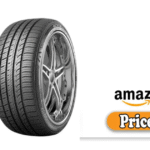
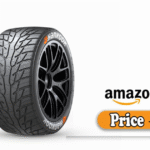
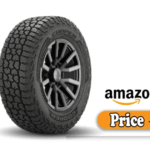
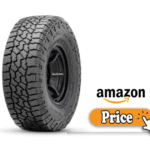
Let’s start with a little backstory. The Falken brand may not have the same top-of-mind recognition as Michelin or Goodyear for some, but it has been quietly building a decent reputation.
Founded in Japan in 1983, and introduced to the North American market around 1985. The company behind it is Sumitomo Rubber Industries (originally via Ohtsu Tire & Rubber), and they’ve positioned Falken as a high-performance tyre brand with motorsport roots.
In my driving life, I’ve run a set of Falken tires (specifically the Wildpeak A/T line) on my SUV/truck combo, which gave me a mix of highway, off-road (light duty), and mixed c,, conditions.
I’ve learned a lot. So this review aims to be: authentic, unsparingly honest, and useful to folks who might be considering buying Falken tires (or are in the market and want alternatives).
If you’re shopping for “Falken tires for sale,” you’ll find plenty of deals, but I want you to understand what you’re getting into: strengths, weaknesses, and how they fit you.

What I Like
Let’s talk about the good stuff. These are the highlights that drew me in and made me keep the Falkens longer than many other tires I’ve tried.
1. Excellent value for the performance
One of the biggest draws is that you often get more bang for your buck compared to ultra-premium brands. In independent reviews and user forums, people mention that Falken offers solid performance at a more accessible price point. For example, a recent guide said:
“Falken Tires has earned a strong reputation among drivers looking for high-performance, durable, and budget-friendly tires.”
So if you’re budget-conscious but still want legit performance, Falken shows up.
2. Strong we,t a, nd all-weather traction in many models
From my experience (and many others’), Falken has improved in the wet department and for all-weather use. In one review of the Wildpeak AT4W, the writer said:
“These tires brake extremely well … On the way back … there were literally sheets of black ice to contend with … Really quite good. They bring a surprising amount of confidence in the rain.”
That kind of statement gives you confidence that the tire maker is serious about traction, which, for many U.S. drivers (where rain, occasional snow, and mixed surfaces exist), may matter a lot.
3. Decent off-road / SUV-truck pedigree in certain lines
If you drive a light truck, an SUV, or occasionally off pavement, Falken’s Wildpeak series is well regarded. The brand itself talks up its off-road credentials:
“With high-performance competition as our laboratory … success on the track translates to innovative technology for drivers everywhere.”
In my truck, when I was on gravel or rougher secondary roads, the Falkens held up nicely.
4. Mileage warranties and good brand backing
Another nice thing: Falken offers mileage warranties on many of its models, which is not always guaranteed in lower-cost brands. According to one site:
“Falken Tire distinguishes itself… bitselitselfmileage warranties in unique tire sizes and models.”
That adds peace of mind.
5. Brand history and motorsport involvement
You may not care about drifting or race circuits, but the fact that Falken has motorsport lineage means their engineers have been working under tough conditions, trying to push limits. That often filters into consumer models. For example:
“Falken has grown to become a flagship brand that focuses on Ultra High Performance products.”
So they’re not new or fly-by-night; they’ve got bona fides. 👉🏿👉🏻 Check the Latest Price and Offer at Amazon 👈🏻👈🏿
What Could Be Better
No tire is perfect, and Falken is no exception. Some of the trade-offs and things I’d want you to be aware of before you buy.
1. Tread life / durablife/durability some reviews
While many users are happy, some report that certain models – especially aggressive all-terrain ones – wear faster than they expected. Example forum quote:
“They were pretty quiet for aggressive A/Ts and had great traction in all weather, but the treadlife was horrible. I rotated them every 5000 miles … they were shot at 20,000 miles.
That’s pretty steep wear. It appears to vary by model and driving style, though, so it’s not universally bad, but it is a caution.
2. Ride comfort or noise may not match premium touring tires
Because some Falken models lean toward performance or ruggedness, you might sacrifice a little of the plush ride feel or ultra-quiet comfort that you’ll get from the very top-tier models. Example: from a long-term review:
“I certainly noticed the bump more than with some other all-terrains.” So if your priority is whisper-quiet highway cruising, you might want to check reviews for that specific model.
3. Not always “best in class” for specialized uses
In very tight comparisons (e.g., ultra high-performance summer tires, or luxury car comfort tires), my drivers feel Falken comes close but doesn’t quite match the absolute elite. One reviewer said:
“I didn’t like the Falkens and replaced them with Goodyear Eagle F1 Asymmetric 5… noise was high…” (in a Toyota forum)
So if your needs are extremely specialized (super sports car grip in summer only, or ultra high mileage touring), you may want to compare side-by-side with the higher-tier brands.
4. Some variability across the model lineup
Because Falken has many different lines (touring, performance, all-terrain, snow capable), it means “Falken tire” can mean a lot of things. The strengths/weaknesses differ by line.
It’s important to pick the right Falken model for your usage (commute vs off-road vs high performance). Some confusion around “Falken tires for sale” might be that you’re tempted by the price, but get the wrong model for your driving.
My Personal Experience
Okay — now let’s get to the nitty-gritty of my time with Falken tires. This is the part I’m most comfortable sharing, because it’s real miles, real roads, real conditions.
Setup & context
I drive a mid-sized SUV with occasional light towing occasionally or dirt roads, and a mix of city + highway miles. A while back, I mounted t,, the Falken Wildpeak A/T4W (an all-terrain, all-weather capable tire) because I wanted something that could handle highway miles but also the rougher secondary roads I sometimes venture on.
First impressions
When I first got them mounted:
- The ride felt solid. The tires felt confident and stable.
- The noise level: fairly good for an A/T. Not silent, but decent.
- The “road-feel” was good: I felt confident in corners, and I felt less floaty than in my previous car in all seasons.
- Off pavement: sure enough, the extra sidewall support and tread blocks made me feel less worried when the road turned rough.
Over time (first 5-10k miles)
As I logged more miles:
- Wet traction: I was impressed. On a rainy highway stretch, I felt the tire held firmly, didn’t feel like it was fighting. One night, I encountered slick pavement and darker conditions, and I felt like the Falkens gave me good confidence.
- Gravel/backroads: When I left pavement, these tires held up well. I didn’t get any new punctures or damage in that early phase, and the sidewalls seemed sturdy.
- Highway miles: On long stretches, I found the ride acceptable. Not butter-soft, but no major complaint.
- Fuel economy: I didn’t measure meticulously, but I didn’t feel the tire was a massive drag. Could I shave more MPG with a true touring tire? Maybe. But I accept the trade-off for capability.
Longer term (20k+ miles)
Here’s where I saw some of the trade-offs come into play:
- Wear: The tread depth had diminished a bit faster than I’d like, especially given my expectations. I didn’t hit the ‘horrible wear’ some users reported, but it wasn’t “set them and forget them” either.
- Noise: After a while, on certain rough road surfaces, I noticed more road noise than what a luxury-touring tire would show. It wasn’t a deal breaker, but it was noticeable if I compared it to other tirit es I’ve had.
- Comfort: Because these are more rugged, the ride wasn’t as cushy as s, ay a high-end highway touring tire. Again, for me t,, this was acceptable because I value the extra capability.
- Confidence in rough conditions: I still felt good about them on gravel and dirt roads. If I were doing full-blown off-roading, I’d pick something more aggressive, but for my mixed-use truck, they did shine.
Final take from me
Would I buy them again? Yes, under the conditions they’re meant for (mixed highway + some rough roads ↔ occasional off pavement). But would I pick them if my only goal was ultra-quiet, ultra-comfortable commuting on perfectly paved highways? Maybe not,ot I might pick a more dedicated touring tire.
In short: I believe Falken tires deliver very good v,,lue and real performance, provided you pick a model that fits your driving style and you accept the trade-offs inherent in that choice.
Design
Let’s pull apart the design aspects: what they’ve built into the tires, what tech or features matter, and how it affects you.
Brand & heritage
The design roots matter. Falken started as a high-performance brand in Japan in 1983. They were built around motorsport track/rally track/rallyd, then leveraged that into consumer tires. That means their design philosophy tends to lean performance-capable, not purely “touring comfort.”
From their website:
“After more than 35 years of success on the track, Falken has earned a reputation for on-road dominance.”
Tire lines & what they mean
It’s important to understand that “Falken” is uman brella; underneath it are several lines with distinct purposes. For example:
- Azenis: Ultra high-performance street tires. (For performance cars)
- Wildpeak: All-terrain / off-road / SUV/truck-focused models. (My line)
- Ziex / Sincera: More all-season / budget / general-use tires.
Knowing this helps you pick the design features that matter to you.
Key design features I liked
- Sidewall strength and tread block design: On the Wildpeak A/T4W I had, the sidewalls felt beefy; the tread blocks felt aggressive enough for rougher roads but not so aggressive that they were obnoxious on pavement. One review states that r said the A/T4W had “increased tread rigidity, siping, kerfs, tread blocks … really upped the game in the all-terrain world.”
- Wet traction / ctraction/compound incorporates silica / high-silicone compounds and tread patterns meant to handle water and slick conditions better. That translated to real confidence for me in the rain.
- Warranty and support features: The fact that Falken offers mileage warranties and ride guarantees (in some models) shows that the design includes durability expectations. For example: “Wildpeak A/T4W … carries a 65,000-mile limited tread life warranty … backed by road hazard protection and a 30-day ride guarantee.”
Design trade-offs
- Because the tire is designed for ruggedness / all-terrain, you might see a heavier weight, slightly firmer ride, and possibly more noise or less plushness than a pure highway touring design. My ride experience confirmed that.
- Some designs may sacrifice maximum tread life for more aggressive grip (especially in mixed conditions).
- For sports car drivers: If you’re in a high-turbo sports car and want peak dry-grip, the Falken Azenis line is good, but there might be even more grip in specialized summer tires from certain brands. So design intent matters.
My design score (based on my usage)
- Fit for mixed pavement + light off-road: 8.5/10 — I think Falken nailed that niche well.
- Fit for luxury highway-only comfort: 7/10 — It works, but it’s not the strongest design compared to dedicated touring tires.
- Fit for ultra-performance sports car summer only: 6.5/10 — You’ll find better with tires designed solely for that use, but Falken offers a decent option.
Performance
Here’s where we get into how the tires behave on the road (or off), the real-world drive, braking, ride, noise, longevity, etc.
Wet/dry traction
- Dry: On pavement, the Falkens felt very competent. The turn-in was solid, the feel was stable. In spirited cornering, they held their own.
- Wet: This is a strong point. I mentioned earlier that in a rainy or slick street, I felt confident. Independent reviews back this up:
“I find myself occasionally getting loose in the snow … rain: 8/10 … braking: 9/10.” (for the A/T4W) And:
“Fuel economy has improved marginally, dry grip improved a bit, and wet grip improved a lot.” (user comment)
So Falken appears to be investing in wet-weather compound and tread design. That’s a big plus off-road.
Mixed Terrain
In my mixed roads (gravel, dirt, asphalt), the Wildpeak handled well. I never felt the tire was totally out of its element. The sidewalls held u, and I felt less scared on rough stretches. Many users who do more aggressive off-road also give it praise. Example:
“I have had those tires for slightly over a year … they are so after-ride compared to road tires … very happy with them.”
Now, to be clear: If you’re doing hardcore rock crawling or extreme off-road, you might want a dedicated mud-terrain. But for general mixed use, Falken’s performance is admirable.
Ride comfort & noise.
As I mentioned in my experience, the ride was acceptable, not ultra plush. Noise was moderate. On paved highways, if you pay attention, you’ll hear ambient road noise, but nothing jarring.
One reviewer said the Wildpeak A/T3W (another line) handled off-road well and “looked good, aren’t noisy”, though they did note the ride quality was a little firmer. It’s a trade-off: ruggedness + capable performance = some firmness.
Tread life & durability.
This is an area of mixed results, in my opinion. In my case, I got good mileage but not “legendary”. Some users report quick wear. That means you likely will get good value, but you shouldn’t expect Michelin-level 70-80k miles in every case (depends heavily on driving style, vehicle, conditions). From a forum:
“Reasonably priced, excellent wear, good warranty, easily get 60K. But others say they got far less. So tread life is decent but variable.
Fuel economy impact
I didn’t measure row-by-row, but subjectively I didn’t fe,e l the tire was a major drag. Some users mention light fuel economy improvement (though not universal). There was a note in a review:
“On-highway gas mileage improved an average of 2 mpg!” (with Wildpeak A/T4W)
Now that might be specific to that vehicle and conditions, so take it with a grain of salt. But it’s encouraging.
My performance score
- Mixed driving (road + rough): 8/10
- Pure highway touring: 7.5/10
- Deep sport/performance car use: 7/10
In sum: very good for what it’s designed for; just pick the right model.
Build Quality
We’ve talked about design & performance; now let’s zero in on build quality: materials, manufacturing, sidewall strength, warranty, etc.
Manufacturing & brand credibility
Falken is part of Sumitomo Rubber Industries, a large and established tire manufacturer. The fact that the brand has been in operation for decades (since 1983) lends confidence.
Their marketing and brand messaging talk about quality, innovation, motorsport testing, etc. That suggests build quality is taken seriously.
Materials and structural integrity
From user reports and independent review snippets:
- The sidewalls on the Wildpeak models are built tough: “The sidewalls, while being 2-ply, are thick and will fend off abrasions and cuts well…”
- The tread compound seems modern and effective for many conditions (wet, mixed).
- The fit and finish (mounting, uniformity) in my experience was fine, no weird vibrations or issues early on.
Warranty/guarantee & support
As mentioned earlier, Falken offers mileage warranties and ride guarantees on certain models. This speaks to confidence in build quality. For example:
“65,000-mile limited tread life warranty (60,000-mile for LT sizes) … backed by road hazard protection and a 30-day ride guarantee.”
That’s solid. When a manufacturer offers that, it typically means they’ve built expectations into the quality.
Customer support and brand ecosystem
The brand has decent support in the U.S., distribution centres in multiple states (California, Florida, Illinois, New Jersey, Tennessee, Texas),w, which helps in logistics and availability. So in case of issues, getting support should be relatively straightforward (depending on your region).
My build-quality score
- Overall build quality: 8.5/10
- Durability in my use (so far): 8/10
- Warranty/support: 9/10
In summary, build quality is a strength of Falken, relative to price.
Alternative Option
If you’re looking at Falken, it’s wise to also consider some alternatives, either because you want something slightly different or you want to compare. Here are a few worthy alternatives:
1. Michelin
Michelin is often the gold standard. If your budget allows and your priorities are ultra-comfort, ultra-quiet, long life, and premium highway performance, Michelin is a top choice. Build quality, brand reputation, and overall performance are excellent, though usually at a higher price.
2. Goodyear
Another big player with a broad product line. If you’re in the market for touring tires, all-season or performance tires, Goodyear offers a wide range and solid reputation. Some users in forums have replaced Falken with Goodyear and noted differences.
3. Toyo
Toyo is a brand that also straddles performance/ruggedness with good value. For trucks or SUVs and off-road capable tires, Toyo can be a competitor to Falken Wildpeak.
4. Other value-brands
If budget is a major constraint, you might consider brands like Cooper, Kumho, or Hankook, which offer reasonable quality at lower price points, though you may lose some performance or warranty.
Falken positions itself often as a “better value” performance brand rather than ultra-premium, so these might make sense if you’re stretching your budget.
My recommendation for alternative scenarios
- If you commute mostly on paved highways, value ultra-quiet comfort, and don’t need off-road capability → go Michelin or Goodyear touring.
- If you drive mixed terrain (road + gravel/offroad) and want ruggedness + value → Falken Wildpeak or Toyo equivalent.
- If you’re on a tight budget and accept some compromises → one of the value brands may work.
Final Thought
Alright, there’s where I wrap it up, give my recommendation, and help you decide (if you haven’t already).
Summary
The “Falken tires for sale” line you’re browsing: yes, you’ll find good deals. Falken is a brand that offers strong value, solid build quality, and very competent performance, especially in mixed driving scenarios (road + rough surface) and for drivers who want more capability without paying top-tier premiums.
However, you need to match the specific model to your driving style. A Falken ultra-high performance summer tire will differ from an all-terrain model in ride, noise, and longevity. And you should be aware of potential trade-offs: slightly firmer ride, maybe more road noise, and possibly faster wear in some aggressive models.
My recommendation
If I were you, and I were shopping right now:
- Ask yourself: What is my driving mix? Highway only? City? Dirt/gravel? Off-road occasionally?
- Then pick the model accordingly: for example, if you drive a truck and go off-road sometimes, the Wildpeak line is a good bet. If you drive a sedan and want luxury comfort, maybe look at Falken’s touring/all-season line or even a competitor.
- Compare price, warranty, and reviews for your exact size/model. Sometimes you’ll find a great deal on Falken.
- Buy from a trusted retailer, ensure the correct size and load rating. Also, maintain proper inflation, rotate tires as recommended, as this will impact wear a lot more than the brand sometimes.
My final score
Overall, for my usage (mixed road + rough roads, occasional off pavement), I give Falken tires 8.5/10.
If I were using them purely for luxury highway touring, I’d give them 7.5/10 in that narrower category.
Final note
So, if you’re seeing “Falken tires for sale” and wondering if they’re worth it: yes, they are worth considering. Just treat it like any tire purchase: match your driving style, pick the right model, read reviews for that size/model, set realistic expectations, and maintain them well. If you do all that, you’ll likely end up happy.
Read More: Where Are Lexani Tires Made | My Honest Experience
FAQs: Falken Tires For Sale | My Honest Experience
1. Are Falken tires of good quality?
Yes, Falken tires are generally very good quality, especially considering their price point. They’re made by Sumitomo Rubber Industries, one of the world’s largest and most respected tire manufacturers.
Falken tires are known for strong traction, durable build, and reliable performance in both wet and dry conditions. While they may not always match Michelin or Bridgestone in refinement, they often outperform expectations for the price.
2. Who makes Falken tires?
Falken tires are manufactured by Sumitomo Rubber Industries, a Japanese company that’s been producing tires since 1909. The Falken brand itself was launched in 1983, with a focus on high-performance and motorsport-inspired products.
Their U.S. operations, Falken Tire Corporation, are headquartered in Rancho Cucamonga, California.
3. Where can I find Falken tires for sale in the U.S.?
You can find Falken tires for sale at most major U.S. retailers and tire shops, including:
- Discount Tire
- Tire Rack
- SimpleTire
- Walmart Auto Center
- Amazon Automotive
- NTB and Big O Tires
- Local Falken authorized dealer.s
Many online retailers also run seasonal promotions, rebates, or free shipping deals, especially around holidays like Memorial Day, Labor Day, and Black Friday.
4. Are Falken tires made in the USA?
Some Falken tires sold in the U.S. are made domestically, while others come from plants in Japan, Thailand, or Indonesia. Falken operates manufacturing and distribution centers in multiple U.S. states, including California, Illinois, and Tennessee. Regardless of origin, their production follows strict global quality standards set by Sumitomo.
5. How long do Falken tires last?
On average, Falken tires last between 40,000 and 70,000 miles, depending on the model and driving conditions. For example:
- Wildpeak A/T4W: Up to 65,000 miles (with warranty)
- Ziex ZE960 A/S: Around 60,000 miles
- Azenis FK460 UHP: 45,000–55,000 miles
Longevity depends on maintenance (tire rotation, alignment, inflation), your driving habits, and the type of roads you drive on.
6. Are Falken tires noisy?
It depends on the model. Falken’s all-terrain tires (like the Wildpeak series) can produce a moderate hum on the highway, typical for rugged designs.
However, their touring and performance models (like the Sincera or Ziex lines) are engineered for quiet, smooth rides. Overall, they’re quieter than most budget brands but a little louder than top-tier luxury models.
7. How do Falken tires perform in rain or snow?
Falken tires are excellent in rain and generally good in light snow, especially models labeled “A/T” (all-terrain) or “A/S” (all-season). Many use high-silica rubber compounds and deep tread channels that improve grip and water evacuation.
For heavy snow or icy conditions, you’ll want a dedicated winter tire like the Falken Espia EPZ II, or consider pairing all-terrains with snow chains.
8. Are Falken Wildpeak tires good for off-road driving?
Yes, Falken’s Wildpeak A/T3W and A/T4W tires are highly rated for off-road and mixed terrain. They provide solid traction on gravel, dirt, sand, and light mud while still handling smoothly on paved roads.
The sidewalls are reinforced to resist punctures and abrasions, making them a popular choice for overlanding and SUV owners who occasionally leave the pavement.
9. Are Falken tires worth the money?
Absolutely. Falken sits in a sweet spot between value and performance. They’re typically more affordable than Michelin, Pirelli, or Continental, but still deliver quality and capability that’s surprisingly close to those premium brands.
If you’re looking for a reliable mid-tier tire that performs well in multiple conditions without breaking the bank, Falken is worth it.
10. What’s the warranty on Falken tires?
Falken offers competitive warranties depending on the model:
- Wildpeak A/T4W: 65,000 miles (or 60,000 for LT sizes)
- Sincera SN250 A/S: 80,000 miles
- Ziex ZE960 A/S: 65,000 miles
- Azenis FK460 UHP: 50,000 miles
Many also include road hazard protection and a 30-day ride satisfaction guarantee, letting you return or exchange them if you’re unhappy early on.
11. How do Falken tires compare to Michelin or Goodyear?
Here’s a quick side-by-side overview:
| Feature | Falken | Michelin | Goodyear |
| Price | 💲💲 (mid-range) | 💲💲💲💲 (premium) | 💲💲💲 |
| Performance | Excellent for price | Outstanding, top-tier | Very good |
| Tread Life | 40–65k miles avg | 60–85k miles avg | 55–75k miles avg |
| Comfort/Noise | Moderate | Extremely smooth | Smooth |
| Off-Road Options | Strong (Wildpeak line) | Moderate | Good |
| Best For | Value + capability | Luxury + longevity | Balanced all-around |
So if you’re budget-conscious but still want great performance, Falken wins. If you want maximum comfort and longevity, no matter the price, Michelin is king.
12. Can I use Falken tires for high-performance sports cars?,
Yes, Falken’s Azenis line is specifically designed for that. The Azenis FK460 A/S and FK520L are made for high-speed stability, cornering precision, and strong wet/dry grip.
They’re popular choices among tuners, autocross enthusiasts, and sports car owners who want premium performance without paying top-tier prices.
13. Do Falken tires affect fuel economy?
Slightly. Because Falken offers both rugged and performance-oriented models, rolling resistance can vary. Touring tires like the Sincera SN series are designed for better fuel efficiency, while A/T models (Wildpeak) may reduce MPG slightly due to more aggressive tread. Still, most users report only a difference of 1–2 MPG at most.
14. How do I know which Falken tire is right for me?
Think about your driving style and vehicle type:
- City/highway daily driver: Falken Sincera SN250 A/S or Ziex ZE960 A/S
- SUV / crossover / light off-road: Wildpeak A/T4W or A
- Performance/sports car: Azenis FK460 A/S or FK520L
- Winter conditions: Espia EPZ II
Choosing the right model is key to getting the best experience, performance, comfort, and longevity, all depend on fit.
15. Are Falken tires good for trucks and SUVs?
Yes, in fact, that’s one of Falken’s strongest areas. The Wildpeak line is designed specifically for trucks, SUVs, and CUVs that tackle mixed terrain.
They offer excellent durability, traction, and control under load. Many off-roaders and daily SUV drivers rate them among the best mid-range A/T tires available in the U.S.
16. How often should I rotate my Falken tires?
For best results, rotate every 5,000–7,000 miles (about every oil change). Regular rotation helps maintain even tread wear and maximize lifespan. Falken even requires regular rotations for its treadwear warranty to remain valid.
17. Do Falken tires need special maintenance?
No special maintenance beyond normal tire care:
- Check tire pressure monthly
- Rotate regularly
- Align your wheels annually or after a major pothole hits.
- Balance tires when installing or noticing vibration
Follow these basics and your Falkens should perform well throughout their lifespan.
18. Do Falken tires come with a satisfaction guarantee?
Yes. Many Falken models include a 30-day Ride Guarantee, which allows you to exchange the tires if you’re not satisfied with ride comfort, handling, or performance within the first month of ownership.
19. Are Falken tires good for towing or hauling?
Yes, the Wildpeak A/T3W and A/T4W lines are popular with truck owners who tow trailers, boats, or campers.
They provide a strong sidewall, high load rating, and stable towing behavior on highways. Just make sure to choose LT-rated (Light Truck) versions for heavier loads.
20. Are Falken tires a good choice overall?
In my honest experience, yes. Falken tires deliver real-world performance, solid value, and respectable longevity without the sky-high price tag of premium brands.
If you’re looking for tires that balance performance and price, Falken deserves a spot on your shortlist.