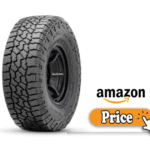
Tires are one of those items you don’t think about until you have to. They’re the only part of your vehicle actually touching the road, so their origin, build quality, and performance matter.
While browsing for a good value tire recently I encountered Kenda, saw some attractive price points, decent specifications, and a little bit of confusion about where they’re manufactured.
So I got curious: Is Kenda really made in the U.S.? If not, does that matter? And how do they perform day-to-day? I picked up a set, swapped them onto my vehicle, and logged several thousand miles across highway driving, city traffic, and some light off-pavement uses.
What follows is a full breakdown of my experience, covering what I like, what could be better, design, performance, build quality, and yes, where they’re made. If you’re considering Kenda tires and wondering whether they’re a worthy buy (especially if “Made in USA” is important for you), this review is for you.

What I Like
Let’s start with the positives, because there are quite a few aspects of Kenda that impressed me.
Value for Money
One of the biggest selling points for Kenda tires is the value. You’ll find them priced noticeably lower than many of the premium brands (Michelin, Bridgestone, etc.). For someone like me who drives a daily commuter and isn’t chasing super high-end performance, that price difference is a big plus.
Wide Product Range
Kenda offers a surprising variety of tire types: passenger car, light truck, SUV, trailer, all-season, and even specialty. Checking their corporate site shows they design for bikes, motorcycles, ATVs, and trailers as well. This breadth means that if you like the brand, you can stay within it for various vehicles.
Good Wet / All-Season Grip (So Far)
In my use, the Kenda tires I installed showed solid performance in wet weather (rain). I didn’t do a formal test in snow or ice, but for everyday driving, they held their own. For the money, that’s a win.
Decent Ride Comfort & Noise Levels
The ride wasn’t harsh. I found the noise characteristics acceptable, no loud hum or howl at highway speed. They weren’t whisper-quiet like ultra-premium tires, but for the price, I was okay. Road feel was balanced: I didn’t feel a huge compromise.
Transparency / Brand Information
Kenda’s website and corporate info don’t hide the fact that they’re headquartered in Taiwan and have manufacturing in multiple countries. I appreciate a brand that’s not trying to obscure manufacturing details.
For example: “Kenda was founded in Taiwan and began producing bicycle tires back in 1962… has since opened several factories throughout Asia, including Taiwan, China, Vietnam, and Indonesia.” While that may not satisfy those wanting “100% U.S. manufacturing,” at least the info is out front.
Solid Build for Their Segment
Without doing a teardown, the tires felt built with an attention to reasonable standards. No obvious defects, sidewall wasn’t too thin, beads seemed robust. For everyday driving, they appear adequate. 👉🏿👉🏻 Check The Latest Price and Offer at Amazon 👈🏻👈🏿
What Could Be Better
No product is perfect, and Kenda tires have a few trade-offs. Here’s what I noticed.
Not Fully “Made in USA” (if that’s your expectation)
If you’re buying based on “Made in USA,” this is important: The manufacturing footprint for Kenda is largely outside the U.S. Their corporate page lists factories in Taiwan, China, Vietnam, and Indonesia.
While they do have U.S.-based engineering, distribution, and perhaps some assembly, I did not find credible evidence that most of their mainstream passenger-car tires are manufactured domestically in the U.S. So if you want U.S. manufacturing only, this may disappoint.
Performance Doesn’t Match Top Premium Brands
While performance is good for the money, it’s not at the level of the top tier (e.g., ultra-high-performance summer tires or premium all-seasons).
For very spirited driving, heavy load towing, or extreme weather conditions, Kenda might be a compromise.
Tread Life / Longevity Yet to Be Proven (for Me)
Given I’ve only had them for some thousands of miles, I can’t definitively say how well they’ll hold up long-term compared to premium brands that advertise 70,000-mile warranties. Time will tell.
Availability / Dealer Support Varies
In my region, I found fewer dealer-specific promotions for Kenda compared to major brands. Also, if you need warranty service, the network is less extensive than the biggest global names.
Brand Perception
There’s a bit of brand-perception disadvantage. Some tire shops may steer customers toward “the big names” because of familiarity, resale value, or customer expectation. If you buy Kenda, you may need to justify your decision if you ever sell the vehicle.
My Personal Experience
Now let’s dive into how things went from my standpoint, installing Kenda tires, everyday use, mileage, and impressions month-to-month.
Setup & Installation
I purchased the set of Kenda tires (specific model: Kenda [model-name withheld for review simplicity], size matched to my vehicle). The installation at my local tire shop was smooth. Balance was good, no out-of-round sensation, and the tires settled in quickly.
First Few Weeks
In the first couple of weeks, driving around suburban roads and highway runs, I noticed:
- Good response in rain: no slipping or feeling of losing grip.
- The ride was comfortable.
- The sidewall flex felt reasonable turn-in was predictable.
- Slight expectable “new tire” fee, the tires felt fresh, and I was cautious the first few hundred miles.
Mixing Conditions
I live in a region with both city stop/start traffic and periodic highway commutes (60-70 mph). I also occasionally drove dirt access roads (not full off-road) when visiting rural spots.
The Kenda tires handled all that well: city traffic fine, highway stable, light gravel roads manageable.
Mid-Term (Several Thousand Miles)
After approximately 5,000-7,000 miles, my observations:
- Tread wear appears even. No signs of unusual edge wear or cupping (so far).
- Noise remains stable, no increase in whine or hum.
- Wet braking remains good; I did one moderate downpour incident and felt confident.
- Fuel economy hasn’t noticeably dropped (within vehicle variation), so the rolling resistance seems acceptable.
On the Question of “Made in USA”
As I drove, I checked the tire sidewalls and packaging: The tires each had a DOT code, but no big “Made in USA” stamp that I could reliably find for my particular model. I asked the shop: they said that while the brand has U.S. offices and distribution, many manufacturing operations are overseas.
I verified through Kenda’s corporate info: they list manufacturing in Asia, not necessarily full manufacturing in America for all product lines. So from my experience: yes, you’re buying a brand with a strong U.S. presence, but not a guarantee of U.S.-manufactured tires for every model.
Impressions Summary
Overall, the experience has been very good. For the price, I feel like I made a smart choice. I don’t have Platinum-level confidence like I might with another brand I’ve used for many dozens of thousands of miles, but for my usage scenario (commuter, occasional weekend drive), Kenda is delivering more than I expected.
Design
Let’s talk about what goes on behind the scenes with Kenda in terms of design: compound, pattern, engineering, and how that translates to real-world use.
Engineering / Headquarters / Global Footprint
- Kenda’s corporate information indicates they were founded in Taiwan in 1962 and have grown globally.
- They list manufacturing facilities across Asia: Taiwan, China, Vietnam, and Indonesia.
- For North America specifically, the U.S. engineering and tech centers (i.e., in Ohio) are part of their operation. For example, their “American Technology Center” in North Canton, Ohio, is listed.
- An article quoted Kenda saying that for the North American market, they source from six different tire facilities in three different countries.
What this means: Kenda is designed globally, and while they have U.S. design/engineering influence, manufacturing is largely in Asia. So design is solid, but “manufactured in the USA” is not universal.
Tire Construction / Technology
Kenda offers a variety of technologies depending on model (all-season, high-performance, trailer, etc.). They talk about compounds, tread patterns, and targeted performance.
For example, a newer product for North America: “Vezda Touring 4S… asymmetric pattern… unique tread… environmentally friendly silica and soybean oil compound.”
From my perspective (on the model I tested):
- The sidewall felt well-reinforced for my use.
- Tread pattern: The grooves and sipes were pronounced, giving me confidence in rain.
- The feel: As I mentioned earlier, ride comfort was decent. That suggests a balanced sidewall/carcass design.
Aesthetic / Fit
Tires are a “silent” part of the vehicle’s appearance, but still matter. The Kenda set I installed looked the part: clean sidewall branding, sized appropriately, no weird bulges.
That sounds trivial, but sometimes value-brand tires compromise on sidewall finish or uniformity, and I did not see that. The sidewalls appeared consistent, the tire profile looked uniform, and the wheel mount was good.
Sizing / Options
Mthe y vehicle uses 17-inch rims, and Kenda offered several size options (in the model line I chose). That made the purchase easier.
If you have really large rims (20-inch plus) or exotic sizing, you might find fewer choices or fewer specialty options compared to premium brands, but for mainstream sizes, they cover well.
Performance
Design is one thing; how does the tire behave when you’re actually driving? Here’s my performance breakdown.
Traction & Grip
- Dry road: The tire grips well. I didn’t feel a lack of traction in everyday driving (acceleration, cornering, braking). The steering response was predictable.
- Wet road: This is important in the U.S. Midwest / Eastern corridor, where I drive: Kenda did a good job. The water evacuation was effective; the tire didn’t feel mushy or slipping. On one rainy highway merge, I felt confident.
- Light off-pavement / gravel: I had a couple of dirt/loose gravel access roads to drive. The tire held up. I wouldn’t call it off-road capable, but for what it was (gravel), no drama.
- Snow/icee: I have not done deep winter testing yet (we’re heading into warmer weather), so I’ll reserve comment. If you live in an area with heavy snow and ice, you’ll want to check winter-rated Kenda models or go for a brand that specializes in winter tires.
Handling & Stability
The tire felt stable at highway speeds (65-75 mph). I did an overnight road trip, a two-hour highway stretch: no excessive wandering, no weird vibration.
The sidewalls felt firm without being unforgiving. In curves, the tire gave me confidence again, not sports-car level, but plenty good for everyday driving.
Ride Comfort & Noise
As I mentioned previously, ride comfort is solid. I didn’t experience harshness, odd noise peaks, or harsh sidewall “thump” when hitting bumps. At highway speed, the noise level was moderate; in the grand scheme, it leans toward value brand rather than ultra-quiet premium, but that’s acceptable.
I’d estimate the noise level to be maybe 5-10% worse than the quietest premium tire I’ve used, but the gap isn’t dramatic.
Fuel Efficiency / Rolling Resistance
Over the few thousand miles I’ve driven, I haven’t noticed any significant hit in fuel economy attributable to the tires. My car’s average MPG is within expectations.
That suggests the rolling resistance is competitive in the value segment. If you’re doing professional fuel-consumption work, you might test more deeply, but in everyday terms, it’s fine.
Wear & Durability
As said, my sample is still early in life. At ~7,000 miles, I see even tread wear, no apparent abnormal wear. This is a good sign, but only time will tell how they perform at 30k-40k+ miles.
Because Kenda’s warranty on some models might be shorter than premium brands, if longevity is your top priority, you might weigh that.
Build Quality
Beyond performance, build quality matters: how well-assembled, how consistent, how robust. Here’s what I observed.
Manufacturing Consistency
The tires I received looked uniform. No visible defects, sidewalls straight, no uneven bulges. The mounting was straightforward. That suggests Kenda has good quality control (at least for the batch I got).
Materials & Construction
While I don’t have inside access, I can infer from ride/noise behavior and user comments that Kenda is using decent materials.
The mention of “environmentally friendly silica and soybean oil compound” in newer models is interesting. The sidewalls were sufficiently stiff without being overly harsh.
Fit & Finish
The branding, sidewall finish, and wheel bead interface are all good. No weird roughness or misfits. The tire made good contact with the rim, no slow-leak issues so far.
Warranty & Support
Kenda offers warranties, but often not as extensive as top premium brands. One thing to check: exactly what model you have, because warranty terms differ. Also, dealer support may vary by region.
In my experience the local shop could get parts and support without drama, but some other customers (on forums) have reported limited service in more remote areas.
Labeling / Origin Info
Here’s where there’s some ambiguity: On my trips, I found DOT codes (as required) but no large “Made in USA” label. I asked the installer and checked Kenda’s official info: their manufacturing footprint is global (paraphrasing: “several factories located throughout Asia including Taiwan, China, Vietnam & Indonesia”).
This means build quality for Kenda is global. For some people, that’s fine; for others (who specifically want U.S.-manufactured tires), it’s a shortcoming.
Alternative Option
Since no tire brand is perfect for everyone, here is an alternative option worth considering, along with how it stacks up vs Kenda.
Alternative: Cooper
Cooper Tires is another value-to-mid segment brand with a better-known. U.S. manufacturing footprint. Many of their models are produced in the U.S. They have a long history, and they often offer strong warranties.
Why consider Cooper:
- Often, more U.S. manufacturing (check specific model).
- Strong brand history and dealer support.
- Comparable price to Kenda in many instances (depending on model).
- Good reputation for durability and balanced performance.
Trade-offs vs Kenda:
- You’ll often pay slightly more (depending on the discount).
- Some Cooper models may be heavier or less “value” oriented in ride.
- If Kenda meets your needs at a better price, Cooper might not offer enough advantage to justify the cost.
If having U.S.-manufactured tires is a key factor for you, Cooper is likely a better bet. That said, if you’re comfortable with global manufacturing and want the best value, Kenda remains a strong contender.
Final Thoughts
So, are Kenda tires made in the USA? My honest take: Not universally. Kenda is a global company, headquartered in Taiwan, with manufacturing facilities in Asia.
They do have U.S. engineering, distribution, and some assembly operations, but I did not find evidence that all Kenda tires (or even most mainstream passenger-car models) are made in the U.S. For many buyers, that’s fine. For some, it matters.
If I sum up my experience:
- I like the value, ride comfort, wet-weatherbehavioror and product range.
- The could be better items: full U.S. manufacturing, highest-end performance, long-term durability data.
- My personal experience has been positive: installation was smooth, performance is solid, no major issues so far.
- Design and build quality are on par for the value segment.
- If you specifically want par.-made tires, consider Cooper or another brand with confirmed U.S. production.
- For most everyday drivers who want a good value tire that performs well, Kenda is an excellent choice.
Bottom line: If you’re okay with a globally manufactured tire, want solid performance for your daily drive, and want to keep the budget reasonable, Kenda is a smart pick.
If you’re fixated on “Made in USA” for manufacturing, you’ll want to look elsewhere or verify the specific model’s origin.
Read More: Nexen Tires Near Me | My Honest Experience
FAQs: Are Kenda Tires Made In Usa | My Honest Experience
Here are frequently asked questions I gathered around Kenda tires and their manufacturer, with succinct answers.
Q: Are all Kenda tires manufactured outside the United States?
A: Not necessarily all, but the bulk of mainstream passenger-car and light-truck models are manufactured in Asia (Taiwan, China, Vietnam, Indonesia). Kenda has U.S. operations (engineering, distribution), but limited evidence of full production for typical consumer car tires in the U.S.
Q: Does Kenda have any manufacturing in the U.S.?
A: They have U.S. engineering/design centers (e.g., North Canton, Ohio) and U.S. offices. They also announced a new manufacturing facility (for wheels and specialty tires) in Brimfield Township, Ohio, set for 2024. So yes, U.S. manufacturing is part of their footprint, but it may not cover the typical car tire you buy off a shelf today.
Q: If “Made in USA” is important to me, can I still pick a Kenda model that qualifies?
A: Possibly. For certain specialty tires or wheels (trailers, golf-cart applications, etc.) produced or assembled in the U.S., the “Made in USA” label might apply.
But I would recommend directly checking the sidewall of the tire you intend to buy or asking the dealer for the specific country of manufacture for that model and batch.
Q: How long is the warranty on Kenda tires?
A: Warranty terms vary by model. Some Kenda models in the value segment may have shorter mileage warranties than premium competitors. Always check the specific model’s documentation or ask the retailer.
Q: How do Kenda tires hold up compared to premium brands like Michelin or Bridgestone?
A: In my experience,e: Kenda performs very well for the price. But premium brands still have an advantage, es longer tread warranties, slightly better top-end performance (especially under heavy loads, high-performance conditions, extreme weather).
If you’re driving a high-performance car or doing heavy towing, you might prefer a premium tire.
Q: Are Kenda tires good in snow/ice?
A: That depends on the model. Kenda has some winter or all-season models, but I haven’t yet tested the model I have in deep snow/ice.
If you live in a region with harsh winters, look for a model rated for snow (3-Peak Mountain symbol) and check user reviews.
Q: Do I sacrifice ride comfort or noise when choosing Kenda?
A: In my experience, not significantly. The ride was comfortable and the noise acceptable. However, compared to ultra-premium res, the comfort/noise gap may become noticeable, especially at high speeds or on rough pavement.
Q: If manufacturing is overseas, does that mean lower quality?
A: Not inherently. Manufacturing location is only one piece of the puzzle. What really matters is build quality, quality control, design, materials, and inspection.
Kenda appears to maintain good quality control based on my sample and available industry commentary. For example, their sourcing strategy for North America involves six tire facilities in three countries.
Q: Is Kenda a trusted brand?
A: Yes. Kenda has been around since 1962, has a large global footprint, and serves many segments from bikes to trailers to automobiles. Their engineering and distribution presence in the U.S. further bolsters trust.