If you’ve ever driven a car, you’ve used the gearbox, whether you realized it or not. Every time you shift gears, accelerate onto a highway, or cruise smoothly down the road, the gearbox is quietly doing the heavy lifting behind the scenes.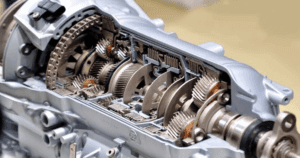 Think of the gearbox as the translator between your engine and your wheels. Your engine creates power, but that power isn’t usable by itself. The gearbox converts that raw engine power into usable motion so your car can move smoothly, efficiently, and safely at different speeds.
I used to think the gearbox was just “the thing that changes gears.” But after learning more (and dealing with a costly transmission repair myself), I realized it’s one of the most important and expensive systems in any car. A healthy gearbox means:
- Better fuel economy
- Smooth acceleration
- Less engine stress
- Longer engine life
- Comfortable driving
In this guide, I’ll break it down in simple language, no mechanical jargon overload, and explain:
- What a gearbox really is
- How it works
- Types of gearboxes
- Why it matters
- Which type is best for different drivers
- Maintenance tips
If you’re a beginner, this is for you. If you’re a car owner, this is essential knowledge.
What Is a Car Gearbox?
A gearbox (also called a transmission) is a mechanical system that controls how power from the engine is delivered to the wheels.
In simple terms, the gearbox decides how fast your wheels turn compared to how fast your engine turns. Your engine always spins at high speed (RPM), but your wheels can’t always spin that fast.
The gearbox adjusts the engine’s power using different gear ratios so your car can:
- Start from a stop
- Climb hills
- Cruise at highway speed
- Drive efficiently
- Reverse
Without a gearbox, your car would:
- Stall when stopping
- Over-rev at low speeds
- Struggle to move from a standstill
- Waste fuel
- Damage the engine
So yes, a car literally cannot function properly without a gearbox.
How a Gearbox Works (Simple Explanation)
Let’s make it easy. Imagine riding a bicycle:
- Low gear = easier pedaling, more power, slower speed
- High gear = harder pedaling, less power, higher speed
A car gearbox works the same way.
Step-by-step:
- The engine produces power
- Power goes into the gearbox
- Gearbox selects a gear ratio
- Power is adjusted
- Power goes to the wheels
- The car moves smoothly
Low Gear:
- More power
- Less speed
- Used for starting, hills, heavy loads
High Gear:
- Less power
- More speed
- Used for highways and cruising
This balance between power and speed is the gearbox’s main job.
Why a Gearbox Is So Important
From real driving experience, a good gearbox means:
Performance
- Smooth acceleration
- Better control
- Strong hill climbing
Efficiency
- Lower fuel consumption
- Less engine strain
- Optimized RPM
Comfort
- Smooth gear changes
- Quiet driving
- No jerking
Durability
- Protects engine
- Extends vehicle lifespan
- Prevents mechanical damage
A bad gearbox, on the other hand, means:
- Slipping gears
- Jerking motion
- Poor fuel economy
- Noisy driving
- Expensive repairs
Types of Gearboxes in Cars
1. Manual Gearbox
You change gears using a clutch pedal and a gear stick.
Pros:
- Better control
- Cheaper maintenance
- Better fuel economy (often)
- More driver engagement
Cons:
- Learning curve
- Traffic driving is tiring
Best for: Driving enthusiasts, budget buyers, rural areas
2. Automatic Gearbox
The car changes gears automatically for you.
Pros:
- Easy to drive
- Comfortable
- Great for traffic
Cons:
- Higher maintenance cost
- Slightly lower fuel efficiency (older models)
Best for: City drivers, beginners, daily commuters
3. CVT (Continuously Variable Transmission)
No fixed gears, smooth, continuous power delivery.
Pros:
- Very smooth driving
- Great fuel economy
- Quiet
Cons:
- Expensive repairs
- Less sporty feel
Best for: Economy cars, daily driving
4. DCT (Dual-Clutch Transmission)
Two clutches for ultra-fast gear changes.
Pros:
- Very fast shifting
- Performance driving
- Fuel efficient
Cons:
- Complex system
- High repair cost
Best for: Sports cars, performance vehicles
Gearbox Types Comparison Table
| Gearbox Type | Comfort | Fuel Economy | Maintenance Cost | Performance | Best For |
| Manual | Medium | High | Low | High | Enthusiasts, budget drivers |
| Automatic | High | Medium | Medium | Medium | City drivers |
| CVT | Very High | Very High | High | Low | Economy driving |
| DCT | High | High | Very High | Very High | Sports/performance cars |
Real-Life Driving Experience
From personal experience, the gearbox completely changes how a car feels.
A manual car feels connected — you feel in control.
An automatic feels relaxed — especially in traffic.
A CVT feels smooth and calm — perfect for daily commuting.
A DCT feels aggressive and sporty — fast shifts, racing feel.
The same car model can feel totally different just by changing the gearbox type.
Buyer’s Guide: Choosing the Right Gearbox
Choose Manual If:
- You want low maintenance
- You enjoy driving
- You want control
- You live in low-traffic areas
Choose Automatic If:
- You drive in traffic daily
- You want comfort
- You prefer easy driving
Choose CVT If:
- You want fuel efficiency
- You want smooth rides
- You drive long distances
Choose DCT If:
- You love speed
- You want performance
- You enjoy sporty driving
Gearbox Maintenance Tips
Basic Care:
- Change transmission fluid regularly
- Don’t ignore warning signs
- Avoid aggressive driving
- Service on time
Warning Signs:
- Slipping gears
- Delayed shifting
- Grinding noises
- Burning smell
- Jerky motion
- Transmission warning light
Ignoring these can lead to massive repair bills.
Long Expansion: Why the Gearbox Is the Heart of Driving Experience
A car’s personality is shaped by its gearbox. Two identical engines with different gearboxes will feel like two different cars. The gearbox controls:
- Acceleration response
- Driving smoothness
- Fuel efficiency
- Noise levels
- Power delivery
- Driving comfort
Modern gearboxes are no longer just mechanical systems; they’re computer-controlled smart systems that adapt to driving style, terrain, and conditions. Today’s advanced transmissions can:
- Learn driver behavior
- Optimize fuel usage
- Adjust shifting patterns
- Protect engine health
- Improve traction
This is why the gearbox is now considered the brain of the drivetrain.
Read More: Brake Pad Replacement Cost
FAQs: What’s A Gearbox In A Car
What does a gearbox do in a car?
It controls how engine power is delivered to the wheels, balancing speed and power.
Are gearbox and transmission the same?
Yes. The gearbox and transmission are the same thing.
Which gearbox is best?
There is no universal best; it depends on your driving style.
Is automatic better than manual?
For comfort and traffic, yes. For control and cost manual is better.
How long does a gearbox last?
Typically, 150,000–300,000 miles with proper maintenance.
Is CVT reliable?
Modern CVTs are reliable but require proper servicing.
Which gearbox is cheapest to repair?
Manual gearboxes are usually the cheapest.
Final Thoughts
The gearbox is more than just a mechanical part; it’s the soul of how your car drives. It controls:
- How does your car feels
- How it accelerates
- How it saves fuel
- How comfortable it is
- How long does it lasts
Once you understand the gearbox, you understand your car.