If you’ve ever driven a car, you’ve used the gearbox, whether you realized it or not. It’s one of those components that quietly does its job in the background. You press the accelerator, and the car moves.
You slow down, and it adjusts. But behind that smooth motion is a surprisingly complex system working nonstop. I still remember the first time I drove a manual car.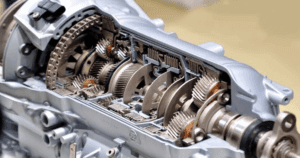 The coordination between clutch, gear lever, and throttle felt like learning a new language. Stall the engine once, and you suddenly gain a lot of respect for what the gearbox actually does.
So what is a gearbox, really? And why does it matter so much when choosing a car? Let’s break it down in a way that actually makes sense.
What Is a Gearbox in a Car?
A gearbox (also called a transmission) is the system in a car that controls how power from the engine is delivered to the wheels.
In simple terms:
👉 The engine produces power
👉 The gearbox decides how that power is used
Without a gearbox, your car would either:
- Struggle to start moving
- Or run inefficiently at higher speeds
Why Is a Gearbox Necessary?
Engines operate best within a specific speed range (RPM). But cars need to:
- Start from a complete stop
- Climb hills
- Cruise at high speeds
A gearbox allows the engine to stay efficient while the car adapts to different driving conditions.
How Does a Gearbox Work? (Simple Explanation)
Think of gears like different levels of strength:
- Low gears = more power, less speed
- High gears = less power, more speed
When you shift gears:
- You’re changing how hard the engine works
- And how fast the wheels turn
Types of Gearboxes (And What They Feel Like to Drive)
There are several types of gearboxes, each with a unique driving experience.
1. Manual Gearbox
You control everything:
- Gear shifts
- Clutch operation
Driving feel: Engaging, hands-on
2. Automatic Gearbox
The car shifts gears for you.
Driving feel: Smooth and effortless.
3. CVT (Continuously Variable Transmission)
No fixed gears, just a seamless range.
Driving feel: Very smooth, but sometimes less responsive
4. Dual-Clutch Transmission (DCT)
A performance-focused automatic with lightning-fast shifts.
Driving feel: Fast, sporty.
Comparison Table: Types of Gearboxes
| Gearbox Type | Driving Experience | Fuel Efficiency | Maintenance | Best For |
| Manual | Hands-on, engaging | High | Low | Enthusiasts |
| Automatic | Smooth, easy | Moderate | Moderate | Daily driving |
| CVT | Seamless | Very high | Moderate | City driving |
| DCT | Fast, sporty | High | Higher | Performance cars |
My Personal Experience With Different Gearboxes
Over time, I’ve driven all four types, and each one feels completely different.
- Manual: Feels connected, but tiring in traffic
- Automatic: Stress-free, especially in cities
- CVT: Surprisingly smooth, but lacks excitement
- DCT: The most fun, quick, and responsive
If I had to choose for everyday use? I’d go with a regular automatic or CVT. But for fun driving, nothing beats a manual or DCT.
What Happens If a Gearbox Fails?
This is where things get serious. Common symptoms:
- Strange noises
- Difficulty shifting
- Slipping gears
- Burning smell
Ignoring these signs can lead to expensive repairs.
Buyer’s Guide: Choosing the Right Gearbox
If you’re buying a car, the gearbox choice matters more than most people think.
1. Your Driving Environment
City driving:
- Automatic or CVT is ideal
Highway driving:
- Manual or DCT can be more enjoyable
2. Comfort vs Control
- Want ease? → Automatic
- Want control? → Manual
3. Fuel Economy
- CVTs are usually the most efficient
- Manuals can also be very economical
4. Maintenance Costs
- Manual = cheapest
- Automatic/DCT = more expensive repairs
5. Driving Experience
Ask yourself:
- Do you enjoy driving?
- Or want to get from A to B?
Long Expansion: A Deep Dive Into Gearbox Engineering
Let’s go deeper into how gearboxes actually work and why they’ve evolved so much.
The Core Components of a Gearbox
A typical gearbox includes:
- Gears (different sizes)
- Shafts
- Clutches or torque converters
- Synchronizers
Each part plays a role in controlling speed and torque.
Gear Ratios Explained
Gear ratios determine how many times the engine turns compared to the wheels.
- Lower ratio = more power
- Higher ratio = more speed
This is why:
- First gear feels strong
- Fifth or sixth gear feels smooth and fast
Why Modern Gearboxes Are So Advanced
Today’s gearboxes are smarter than ever. Automatic systems can:
- Learn your driving style
- Adjust shifting patterns
- Improve fuel efficiency
The Rise of Automatic and CVT Systems
Manual gearboxes used to dominate. But now:
- Automatics are more efficient than ever
- CVTs offer unmatched smoothness
This shift is especially noticeable in urban areas.
Performance and Sports Driving
In high-performance cars:
- DCT gearboxes dominate
- Shifts happen in milliseconds
This gives:
- Faster acceleration
- Better control
Gearbox and Fuel Efficiency
A well-designed gearbox can:
- Reduce fuel consumption
- Improve engine lifespan
That’s why manufacturers invest heavily in transmission technology.
Maintenance and Longevity
To keep your gearbox healthy:
- Change transmission fluid regularly
- Avoid aggressive driving (especially in automatics)
- Listen for unusual sounds
Common Mistakes Drivers Make
1. Riding the Clutch (Manual Cars)
Causes premature wear.
2. Shifting Without Fully Stopping
Bad for gears in automatics.
3. Ignoring Warning Signs
Small issues become big problems quickly.
Future of Gearboxes
With electric vehicles rising, traditional gearboxes are changing. Electric cars:
- Often use single-speed transmissions
- Don’t require complex gear systems
This could redefine how we think about driving.
Read More: Are Turbo Back Exhaust Systems Illegal? My Honest Experience
FAQs: What Is The Gearbox In A Car
1. Is a gearbox the same as a transmission?
Yes, they’re different names for the same system.
2. Which gearbox is best for beginners?
Automatic or CVT is easiest to learn.
3. Is manual better than automatic?
Depends on preference, manual offers control, automatic offers convenience.
4. Do automatic cars use more fuel?
Not necessarily modern automatics are very efficient.
5. How long does a gearbox last?
With proper maintenance, it can last the lifetime of the car.
6. Can I switch gearbox types later?
No, it’s built into the car’s design.
7. Why do sports cars use DCT?
Because of fast gear changes and better performance.
Final Thoughts
The gearbox is one of the most important and most underrated parts of a car. It affects:
- How does your car feel
- How efficient it is
- How enjoyable your driving experience becomes
From my own experience, choosing the right gearbox can completely change how much you enjoy driving. So next time you’re behind the wheel, take a moment to appreciate what’s happening beneath the surface because your gearbox is doing a lot more than you think.