Most drivers remember to fill up the fuel tank but forget one of the most important fluids keeping the engine alive, engine oil. I learned this lesson the hard way. A few years ago, my car started making a slight ticking noise on cold mornings.
Nothing seemed seriously wrong, but after checking the dipstick, I realized the oil level was well below the recommended mark. Thankfully, I caught it early before any expensive engine damage occurred.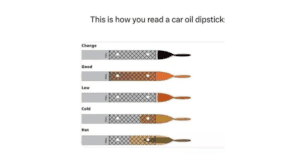 Checking engine oil with a dipstick is one of the easiest maintenance tasks any car owner can do. It takes less than five minutes and can potentially save thousands of dollars in repair costs.
In this guide, I’ll explain exactly how to check dipstick oil, common mistakes to avoid, what the oil color means, and how to interpret the readings correctly.
Why Checking Engine Oil Matters
Engine oil performs several critical functions:
- Lubricates moving engine parts
- Reduces friction and wear
- Helps cool engine components
- Removes contaminants and sludge
- Prevents corrosion and rust
When oil levels become too low, engine components can grind against each other, causing severe damage. Regular oil checks help you:
✅ Extend engine life
✅ Improve fuel efficiency
✅ Detect leaks early
✅ Avoid costly repairs
✅ Maintain vehicle performance
Step-by-Step: How to Check Dipstick Oil
Step 1: Park on a Level Surface
Always park your vehicle on flat ground. A slope can give inaccurate oil readings.
Turn off the engine and engage the parking brake.
Step 2: Let the Engine Cool Slightly
For most vehicles, waiting about 5–10 minutes after turning off the engine gives the oil enough time to drain back into the oil pan.
Some manufacturers recommend checking oil when the engine is warm, while others suggest a cold engine. Always consult your owner’s manual.
Step 3: Locate the Dipstick
Open the hood and find the oil dipstick. It usually has:
- A yellow handle
- An orange ring
- The word “ENGINE OIL”
Step 4: Pull Out the Dipstick
Remove the dipstick carefully.
The first reading is usually inaccurate because oil splashes onto the stick while driving.
Use a clean cloth or paper towel to wipe it completely.
Step 5: Reinsert the Dipstick Fully
Push the dipstick all the way back into the tube.
Wait a second or two.
Then pull it out again.
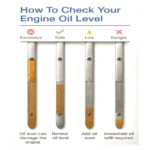
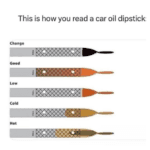
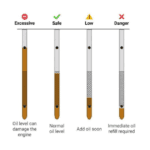
Step 6: Read the Oil Level
The dipstick usually has markings such as:
- MIN and MAX
- LOW and FULL
- Crosshatched area
- Two holes or lines
The oil should ideally sit near the upper mark.
Dipstick Oil Level Comparison Table
| Oil Reading | Meaning | Action Required |
| Above MAX | Too much oil | Drain excess oil |
| Near MAX | Ideal level | No action needed |
| Middle Area | Acceptable | Monitor regularly |
| Near MIN | Oil is low | Add oil soon |
| Below MIN | Dangerous level | Add oil immediately |
What Should Engine Oil Look Like?
The appearance of oil can reveal a lot about engine health.
New Oil
- Amber or golden color
- Smooth consistency
Used Oil
- Dark brown or black
- Slightly thicker texture
Dark oil does not always mean it needs replacement. Modern detergents in engine oils intentionally hold contaminants in suspension. However, oil that appears:
- Milky
- Foamy
- Contains metal particles
May indicate serious engine problems.
Oil Condition Comparison Table
| Oil Appearance | Possible Meaning |
| Golden Amber | Fresh oil |
| Dark Brown | Normally used oil |
| Thick Black Sludge | Overdue oil change |
| Milky Coffee Color | Coolant contamination |
| Metallic Shine | Internal engine wear |
| Foamy Oil | Overfilled or coolant issue |
Common Mistakes When Checking Dipstick Oil
Over the years, I’ve noticed many drivers make the same errors.
1. Checking Immediately After Turning Off the Engine
Oil hasn’t drained back yet, leading to low readings.
2. Parking on an Incline
Even a slight slope can alter the reading.
3. Not Wiping the Dipstick First
The first pull is rarely accurate.
4. Overfilling the Engine
Many people think more oil is better. Actually, too much oil can:
- Increase pressure
- Cause foaming
- Damage seals
- Harm catalytic converters
5. Ignoring Oil Consumption
Some engines naturally burn small amounts of oil.
Checking monthly helps catch abnormal consumption.
My Personal Review: Why I Now Check Oil Regularly
Honestly, checking engine oil used to seem unnecessary to me. Modern vehicles are incredibly reliable, and many drivers depend entirely on dashboard warning lights. Unfortunately, by the time the oil warning light appears, the oil level may already be dangerously low.
After discovering my engine was nearly one quart low, I made oil inspections part of my monthly routine. Since then, I’ve noticed several benefits:
- Smoother engine operation
- Better peace of mind before long trips
- Early detection of a minor valve cover leak
- Reduced maintenance anxiety
The process takes less time than checking tire pressure.
For such a simple task, the payoff is surprisingly large.
How Often Should You Check Dipstick Oil?
General recommendation:
| Driving Condition | Inspection Frequency |
| Normal commuting | Once per month |
| Older vehicles | Every 2 weeks |
| Long road trips | Before every trip |
| High-mileage engines | Weekly |
| Heavy towing | Weekly |
If your vehicle consumes oil, increase inspection frequency.
Signs Your Engine Oil May Be Low
Watch for these symptoms:
Engine Warning Light
One of the most obvious indicators.
Ticking or Knocking Sounds
Low oil reduces lubrication.
Burning Oil Smell
Oil may be leaking onto hot engine components.
Reduced Performance
Insufficient lubrication increases internal friction.
Excessive Exhaust Smoke
Could indicate oil burning.
How Much Oil Should You Add?
If the dipstick reads low:
- Add small amounts gradually.
- Wait a minute.
- Recheck.
As a rough guideline:
One quart (about 1 liter) usually raises the oil level from MIN to MAX, though this varies by vehicle.
Always consult your owner’s manual.
Buyer’s Guide: Tools That Make Oil Checks Easier
Although checking oil requires minimal equipment, a few inexpensive items can make the process cleaner and easier.
1. Microfiber Cloths
Ideal for wiping dipsticks clean without leaving fibers behind.
Benefits:
- Reusable
- Absorbent
- Easy to store in the glove compartment
2. Small Funnel
Helps avoid spills when adding oil.
Benefits:
- Cleaner top-ups
- Prevents contamination
- Useful for emergencies
3. LED Inspection Light
Modern engine bays can be difficult to inspect in poor lighting.
Benefits:
- Easier dipstick visibility
- Helpful during nighttime checks
4. Disposable Gloves
Useful if you dislike greasy hands.
Benefits:
- Cleaner maintenance experience
- Protects skin from used oil exposure
5. Spare Engine Oil Bottle
Keeping one manufacturer-approved oil bottle in your trunk can be extremely helpful during long trips.
Always ensure the oil matches the specifications recommended by your vehicle manufacturer.
Vehicles Without Traditional Dipsticks
Some newer vehicles no longer use physical dipsticks. Brands such as:
- BMW
- Mercedes-Benz
- Certain models from Audi
May rely on electronic oil monitoring systems. In these vehicles, oil levels are checked through the infotainment display or dashboard menu. Always refer to the owner’s manual for specific procedures.
Additional Tips for Accurate Oil Checking
Check at the Same Time Each Month
Consistency improves accuracy.
Record Oil Consumption
Keeping notes can reveal developing engine issues.
Inspect for Leaks
Look underneath the car for fresh oil spots.
Examine Oil Smell
A strong fuel odor may indicate contamination.
Replace Oil on Schedule
Checking the oil level does not replace regular oil changes.
Read More: Car AC Pressure Switch Bypass
FAQs: How To Check Dipstick Oil
1. Should I check oil when the engine is hot or cold?
Most manufacturers recommend checking after the engine has been off for 5–10 minutes. Always verify the procedure in your owner’s manual.
2. Can I drive with oil below the minimum mark?
It is not recommended. Low oil can cause serious engine wear and possible engine failure.
3. Why is my engine oil black?
Dark oil is often normal because it contains contaminants and combustion byproducts.
4. Is it bad to slightly overfill engine oil?
Yes. Excess oil can foam and increase internal pressure, potentially damaging seals and engine components.
5. How often should I check engine oil?
For most vehicles, once a month is sufficient. Older or high-mileage cars may require more frequent checks.
6. What if my vehicle doesn’t have a dipstick?
Some newer vehicles use electronic oil monitoring systems accessible through dashboard menus.
7. Can low oil damage the engine permanently?
Yes. Severe oil starvation can lead to overheating, bearing failure, and complete engine seizure.
8. Why does my oil level keep dropping?
Possible reasons include:
- External leaks
- Oil burning
- Worn piston rings
- Faulty seals
- Turbocharger issues
If oil consumption increases suddenly, have the vehicle inspected by a qualified mechanic.
Final Thoughts
Learning how to check dipstick oil is one of the easiest and most valuable maintenance skills every driver should have. The process requires:
- Parking on level ground
- Waiting several minutes after shutdown
- Wiping and reinserting the dipstick
- Reading the oil level correctly
- Adding oil only when necessary
In my experience, this simple habit provides peace of mind and helps catch problems long before they become expensive repairs. Five minutes of prevention can potentially save an engine worth thousands of dollars.