If you’ve ever driven a car, you’ve used a gearbox, whether you realized it or not. It’s one of those components that quietly does all the heavy lifting behind the scenes, making your driving experience smooth, efficient, and (hopefully) enjoyable.
I still remember the first time I drove a manual car. I stalled it twice because I didn’t fully understand how the gearbox worked. Once I did, everything clicked. The car felt more responsive, more alive.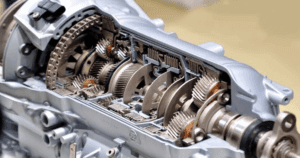 That’s when I realized: the gearbox isn’t just a mechanical part, it’s the heart of how your car delivers power. In this guide, I’ll break everything down in a simple, readable way.
Whether you’re a beginner or someone looking to understand your car better, this article will give you real-world insights, practical tips, and honest advice.
What Is a Gearbox in a Car?
A gearbox (also called a transmission) is a system of gears that controls how power from the engine is transferred to the wheels.
In simple terms:
👉 The gearbox helps your car:
- Move from a stop
- Accelerate smoothly
- Maintain speed
- Use fuel efficiently
Without a gearbox, your engine would either stall or run uncontrollably fast.
How a Gearbox Works (Easy Explanation)
Your engine produces power at a limited speed range. But your car needs different speeds and torque depending on the situation. That’s where the gearbox comes in.
Here’s what it does:
- Low gears (1st, 2nd): High torque, low speed → starting and climbing hills
- Mid gears (3rd, 4th): Balanced → city driving
- High gears (5th, 6th): Low torque, high speed → highways
Think of it like a bicycle:
- Low gear → easier pedaling uphill
- High gear → faster movement on flat roads
Types of Car Gearboxes
There are several types of gearboxes, each with its own feel and benefits.
1. Manual Gearbox
You change gears yourself using a clutch pedal and a gear stick.
My experience:
More control, more engaging, but it can be tiring in traffic.
Best for:
- Driving enthusiasts
- Budget buyers
- Rural or less congested areas
2. Automatic Gearbox
The car shifts gears for you automatically.
My experience:
Super convenient, especially in heavy traffic.
Best for:
- City driving
- Beginners
- Comfort seekers
3. CVT (Continuously Variable Transmission)
No fixed gears, just a smooth transition between speeds.
My experience:
Very smooth, but sometimes feels less powerful.
Best for:
- Fuel efficiency
- Smooth driving
4. Dual-Clutch Transmission (DCT)
Uses two clutches for faster gear shifts.
My experience:
Lightning-fast shifts feel sporty!
Best for:
- Performance cars
- Quick acceleration
Gearbox Types Comparison Table
| Feature | Manual Gearbox | Automatic Gearbox | CVT | DCT |
| Ease of Use | Medium | Very Easy | Very Easy | Easy |
| Fuel Efficiency | High | Medium | Very High | High |
| Maintenance Cost | Low | Medium | Medium | High |
| Driving Experience | Engaging | Comfortable | Smooth | Sporty |
| Traffic Comfort | Low | High | High | High |
| Initial Cost | Low | High | Medium | High |
Why the Gearbox Is So Important
A good gearbox can completely change how your car feels.
Key benefits:
- Better fuel efficiency
- Smoother driving
- Improved engine life
- Better control over speed
Without it, your car would struggle to function properly.
Signs Your Gearbox Might Be Failing
From personal experience (and a costly repair 😅), here are warning signs you should never ignore:
- Difficulty shifting gears
- Grinding or shaking
- Delayed acceleration
- Strange noises (whining or clunking)
- Burning smell
- Gear slipping
👉 If you notice these, get your car checked immediately.
Buyer’s Guide: Choosing the Right Gearbox
Buying a car? The gearbox you choose matters more than you think.
1. Consider Your Driving Environment
- City traffic (like Dhaka): Automatic or CVT
- Highway driving: Manual or DCT
- Mixed use: Automatic
2. Think About Comfort vs Control
- Want control? → Manual
- Want convenience? → Automatic
3. Budget Matters
- Manual cars are cheaper
- Automatics cost more upfront and in maintenance
4. Fuel Efficiency
- Best: CVT
- Good: Manual
- Average: Automatic
5. Maintenance and Repairs
- Manual → cheapest
- DCT → expensive repairs
- CVT → moderate but requires proper care
My Honest Opinion (Real Talk)
After driving both manual and automatic cars:
- Manual: Fun, but tiring in traffic
- Automatic: Stress-free, especially in cities
- CVT: Smooth but slightly boring
- DCT: Amazing but expensive
👉 If I had to choose today for daily use:
I’d go with an automatic gearbox without hesitation.
Maintenance Tips for Longer Gearbox Life
Want your gearbox to last? Follow these:
- Change transmission fluid regularly
- Don’t ride the clutch (manual cars)
- Avoid sudden acceleration
- Use the correct gear
- Don’t overload your car
- Service your car on time
Common Gearbox Myths (Busted)
Myth 1: Automatic cars use more fuel
👉 Not always true anymore, modern automatics are efficient
Myth 2: Manual is always better
👉 Depends on your needs
Myth 3: The gearbox never needs maintenance
👉 Completely false neglect = expensive repairs
Long Detailed Expansion (Deep Dive)
Let’s go deeper into how the gearbox impacts real-world driving.
1. Gear Ratios Explained
Each gear has a ratio that determines:
- Speed
- Torque
Lower gears = more power
Higher gears = more speed
2. Torque vs Speed Balance
The gearbox ensures your engine doesn’t:
- Overwork at high speed
- Stall at low speed
It keeps everything balanced.
3. Role in Fuel Efficiency
A well-functioning gearbox:
- Keeps engine RPM optimal
- Reduces fuel consumption
- Improves mileage
4. Driving Feel & Performance
- Manual → raw control
- Automatic → smooth comfort
- DCT → performance edge
5. Real-Life Scenario
Traffic jam in Dhaka:
- Manual = constant clutch use → tiring
- Automatic = just brake & go → stress-free
6. Gearbox and Engine Relationship
They work together like a team:
- Engine = power source
- Gearbox = power manager
Without proper coordination, performance suffers.
Read More: How To Read an Engine Oil Dipstick
FAQs: What Is a Gearbox in a Car? | My Honest, Practical Guide
1. What does a gearbox do in a car?
It controls how engine power is delivered to the wheels for speed and torque.
2. Which gearbox is best?
- City: Automatic or CVT
- Performance: DCT
- Budget: Manual
3. Is manual better than automatic?
Not necessarily depend on your needs and driving style.
4. How long does a gearbox last?
Typically, 150,000–300,000 km with proper maintenance.
5. Can you drive with a bad gearbox?
You can, but it’s risky and may cause bigger damage.
6. Is gearbox repair expensive?
Yes, especially for automatic and DCT systems.
7. How often should gearbox oil be changed?
Usually every 40,000–100,000 km, depending on the car.
Final Thoughts
The gearbox is one of the most important parts of your car, but it’s often overlooked until something goes wrong.
Understanding it gives you:
- Better driving control
- Smarter buying decisions
- Lower maintenance costs
If you ask me? 👉 Choosing the right gearbox can make or break your driving experience.