Have you ever started your car on a chilly morning only to hear the radiator cooling fan immediately spinning at full speed? If so, you’re probably wondering, “Why is my cooling fan running when the engine is still cold?”
As a car owner who enjoys performing basic vehicle maintenance, I’ve encountered this issue more than once. The first time it happened, I assumed the engine was overheating.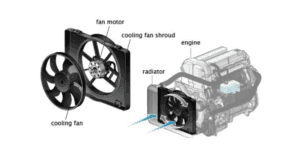 However, after a little investigation, I discovered that a cooling fan running on a cold engine usually points to an electrical problem, sensor failure, or control system issue rather than actual overheating.
The cooling fan plays a critical role in regulating engine temperature. Under normal circumstances, it should only activate when the engine reaches a specific temperature or when the air conditioning system requires additional airflow.
If it runs immediately after startup, something isn’t operating as intended. In this guide, we’ll explore the most common reasons a cooling fan comes on when a car is cold, how to diagnose the problem, potential repair costs, and how to prevent future issues.
Quick Overview: Common Causes
| Cause | Symptoms | Difficulty in Fixing | Typical Cost |
| Faulty coolant temperature sensor | The fan runs constantly | Easy | $20-$150 |
| Bad fan relay | The fan stays on all the time | Easy | $15-$80 |
| Faulty engine control module (ECM) | Erratic fan behavior | Difficult | $300-$1,500 |
| Shorted wiring | Fan activates unexpectedly | Moderate | $50-$500 |
| Defective fan control module | Continuous fan operation | Moderate | $100-$600 |
| AC pressure sensor malfunction | Fan runs with a cold engine | Moderate | $75-$300 |
| Software issue | Incorrect fan commands | Moderate | $100-$250 |
| Stuck thermostat sensor signal | False overheating reading | Moderate | $50-$300 |
How the Cooling Fan System Works
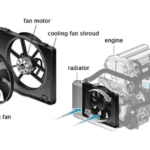
Before diagnosing the problem, it helps to understand how the cooling system functions. Modern vehicles use electric radiator fans controlled by the vehicle’s computer. Several components work together:
- Coolant temperature sensor
- Engine Control Module (ECM)
- Fan relay
- Fan motor
- Wiring harness
- Thermostat
- AC pressure sensors
When coolant temperature reaches a predetermined level, the ECM signals the relay, which powers the cooling fan.
If any component sends incorrect information, the fan may run even though the engine is cold.
Why Does the Cooling Fan Come On When the Engine Is Cold?
1. Faulty Coolant Temperature Sensor
- The coolant temperature sensor is one of the most common culprits.
- This sensor measures engine coolant temperature and reports it to the ECM.
- When the sensor fails, it may falsely indicate that the engine is overheating.
- As a safety precaution, many vehicles automatically run the cooling fan continuously whenever the temperature signal appears abnormal.
Symptoms
- Cooling fan starts immediately
- Check Engine light appears
- Poor fuel economy
- Hard starting
Solution
Replacing the coolant temperature sensor usually solves the issue.
2. Bad Cooling Fan Relay
- The relay acts like an electrical switch.
- A relay can become stuck in the closed position due to age, corrosion, or internal damage.
- When this occurs, electrical power constantly reaches the fan motor.
Symptoms
- The fan never turns off
- The battery drains overnight
- The fan operates with the ignition off
Solution
- Replace the faulty relay.
- This is typically one of the least expensive repairs.
3. Defective Fan Control Module
- Many modern vehicles use a dedicated fan control module.
- This component manages cooling fan speed and operation.
- When the module fails, it can command the fan to run continuously regardless of engine temperature.
Symptoms
- The fan starts immediately after ignition
- Fan speed remains high
- Temperature readings appear normal
Solution
Module testing and replacement may be required.
4. Shorted Wiring
Electrical shorts can create unexpected fan activation. Damaged wiring may occur because of:
- Rodent damage
- Heat exposure
- Corrosion
- Previous repair mistakes
Symptoms
- Intermittent fan operation
- Blown fuses
- Electrical gremlins
Solution
Inspect wiring harnesses and repair damaged sections.
5. Faulty Air Conditioning Pressure Sensor
Most vehicles automatically run cooling fans whenever the air conditioning system operates.
If the AC pressure sensor malfunctions, it can trick the computer into believing the AC system requires maximum cooling.
Symptoms
- Fan activates immediately
- AC performance issues
- Irregular compressor cycling
Solution
Replace the faulty pressure sensor.
6. Engine Control Module Problems
The ECM controls numerous vehicle systems. Though rare, ECM failures can produce incorrect cooling fan commands.
Symptoms
- Multiple electrical issues
- Random warning lights
- Fan operation problems
Solution
Professional diagnosis is usually required.
7. Fail-Safe Mode Activation
Many manufacturers design vehicles to enter a protective mode when sensor data becomes unavailable.
Instead of risking engine overheating, the ECM activates the cooling fan continuously.
Symptoms
- The fan runs at full speed
- Check Engine light appears
- Stored diagnostic codes
Solution
Repair the sensor or communication fault causing fail-safe operation.
Normal Situations Where the Fan May Run Briefly
Not every fan operation indicates a problem. Situations where fan activity can be normal include:
Air Conditioning Operation
Turning on the AC often activates radiator fans.
Hot Weather Conditions
High ambient temperatures can trigger fan operation quickly.
After-Run Cooling
Some vehicles continue running fans after shutdown.
Regeneration Cycles
Diesel vehicles may operate fans during emissions system regeneration.
Comparison Table: Normal vs Problematic Fan Operation
| Condition | Normal? | Action Needed |
| The fan turns on after the engine warms up | Yes | None |
| Fan runs with AC on | Yes | None |
| The fan runs briefly after shutdown | Yes | None |
| The fan runs immediately on cold startup | Usually No | Diagnose |
| The fan stays on continuously | No | Inspect system |
| Fan drains battery overnight | No | Repair required |
| The fan runs with the ignition off | Usually No | Check relay |
How to Diagnose a Cooling Fan Running on a Cold Engine
Step 1: Check Engine Temperature Reading
Observe dashboard temperature gauges. An inaccurate reading may indicate sensor problems.
Step 2: Scan for Trouble Codes
Use an OBD-II scanner. Common codes include:
- P0115
- P0116
- P0117
- P0118
- P0480
- P0481
Step 3: Inspect Relays
Swap identical relays if possible. If the issue disappears, the relay is likely faulty.
Step 4: Check Coolant Sensor Data
Using a scan tool, compare sensor readings with actual engine temperature. A cold engine reading of 250°F indicates sensor failure.
Step 5: Inspect Wiring
Look for:
- Broken insulation
- Corrosion
- Burn marks
- Loose connectors
Can You Drive with the Cooling Fan Running Constantly?
Usually, yes. The fan itself does not harm the engine. However, the underlying problem may affect:
- Fuel economy
- Battery life
- Electrical system performance
- Engine management
Driving temporarily is often safe, but diagnosis should not be delayed.
Repair Costs
| Repair | Estimated Cost |
| Coolant temperature sensor | $20-$150 |
| Fan relay replacement | $15-$80 |
| Wiring repair | $50-$500 |
| Fan control module | $100-$600 |
| AC pressure sensor | $75-$300 |
| ECM replacement | $300-$1,500 |
| Diagnostic inspection | $50-$200 |
My Personal Experience
A few years ago, my cooling fan began running at maximum speed every time I started my vehicle, even during winter mornings. At first, I suspected a thermostat issue. After connecting a scan tool, I noticed the coolant temperature sensor was reporting an impossible reading of 284°F despite the engine sitting overnight.
Replacing a relatively inexpensive sensor fixed the problem immediately. This experience reinforced how a small sensor can create symptoms that seem much more serious than they actually are.
Preventing Cooling Fan Problems
Follow these maintenance tips:
Replace Sensors When Needed
Don’t ignore temperature-related trouble codes.
Keep Electrical Connections Clean
Corrosion can create false signals.
Perform Cooling System Maintenance
Regular coolant service protects sensors and components.
Protect Wiring
Repair damaged insulation promptly.
Address Check Engine Lights Early
Small issues often become larger problems when ignored.
Buyer’s Guide: Tools for Diagnosing Cooling Fan Issues
If you perform your own maintenance, consider these tools.
OBD-II Scanner
A scanner helps identify sensor and cooling-system faults.
Benefits
- Reads diagnostic codes
- Displays live temperature data
- Saves diagnostic time
Digital Multimeter
Useful for testing:
- Relays
- Wiring
- Sensor voltage
Infrared Thermometer
Allows comparison of actual engine temperature versus sensor readings.
Wiring Test Light
Helpful for tracing power delivery to fan circuits.
Signs You Need Professional Help
Seek professional diagnosis if:
- The fan continues running after replacing the sensors.
- Multiple fault codes exist.
- Wiring damage is extensive.
- ECM problems are suspected.
- The battery repeatedly dies.
Professional equipment can quickly identify advanced electrical faults.
Read More: Car AC Condenser VS Compressor
FAQs: Cooling Fan Comes On When Car Is Cold
Why does my radiator fan run when the engine is cold?
A faulty coolant temperature sensor, bad relay, damaged wiring, or a fan control module problem is usually responsible.
Is it safe to drive with the cooling fan always on?
Generally, yes, but the underlying fault should be diagnosed as soon as possible.
Can a bad thermostat cause the fan to run continuously?
Indirectly, yes. However, sensor and relay failures are more common causes.
Will a cooling fan running constantly drain the battery?
Yes. If the fan remains on after the engine is off, battery drain can occur.
How much does it cost to fix a cooling fan that stays on?
Repairs range from about $20 for a sensor replacement to over $1,500 for ECM-related issues.
Can low coolant cause the cooling fan to run?
Yes. Low coolant can create inaccurate temperature readings and trigger fan operation.
How do I know if my coolant temperature sensor is bad?
Common signs include incorrect temperature readings, poor fuel economy, check engine lights, and cooling fans running unexpectedly.
What happens if I ignore the problem?
You may experience battery drain, reduced fuel efficiency, premature fan wear, and potential cooling system issues.
Can a blown fuse cause the fan to stay on?
Typically no. A blown fuse usually prevents the fan from operating.
Does the AC system affect radiator fan operation?
Yes. Most vehicles activate cooling fans whenever the air conditioning system is running.
Final Thoughts
A cooling fan that comes on when the car is cold is usually a sign of an electrical or sensor-related issue rather than actual engine overheating. In many cases, the culprit is a faulty coolant temperature sensor, a bad relay, damaged wiring, or a malfunctioning fan control module.
The good news is that most causes are relatively affordable to diagnose and repair. Addressing the issue promptly prevents unnecessary battery drain, excessive fan wear, and potential engine management problems.
If your cooling fan starts running immediately every time you start a cold engine, begin with a scan tool and basic inspection. A little troubleshooting can often save significant repair costs and restore normal cooling system operation.