If you’ve ever popped the hood of your car and felt overwhelmed by the maze of components, you’re not alone. One of those lesser-known but incredibly important parts is the EGR valve, short for Exhaust Gas Recirculation valve.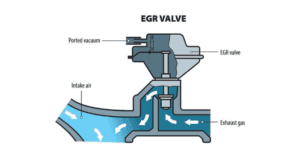 At first glance, it sounds technical and maybe even unnecessary. But here’s the truth: the EGR valve plays a crucial role in your engine’s efficiency, emissions, and even long-term durability.
I didn’t pay attention to mine until my car started idling roughly and throwing a warning light. After digging into it, I realized just how central this small component is and why ignoring it can cost you.
What Does an EGR Valve Do?
At its core, the EGR valve reduces harmful emissions by recycling a portion of your engine’s exhaust gases back into the combustion chamber.
Simple Explanation:
Instead of letting all exhaust gases leave the engine, the EGR valve redirects some of them back inside. This might sound counterintuitive, but it serves a very specific purpose.
Why This Matters:
When fuel burns inside your engine, it produces extremely high temperatures. These temperatures create nitrogen oxides (NOx), harmful pollutants.
The EGR valve helps by:
- Lowering combustion temperature
- Reducing NOx emissions
- Improving environmental performance
How the EGR Valve Works (In Everyday Terms)
Think of your engine like a fire. The hotter it burns, the more pollution it creates. The EGR valve acts like a temperature regulator.
Step-by-Step:
- The engine produces exhaust gases
- EGR valve opens (under certain conditions)
- A small amount of exhaust is redirected back
- This cools down the combustion process
- Result: fewer harmful emissions
Modern vehicles control this process electronically, while older cars use vacuum-operated valves.
Types of EGR Valves
Not all EGR valves are the same. Depending on your car’s age and design, you’ll likely encounter one of these:
| Type | Description | Pros | Cons |
| Vacuum-Controlled EGR | Uses engine vacuum to operate | Simple, inexpensive | Less precise |
| Electronic EGR Valve | Controlled by the ECU (computer) | Accurate, efficient | More expensive |
| Digital EGR Valve | Multiple solenoids for control | High precision | Complex |
| EGR Cooler System | Cool the exhaust before recirculation | Better efficiency | Higher maintenance |
My Personal Experience With an EGR Valve Issue
I first noticed something was off when my car started:
- Idling roughly
- Losing power during acceleration
- Consuming more fuel
At first, I suspected fuel injectors or spark plugs. But after scanning the engine, it pointed to the EGR valve. Cleaning it made a noticeable difference, but eventually, I had to replace it.
Lesson learned:
Ignoring a failing EGR valve doesn’t just affect emissions; it impacts performance and fuel economy, too.
Signs of a Bad EGR Valve
If your EGR valve isn’t working properly, your car will usually give you clues.
Common Symptoms:
- Rough idle
- Engine knocking
- Reduced fuel efficiency
- Check engine light
- Increased emissions
- Stalling (in severe cases)
What’s Actually Happening:
- Stuck open → too much exhaust → engine struggles
- Stuck closed → overheating → higher emissions
Benefits of a Properly Working EGR Valve
Let’s be fair,r the EGR valve isn’t just there to meet regulations.
Real Benefits:
- Lower emissions
- Better fuel efficiency (in many cases)
- Reduced engine knocking
- Longer engine life
Downsides of EGR Valves
Nothing is perfect, CT,t and the EGR valve has its drawbacks.
Cons:
- Carbon buildup over time
- Can clog easily
- Requires periodic cleaning
- Replacement can be costly
Comparison Table: Clean vs Faulty EGR Valve
| Feature | Clean EGR Valve | Faulty EGR Valve |
| Engine Performance | Smooth | Rough/inconsistent |
| Fuel Efficiency | Optimal | Reduced |
| Emissions | Low | High |
| Engine Temperature | Controlled | Too high or unstable |
| Maintenance Needs | Minimal | Frequent |
| Driving Experience | Comfortable | Jerky/sluggish |
Should You Clean or Replace Your EGR Valve?
This is one of the most common questions,ons and the answer depends on the condition.
Cleaning is enough if:
- Carbon buildup is minor
- Valve still moves properly
- No electronic failure
Replacement is better if:
- Valve is stuck
- Electrical components fail
- Repeated clogging happens
Buyer’s Guide: Choosing the Right EGR Valve
If you’re planning to replace your EGR valve, here’s how to make a smart choice.
1. Compatibility Is Everything
Always check:
- Vehicle make and model
- Engine type
- Year
Even a small mismatch can cause issues.
2. OEM vs Aftermarket
OEM (Original Equipment Manufacturer)
- Perfect fit
- Reliable performance
- Higher price
Aftermarket
- More affordable
- Wide variety
- Quality varies
3. Material Quality
Look for:
- Heat-resistant metals
- Carbon-resistant coatings
4. Warranty
A good EGR valve should come with at least:
- 6–12 months warranty
5. Ease of Installation
Some valves are:
- Plug-and-play
- Others require professional installation
6. Price Range (General Idea)
- Budget: $50–$100
- Mid-range: $100–$250
- Premium: $250+
Maintenance Tips (That Actually Work)
From experience, prevention saves money.
What helps:
- Regular engine cleaning
- Using high-quality fuel
- Occasional long drives (burns carbon)
- Periodic inspection
Long-Form Deep Dive: Why the EGR Valve Exists (Expanded Insight)
To truly understand the EGR valve, we need to zoom out. Modern engines are designed to balance:
- Performance
- Efficiency
- Environmental impact
Without an EGR system, engines would:
- Run hotter
- Produce more NOx
- Fail emission standards
Governments worldwide enforce emission regulations, and the EGR valve is one of the simplest yet most effective solutions.
Interestingly, while it helps the environment, it also indirectly:
- Protects engine components
- Reduces wear caused by extreme heat
However, the trade-off is carbon buildup, which is why maintenance becomes essential.
Is It Safe to Drive With a Bad EGR Valve?
Short answer: Yes, but not for long.
Risks:
- Engine damage over time
- Poor fuel economy
- Failed emissions test
- Potential stalling
Read More: What Does an Oxygen Sensor Do In A car
FAQs: What Does EGR Valve Do? A Clear, Honest And Practical Guide
1. Can I drive without an EGR valve?
Technically, yes, but it’s not recommended. You’ll increase emissions and risk engine issues.
2. How often should I clean the EGR valve?
Every 30,000 to 50,000 km, depending on driving conditions.
3. Is replacing an EGR valve expensive?
It depends on your car, but it typically ranges from moderate to expensive.
4. Can a bad EGR valve cause overheating?
Yes. If it’s stuck closed, combustion temperatures rise.
5. Will cleaning improve performance?
If carbon buildup is the issue, yes, significantly.
6. What causes EGR valve failure?
- Carbon buildup
- Electrical failure
- Wear over time
7. Can I clean it myself?
Yes, if you’re comfortable with basic tools. Otherwise, a mechanic is safer.
8. Does every car have an EGR valve?
Most modern vehicles do, especially diesel engines.
9. What happens if it’s stuck open?
Your engine may run rough or stall.
10. Is it worth fixing immediately?
Yes. Delaying can lead to bigger, more expensive problems.
Final Thoughts: Small Part, Big Impact
The EGR valve might not be the most exciting part of your car, but it’s definitely one of the most important.
From reducing emissions to improving engine efficiency, it quietly does a lot of heavy lifting. Ignore it, and your car will let you know,w usually at the worst possible time.
If there’s one takeaway here, it’s this: Don’t wait for failure. Maintain it early, and you’ll save money, fuel, and frustration.