I’ll be honest, when I first heard about the EGR valve, I had no idea what it actually did. All I knew was my car had rough idling, poor fuel economy, and a glowing check engine light.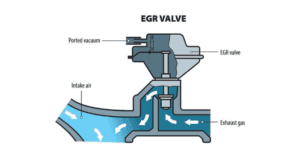 After some digging, the culprit turned out to be a clogged EGR valve. Once cleaned, the car ran smoother instantly. That’s when it clicked:
👉 The EGR valve might be small, but it plays a huge role in how your engine runs and how clean your emissions are.
Let’s break it down in simple terms.
What Does the EGR Valve Do?
The EGR valve (Exhaust Gas Recirculation valve) reduces harmful emissions by recirculating a portion of exhaust gases back into the engine.
In Simple Terms:
👉 It sends some exhaust gas back into the combustion chamber.
Why This Matters:
- Lowers combustion temperature
- Reduces nitrogen oxide (NOx) emissions
- Improves engine efficiency in certain conditions
👉 It’s mainly an emissions control device, but it also affects performance.
How the EGR Valve Works
Here’s a simple step-by-step explanation:
- Engine produces exhaust gases
- EGR valve opens (under certain conditions)
- A portion of exhaust is redirected back into the intake
- This mixes with fresh air-fuel mixture
- Combustion temperature drops
👉 Lower temperature = fewer harmful emissions.
Types of EGR Valves
1. Mechanical EGR Valve
- Operated by vacuum
- Found in older vehicles
2. Electronic EGR Valve
- Controlled by ECU (computer)
- More precise and efficient
EGR Valve Comparison Table
| Feature | Mechanical EGR Valve | Electronic EGR Valve |
| Control Method | Vacuum-based | ECU-controlled |
| Precision | Low | High |
| Reliability | Moderate | High |
| Maintenance | Easier | Slightly complex |
| Found In | Older cars | Modern vehicles |
Key Benefits of the EGR Valve
1. Reduces Emissions
Helps your car meet environmental standards.
2. Improves Fuel Efficiency
Under certain conditions, it can improve combustion efficiency.
3. Prevents Engine Knock
Lower combustion temperature reduces knocking.
4. Protects Engine Components
Less heat = less stress on engine parts.
My Honest Experience
From personal experience:
- A clogged EGR valve can make your car feel sluggish
- Cleaning it can instantly improve performance
- Ignoring it leads to bigger issues over time
👉 My rule:
If symptoms appear, check the EGR valve early; it’s often an easy fix.
Symptoms of a Bad EGR Valve
1. Rough Idling
Engine shakes or feels unstable at idle.
2. Poor Fuel Economy
Burning more fuel than usual.
3. Engine Knocking
Due to higher combustion temperatures.
4. Check Engine Light
Common warning sign.
5. Reduced Performance
The car feels underpowered.
Repair vs Replacement Comparison Table
| Factor | Cleaning / Repair | Replacement |
| Cost | Low | Medium |
| Time Required | 1–2 hours | 1–3 hours |
| Effectiveness | Temporary (if worn) | Long-term solution |
| Difficulty | Moderate | Moderate |
| Best For | Carbon buildup | Severe damage/failure |
What Causes EGR Valve Failure?
- Carbon buildup (most common)
- Poor fuel quality
- Short trips (engine doesn’t heat enough)
- Lack of maintenance
👉 Over time, exhaust deposits clog the valve.
How to Clean an EGR Valve (Basic Guide)
⚠️ Always check your car manual first.
Steps:
- Disconnect battery
- Locate EGR valve
- Remove bolts and detach
- Spray with EGR cleaner
- Scrub carbon deposits
- Reinstall and test
👉 Cleaning often restores function.
Cost Breakdown
| Service Type | Estimated Cost (USD) |
| Cleaning | $20 – $50 |
| New EGR valve | $100 – $400 |
| Labor | $50 – $150 |
Buyer’s Guide: Choosing an EGR Valve
If replacement is needed, keep these in mind:
1. OEM vs Aftermarket
- OEM → best reliability
- Aftermarket → cheaper but varies
2. Compatibility
Match:
- Make
- Model
- Engine type
3. Build Quality
Look for:
- Heat-resistant materials
- Strong seals
4. Warranty
At least 6–12 months recommended.
5. Reviews & Brand Reputation
Avoid unknown brands with poor feedback.
Can You Drive Without an EGR Valve?
Technically yes but it’s not recommended.
Why:
- Increased emissions
- Engine knocking risk
- Possible engine damage
- Legal issues in many areas
👉 Removing it is usually a bad idea.
Maintenance Tips
- Use good-quality fuel
- Drive at highway speeds occasionally
- Clean EGR periodically
- Fix issues early
👉 Prevention saves money.
Common Mistakes to Avoid
❌ Ignoring early symptoms
❌ Replacing instead of cleaning first
❌ Using low-quality parts
❌ Deleting EGR system (can cause issues)
Read More: Is Bimmer Plug Legit
FAQs: What Does The EGR Valve Do
1. What is the main function of the EGR valve?
It reduces emissions by recirculating exhaust gases into the engine.
2. Can a bad EGR valve damage the engine?
Yes, it can lead to overheating and knocking.
3. How often should I clean it?
Every 30,000–50,000 miles (varies by car).
4. Is it expensive to replace?
Moderate cost compared to other engine parts.
5. What happens if it gets stuck open?
Rough idle and poor performance.
6. What happens if it gets stuck closed?
Higher emissions and engine knocking.
7. Should I clean or replace it?
- Minor issue → clean
- Severe damage → replace
Final Verdict
The EGR valve is one of those parts that most drivers overlook until something goes wrong. But once you understand it, the importance becomes clear:
👉 It keeps your engine running cooler, cleaner, and more efficiently. From my experience:
- Cleaning is often enough
- Replacement is sometimes necessary
- Ignoring it is always a mistake
Final Thought
The EGR valve may not boost performance, but it protects your engine and the environment. And that makes it one of the most underrated components in your car.