If you’ve ever driven a car, whether it’s a manual stick shift or a smooth automatic, you’ve already relied heavily on one of the most important components under the hood: the gearbox.
I remember the first time I drove a manual car. I kept stalling at every signal because I didn’t understand how the gears worked together with the engine.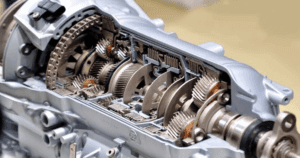 Once it clicked, though, everything made sense. The gearbox wasn’t just a “gear changer,” it was the system that made driving efficient, smooth, and even enjoyable.
So what exactly does the gearbox do? In simple terms: 👉 The gearbox controls how power from the engine is delivered to the wheels.
But that’s just scratching the surface. Let’s break it down in a way that actually makes sense, even if you’re not a car expert.
What Does a Gearbox Do?
The gearbox (also called a transmission) adjusts the speed and torque of your car by changing gear ratios.
In Practical Terms:
- Helps your car start moving from a stop
- Lets you accelerate smoothly
- Keeps engine RPM in an efficient range
- Allows high-speed driving without overworking the engine
Think of It Like This:
Imagine riding a bicycle:
- Low gear = easy pedaling, slow speed (like starting a car)
- High gear = harder pedaling, faster speed
A car gearbox does the same thing, but automatically or manually, depending on the type.
How a Gearbox Works (Simple Explanation)
Here’s a beginner-friendly breakdown:
- The engine produces power (rotational force)
- The gearbox receives that power
- It adjusts the power using different gear ratios
- Sends optimized power to the wheels
Why This Matters:
- Engines can’t efficiently operate at all speeds
- Gearboxes translate engine power into usable motion
Types of Gearboxes (Quick Overview)
There are several types of gearboxes used in modern cars:
1. Manual Transmission
- The driver shifts gears using a clutch and a gear lever
- Full control over gear selection
2. Automatic Transmission
- The car shifts gears automatically
- Smooth and easy driving
3. CVT (Continuously Variable Transmission)
- No fixed gears
- Seamless acceleration
4. Dual-Clutch Transmission (DCT)
- Combines manual efficiency with automatic convenience
- Very fast gear changes
Gearbox Types Comparison Table
| Feature | Manual Gearbox | Automatic Gearbox | CVT | Dual-Clutch (DCT) |
| Ease of Use | Medium | Very Easy | Very Easy | Easy |
| Fuel Efficiency | High | Medium | High | Very High |
| Driving Control | Full Control | Limited | Limited | High |
| Maintenance Cost | Low | Medium to High | Medium | High |
| Performance | Good | Smooth | Smooth (less sporty) | Excellent |
| Best For | Enthusiasts | City driving | Economy & comfort | Performance driving |
Why the Gearbox Is So Important
Without a gearbox, your car would:
- Struggle to start moving
- Stall frequently
- Over-rev at high speeds
- Waste fuel
Key Benefits:
✔ Smooth acceleration
✔ Better fuel economy
✔ Engine protection
✔ Improved driving comfort
My Personal Take (Experience-Based Insight)
After driving both manual and automatic cars over the years, here’s what stood out:
- Manual gearboxes give you full control, great for highways and enthusiasts
- Automatics are a blessing in heavy traffic
- CVTs feel weird at first but are incredibly efficient
- DCTs are insanely fast but can be expensive to maintain
👉 If you drive daily in traffic-heavy areas, automatic wins.
👉 If you love driving, a manual still has a charm that nothing can replace.
Buyer’s Guide: Choosing the Right Gearbox
Choosing the right gearbox depends on your lifestyle, not just your budget.
1. Consider Your Driving Conditions
- City traffic → Automatic or CVT
- Highway driving → Manual or DCT
2. Budget Matters
- Manual = cheapest to buy and maintain
- Automatic/DCT = higher upfront and repair costs
3. Fuel Efficiency
- CVT and manual usually offer better mileage
4. Maintenance & Reliability
- Manual gearboxes are simpler and more durable
- DCT and advanced automatics need proper servicing
5. Driving Preference
Ask yourself:
- Do I enjoy driving? → Manual
- Do I want convenience? → Automatic
Deep Dive: Gearbox Function Explained (Expanded)
Let’s go deeper into what’s really happening inside a gearbox.
Gear Ratios Explained
Each gear has a specific ratio:
- Low gears = more torque, less speed
- High gears = more speed, less torque
Example:
- 1st gear → Helps you start moving
- 5th/6th gear → Helps you cruise efficiently
Torque vs Speed Balance
The gearbox balances:
- Torque (power to move)
- Speed (how fast you go)
Without this balance, your engine would either:
- Be too weak to move the car
- Or spin too fast and get damaged
Components Inside a Gearbox
A typical gearbox includes:
- Gears (different sizes)
- Shafts
- Clutch (manual cars)
- Torque converter (automatic cars)
- Synchronizers
Each part plays a role in delivering smooth power transitions.
Signs Your Gearbox Might Have Problems
Watch out for:
- Grinding noise
- Delayed gear shifts
- Slipping gears
- Burning smell
- Fluid leaks
Ignoring these can lead to expensive repairs.
Maintenance Tips (From Real Experience)
- Change transmission fluid regularly
- Avoid aggressive driving
- Don’t ride the clutch (manual cars)
- Service your car on schedule
👉 A well-maintained gearbox can last the life of the car.
Read More: Car Expansion Valve Stuck Open Symptoms
FAQs: What Does The Gearbox Do In A Car
1. What is the main function of a gearbox?
The gearbox adjusts engine power to provide the right balance of speed and torque for driving conditions.
2. Is a gearbox the same as a transmission?
Yes, both terms are often used interchangeably.
3. Which gearbox is best?
- Manual → best for control
- Automatic → best for comfort
- CVT → best for efficiency
- DCT → best for performance
4. Does the gearbox affect fuel economy?
Yes, an efficient gearbox improves mileage significantly.
5. How long does a gearbox last?
With proper maintenance, it can last over 150,000–200,000 miles.
6. What happens if the gearbox fails?
The car may not move, or it may lose power completely.
7. Is manual better than automatic?
It depends on preference; manual offers control, automatic offers convenience.
Final Verdict
The gearbox is one of those components you don’t think about until something goes wrong. But once you understand it, you realize it’s the heart of how your car actually moves efficiently.
If I had to sum it up: 👉 The gearbox doesn’t just change gears, it makes driving possible, efficient, and smooth.
Whether you’re buying a car or just learning how it works, understanding the gearbox puts you miles ahead of most drivers.