You start your car, turn on the air conditioner, and suddenly you hear an annoying high-pitched squealing noise from the engine bay. If this sounds familiar, you’re not alone.
One of the most common reasons drivers notice this issue is when the car belt starts squealing when the AC is turned on. I’ve personally experienced this on an older sedan during a hot summer drive.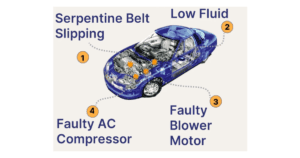 The moment the AC compressor kicked in, the engine produced a loud squeal for a few seconds. At first, it sounded alarming, but after investigating the problem, it turned out to be a worn serpentine belt combined with reduced tension.
This squealing noise usually comes from the serpentine belt slipping when the AC compressor engages. Since the air conditioning system places additional load on the engine belt, any weakness in the belt system quickly becomes noticeable.
In this complete guide, we’ll explore:
- Why car belts sdo queal when the AC is on
- Common causes of the noise
- How to diagnose the issue
- Possible fixes and repair costs
- When to replace belts or pulleys
- A buyer’s guide for replacement belts
Let’s begin with the basics.
Why Does a Car Belt Squeal When the AC Is On?
When the AC system is turned on, the AC compressor engages and starts spinning, which adds extra resistance to the serpentine belt.
If the belt or pulleys are worn, loose, or contaminated, the belt may slip across the pulley surfaces, creating a squealing noise.
Common Reasons
- Worn serpentine belt
- Loose belt tension
- Weak belt tensioner
- Bad AC compressor pulley
- Contaminated belt (oil or coolant)
- Misaligned pulleys
The squealing is basically friction noise caused by the belt slipping rather than gripping properly.
Serpentine Belt vs V-Belt (Comparison)
Not all vehicles use the same belt system. Older cars used V-belts, while modern vehicles typically use serpentine belts.
| Feature | Serpentine Belt | V-Belt |
| Design | Single long belt | Multiple belts |
| Drives Components | Alternator, AC, power steering, water pump | Usually, one component per belt |
| Durability | Longer lifespan | Shorter lifespan |
| Maintenance | Easier replacement | Multiple belts to maintain |
| Common in | Modern cars | Older vehicles |
Most modern cars experience AC squealing due to serpentine belt issues.
How the AC System Affects the Belt
Your car’s air conditioning system relies on the AC compressor, which is driven by the engine via the serpentine belt. When the AC turns on:
- The compressor clutch engages
- The compressor begins spinning
- Extra load is placed on the belt
- Weak belts start slipping
- A squealing noise occurs
This explains why the noise only happens when the AC is turned on.
Common Causes of Belt Squealing
1. Worn or Cracked Serpentine Belt
The most common reason for squealing is a worn belt. Over time, belts become:
- Dry
- Cracked
- Hardened
- Stretched
A worn belt loses grip on the pulleys, causing squealing.
Signs of a worn belt
- Visible cracks
- Fraying edges
- Glossy surface
- Chirping or squealing noises
2. Loose Belt Tension
If the belt tension is too low, the belt cannot grip the pulleys properly. This leads to:
- Slipping
- Noise
- Reduced accessory performance
Many vehicles use automatic belt tensioners, which can weaken over time.
3. Failing Belt Tensioner
The belt tensioner keeps the serpentine belt tight. When it fails, the belt becomes loose, especially when the AC compressor applies additional load.
Symptoms
- Belt squealing
- Belt fluttering
- Visible vibration
4. Bad AC Compressor
Sometimes the issue isn’t the belt, it’s the compressor itself. If the compressor is starting to fail, it may require more torque to spin, which causes the belt to slip.
Warning signs
- Loud squeal when the AC starts
- Grinding noise
- Weak cooling
5. Pulley Misalignment
If a pulley is slightly misaligned, the belt won’t sit correctly on the pulley grooves. This causes:
- Uneven belt wear
- Noise
- Reduced lifespan
6. Oil or Coolant on the Belt
Fluids leaking onto the belt can reduce traction. Common leaks include:
- Engine oil
- Coolant
- Power steering fluid
A contaminated belt often squeals loudly.
Comparison of Possible Causes and Fixes
| Problem | Noise Level | Difficulty to Fix | Typical Cost |
| Worn Serpentine Belt | Medium | Easy | $50 – $150 |
| Loose Belt | Medium | Easy | $0 – $50 |
| Bad Belt Tensioner | High | Moderate | $120 – $300 |
| Bad AC Compressor | Very High | Difficult | $400 – $1200 |
| Pulley Misalignment | Medium | Moderate | $100 – $400 |
| Fluid Contamination | Medium | Easy | $20 – $150 |
How to Diagnose Belt Squealing
Here are simple ways to identify the issue.
Step 1: Inspect the Belt
Look for:
- Cracks
- Fraying
- Shiny surface
Step 2: Listen Carefully
Turn on the AC and listen for:
- Brief squeal (belt slip)
- Continuous squeal (tension problem)
Step 3: Check Belt Tension
Push the belt gently. If it moves too easily, the tensioner may be weak.
Step 4: Check the Pulleys
Spin pulleys manually to check for:
- Grinding
- Resistance
- Wobbling
Is It Safe to Drive With a Squealing Belt?
Sometimes yes, but it’s not recommended. Ignoring the noise can lead to:
- Belt failure
- Loss of power steering
- Overheating
- Alternator failure
If the belt snaps, multiple systems stop working instantly.
How to Fix a Squealing Belt
1. Replace the Serpentine Belt
This is the most common solution. Serpentine belts typically last 60,000 to 100,000 miles.
2. Replace the Belt Tensioner
If the tensioner is weak, replacing it restores proper belt pressure.
3. Clean the Belt
If oil or coolant contaminates the belt, cleaning or replacing it helps.
4. Repair Leaks
Fix engine leaks that drip onto the belt.
5. Replace Faulty Pulleys
Bad pulleys should be replaced immediately.
Average Repair Costs
| Repair Type | Estimated Cost |
| Serpentine Belt Replacement | $80 – $200 |
| Belt Tensioner Replacement | $150 – $400 |
| Pulley Replacement | $120 – $300 |
| AC Compressor Replacement | $500 – $1200 |
Buyer’s Guide: Choosing the Best Replacement Belt
If you need a new serpentine belt, choosing the right one matters.
1. Belt Material
Look for belts made from EPDM rubber. These last longer and resist cracking.
2. Vehicle Compatibility
Always match the belt with your:
- Make
- Model
- Engine size
- Year
3. Trusted Brands
Reliable brands include:
- Gates
- Continental
- Dayco
- Bosch
These brands are widely trusted in the automotive industry.
4. Warranty
Many high-quality belts offer 1–5 year warranties.
5. Rib Design
Higher rib counts improve grip and reduce noise.
Preventing Belt Squealing
Preventive maintenance helps avoid belt noise.
Tips
- Inspect belts every 10,000 miles
- Replace belts every 60k–100k miles
- Fix fluid leaks immediately
- Check belt tension regularly
- Replace worn pulleys early
Regular maintenance can prevent unexpected breakdowns.
Read More: Car AC Parts Diagram
FAQs: Car Belt Squealing When AC Is On
Why does my car squeal when I turn on the AC?
The AC compressor adds extra load to the serpentine belt. If the belt is worn or loose, it may slip and produce a squealing noise.
Is a squealing belt dangerous?
It can be. A slipping belt may eventually break, which can disable important engine components.
How long does a serpentine belt last?
Most serpentine belts last 60,000 to 100,000 miles, depending on driving conditions.
Can belt dressing stop the squeal?
Belt dressing may temporarily reduce noise, but it does not fix the underlying problem.
How much does it cost to replace a serpentine belt?
Most replacements cost $80 to $200, including labor.
Why does the squealing stop after a few seconds?
Once the belt warms up or grips the pulley better, the slipping stops temporarily.
Can a bad AC compressor cause belt squealing?
Yes. A failing compressor may require more force to turn, which causes the belt to slip.
Final Thoughts
A car belt squealing when the AC is on is usually a warning sign that something in the belt system needs attention. In most cases, the issue is a worn serpentine belt or weak tensioner, both of which are relatively affordable repairs.
Ignoring the noise can eventually lead to bigger problems like belt failure, overheating, or alternator malfunction. Fortunately, with regular inspections and timely replacements, this problem is easy to prevent.
If your car starts squealing when the AC kicks in, take it as an early signal to check the belt system. Your engine will thank you later.