If there’s one simple habit that can save your engine from serious (and expensive) damage, it’s checking your car’s oil regularly. I didn’t take it seriously when I first started driving. I assumed the dashboard warning light would tell me if something was wrong. It turns out that by the time light comes on, the damage might already be happening.
Learning how to check oil in a car takes less than 5 minutes, and it can literally add years to your engine’s life. In this complete, easy-to-follow guide, I’ll walk you through:
- Why engine oil is so important
- How to check oil step-by-step
- When to check it
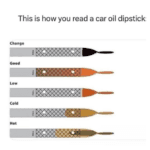
- Whatdoes oil color means
- Common mistakes
- A comparison table
- A buyer’s guide
- FAQs
- And pro tips from real-world experience
Let’s get started.
Why Checking Engine Oil Is So Important
Engine oil is the lifeblood of your car’s engine. It:
- Lubricates moving parts
- Reduces friction
- Prevents overheating
- Cleans internal components
- Protects against corrosion
Without enough oil, engine parts grind against each other. That friction creates extreme heat, leading to:
- Engine knocking
- Seized pistons
- Complete engine failure
And trust me, replacing an engine costs far more than checking oil once a month.
How To Check Oil In Car (Step-by-Step Guide)
Checking your oil is simple. Here’s exactly how to do it properly.
Step 1: Park on Level Ground
Make sure your car is parked on flat ground. This ensures an accurate oil reading.
Step 2: Turn Off the Engine
Turn off the engine and wait at least 5–10 minutes. This allows oil to settle in the oil pan.
Pro tip: Checking oil when the engine is slightly warm (but not hot) gives the most accurate reading.
Step 3: Open the Hood
Locate the hood release lever inside your car and open the hood securely.
Step 4: Find the Dipstick
The dipstick usually has:
- A bright yellow, orange, or red handle
- An oil can symbol
It’s easy to spot.
Step 5: Pull Out the Dipstick
Pull it out completely and wipe it clean with a paper towel or rag.
Step 6: Reinsert Fully
Push the dipstick back in all the way.
Step 7: Pull It Out Again and Checkthe Level
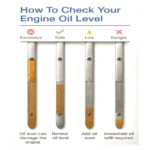
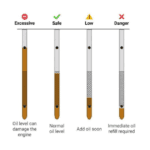
Look at the oil level markings:
- MIN / LOW
- MAX / FULL
The oil should be between these two marks. If it’s below MIN, you need to add oil immediately.
Understanding Oil Level Markings
Most dipsticks have:
- Two dots
- Two lines
- Cross-hatched area
Oil should sit within that safe zone. If it’s above the MAX line, that can also cause problems. Too much oil can:
- Create pressure buildup
- Damage seals
- Cause leaks
What Color Should Engine Oil Be?
Here’s a helpful comparison:
| Oil Color | What It Means | Action Needed |
| Light amber | Fresh oil | No action |
| Dark brown | Normal used oil | Change soon |
| Black | Dirty oil | Change immediately |
| Milky | Coolant contamination | See mechanic |
| Metallic particles | Internal wear | Urgent inspection |
Fresh oil is usually golden. Over time, it turns darker as it collects contaminants.
How Often Should You Check Engine Oil?
General rule:
- Once a month
- Before long road trips
- If the engine sounds unusual
- If the oil warning light flickers
If your vehicle is older or consumes oil, check more often.
Signs Your Car Is Low On Oil
Watch for:
- Oil warning light
- Engine ticking noise
- Burning oil smell
- Overheating
- Poor performance
Never ignore these signs.
What Happens If You Don’t Check Oil?
Neglecting oil checks can lead to:
- Increased engine wear
- Sludge buildup
- Reduced fuel efficiency
- Complete engine failure
I once skipped oil checks for months until I heard a ticking sound at startup. Thankfully I caught it early. Low oil level was the issue. Lesson learne,d.
Dipstick vs Electronic Oil Monitoring Systems
Some newer vehicles don’t have traditional dipsticks. Here’s a comparison:
| Feature | Dipstick Method | Electronic Oil Monitor |
| Accuracy | Very accurate | Generally accurate |
| Ease | Manual check required | Checked via dashboard |
| Cost | Free | Built intothe vehicle |
| Reliability | Extremely reliable | Sensor-dependent |
| Maintenance | None | The sensor may fail |
Personally, I prefer dipsticks to be simple and foolproof.
How To Add Oil If It’s Low
If your oil level is low:
- Locate oil filler cap (usually labeled).
- Check owner’s manual for correct oil type.
- Add small amounts at a time.
- Recheck the level with the dipstick.
Never overfill.
Buyer’s Guide: Choosing the Right Engine Oil
If you need to top up or change oil, here’s what to consider:
1. Check Your Owner’s Manual
It tells you:
- Correct viscosity (e.g., 5W-30)
- Recommended oil type
2. Conventional vs Synthetic Oil
Conventional Oil
- Cheaper
- Good for older engines
Synthetic Oil
- Better heat resistance
- Longer lifespan
- Improved performance
Most modern vehicles recommend synthetic.
3. Oil Viscosity
Common grades:
- 5W-20
- 5W-30
- 10W-30
- 0W-20
Using the wrong viscosity can harm engine performance.
4. Climate Consideration
Colder climates:
- Lower “W” rating helps cold starts.
Hot climates:
- Slightly thicker oil may perform better.
5. High-Mileage Oil
If your car has over 75,000 miles:
- High-mileage oil helps condition seals.
- Reduces leaks and consumption.
Common Mistakes When Checking Oil
Avoid these:
- Checking on uneven ground
- Not wiping dipstick clean
- Checking immediately after shutdown
- Confusing the transmission dipstick with oil dipstick
- Ignoring oil color
Advanced Insight: Why Oil Levelling Changes
Oil level may drop due to:
- Normal engine consumption
- Leaks
- Worn piston rings
- Valve seal wear
Some engines burn small amounts naturally.
How Long Does Engine Oil Last?
Modern synthetic oil:
- 5,000–10,000 miles
- Some vehicles up to 15,000 miles
But checking the level is different from changing oil. Even fresh oil can be low.
Personal Experience Review
After years of driving, I’ve learned one simple truth:
Checking oil regularly prevents stress. It takes less time than ordering coffee, but saves thousands in repair costs. I now check:
- First weekend of every month
- Before any road trip
It’s become a 5-minute routine that protects my engine.
Read More: What Is A Coil In A Car
FAQs: How To Check For Oil In Car
1. Should I check oil when the engine is hot or cold?
Warm (but turned off for 5–10 minutes) gives the best reading.
2. Can I drive with low oil?
Not recommended. It can severely damage the engine.
3. Why is my oil level dropping quickly?
Possible leak or engine burning oil.
4. What if oil level is above MAX?
Too much oil can cause pressure issues. Drain excess.
5. How long should I wait after turning engine off?
5–10 minutes minimum.
6. Is dark oil always bad?
Nthe ot necessarily, but very black oil should be changed.
7. Do new cars consume oil?
Some modern engines consume small amounts normally.
Final Thoughts
Learning how to check oil in your car is one of the most important basic maintenance skills every driver should know.
It’s simple.
It’s fast.
It’s free.
And it protects one of the most expensive parts of your vehicle, the engine.