If you’ve ever cranked up your car’s air conditioning on a hot afternoon and enjoyed that blast of cold air, you can thank a small but mighty component under your hood, the AC belt.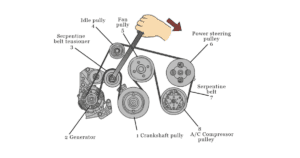 I didn’t think much about mine until one summer day when my AC suddenly stopped blowing cold air. The cabin felt like an oven, and I assumed it was low reon frigerant. Turns out? A worn-out AC belt was the culprit.
So what exactly is an AC belt in a car? Why does it matter? And how do you know when it needs replacing? Let’s break it down in simple, practical terms.
What Is an AC Belt in a Car?
An AC belt (also called an air conditioning belt or accessory belt) is a rubber drive belt that connects the engine’s crankshaft to the AC compressor.
When the engine runs, the belt spins, powering the AC compressor, which circulates refrigerant and produces cold air. In many modern vehicles, the AC belt is part of a larger belt system called the serpentine belt.
In older cars, the AC may have its own dedicated belt. In newer vehicles, one serpentine belt powers:
- AC compressor
- Alternator
- Power steering pump
- Water pump
- Sometimes the radiator fan
The belt transfers mechanical energy from the engine to these components. No belt = no spinning compressor = no cold air. Simple as that.
How Does an AC Belt Work?
Here’s how it works in everyday language:
- You start your engine.
- The crankshaft rotates.
- The belt wrapped around the crankshaft pulley begins spinning.
- That spinning motion transfers to the AC compressor pulley.
- The compressor pressurizes the refrigerant.
- Cold air flows into your cabin.
The belt doesn’t create cold air itself; it powers the component that does.
AC Belt vs Serpentine Belt (Comparison Table)
Many drivers get confused between an AC belt and a serpentine belt. Here’s a clear comparison:
| Feature | AC Belt (Dedicated) | Serpentine Belt |
| Purpose | Powers only the AC compressor | Powers multiple engine accessories |
| Common In | Older vehicles | Most modern vehicles |
| Replacement Cost | Lower | Slightly higher |
| Failure ImpactThe | AC stops working | Multiple systems may fail |
| Complexity | Simple routing | More complex routing |
| Maintenance | Easy to inspect | Requires full belt inspection |
If your vehicle was made after the early 2000s, you most likely have a serpentine belt powering your AC.
Signs Your AC Belt Is Failing
From personal experience, here are the most common symptoms:
1. Squealing Noise
A high-pitched squeal when starting the car is often the first sign. This happens when the belt slips on the pulley.
2. Weak or No Cold Air
If the AC compressor isn’t spinning properly, cooling performance drops.
3. Visible Cracks or Fraying
Pop the hood and inspect the belt. If you see:
- Cracks
- Missing ribs
- Frayed edges
- Glossy surface
It’s time for a replacement.
4. Burning Rubber Smell
A slipping belt creates heat. That burnt rubber smell? Not good.
5. AC Stops Working Completely
If the belt snaps, the AC compressor stops immediately.
What Causes AC Belt Wear?
AC belts wear out due to:
- Heat exposure
- Constant friction
- Age (rubber degrades)
- Oil contamination
- Misaligned pulleys
- Weak belt tensioner
Typically, belts last 50,000 to 100,000 miles, but climate and driving habits matter.
How Much Does It Cost to Replace an AC Belt?
Costs vary by vehicle, but here’s a rough breakdown:
- Belt price: $25 – $80
- Labor: $50 – $150
- Total: $75 – $250
If it’s a serpentine belt, expect slightly higher labor charges. Still much cheaper than replacing an AC compressor.
Can You Drive With a Bad AC Belt?
Short answer: Sometimes, but you shouldn’t. If it’s a dedicated AC belt:
- You can drive.
- But you won’t have AC.
If it’s a serpentine belt:
- You risk losing power steering.
- The alternator may stop charging.
- The engine may overheat.
Driving long-term with a damaged belt can leave you stranded.
How to Inspect an AC Belt
Here’s a simple DIY inspection guide:
- Turn off the engine.
- Let it cool.
- Open the hood.
- Locate the belt routing diagram.
- Check for:
- Cracks
- Glazing
- Loose tension
- Fraying
- Press the belt; it shouldn’t feel loose.
If unsure, a mechanic inspection is inexpensive and quick.
Buyer’s Guide: Choosing the Right AC Belt
When replacing your AC belt, don’t just grab the cheapest one. Here’s what to consider:
1. Vehicle Compatibility
Always match:
- Make
- Model
- Year
- Engine size
2. Belt Material
Look for:
- EPDM rubber (modern standard)
- Heat-resistant materials
3. Brand Reputation
Choose trusted automotive brands.
4. Warranty
Some belts come with limited warranties.
5. Replace Tensioner If Needed
If your belt wears unevenly, the tensioner may also need replacement.
6. Consider Full Serpentine Replacement
If one belt is worn, the entire system may need attention.
AC Belt Maintenance Tips
To extend belt life:
- Inspect every oil change
- Keep the engine area clean
- Fix oil leaks immediately
- Replace the tensioner when worn
- Don’t ignore squealing sounds
Prevention saves money.
AC Belt vs AC Compressor (Common Confusion)
Many people confuse the belt with the compressor. Here’s the difference:
- AC Belt: Transfers power.
- AC Compressor: Compresses refrigerant.
A bad belt is cheap. A bad compressor? Expensive. Always diagnose before replacing major parts.
How Long Does an AC Belt Last?
Average lifespan:
- 5 to 7 years
- 50,000 to 100,000 miles
Hot climates reduce lifespan.
If you live in warmer regions, inspect more frequently.
DIY Replacement: Is It Hard?
Difficulty level: Moderate. For experienced DIYers:
- 30 to 60 minutes
- Basic tools required
- Follow the belt routing diagram carefully
For beginners:
- Professional installation recommended
Incorrect routing can damage components.
What Happens If the AC Belt Snaps?
If it’s part of a serpentine system:
- AC stops
- Alternator stops charging
- The battery warning light appears
- The engine may overheat
- Steering becomes heavy
In worst cases, you’ll need a tow.
Is Replacing an AC Belt Worth It?
Absolutely. It’s one of the cheapest preventive maintenance tasks you can do. Ignoring it can lead to:
- Compressor damage
- Electrical issues
- Engine overheating
- Roadside breakdown
Small investment. Big protection.
Read More: What Is A Car Muffler
FAQs: What Is An AC Belt In A Car
1. Is an AC belt the same as a serpentine belt?
Sometimes. In modern cars, the AC runs off the serpentine belt.
2. Can a bad AC belt affect engine performance?
Yes. Especially if it’s a serpentine belt powering multiple systems.
3. How do I know if it’s the belt or the compressor?
If you hear squealing, it’s likely the belt. Grinding noises often point to compressor failure.
4. Can I replace just the AC belt?
Yes, if your vehicle uses a separate belt.
5. How often should I check it?
Every oil change is ideal.
6. Can cold weather damage it?
Heat causes more damage than cold.
7. Is it safe to spray belt dressing?
Temporary fix only. Replace instead.
8. Does AC use fuel?
Yes. The compressor adds load to the engine.
9. Can a loose belt cause the AC to blow warm air?
Yes, slipping reduces compressor performance.
10. What’s the biggest warning sign?
Squealing noise at startup.
Final Thoughts: Don’t Ignore the Small Stuff
The AC belt might look like a simple rubber loop, but it plays a crucial role in your car’s comfort and performance.
From my own experience, replacing it early saved me from a much larger repair bill. It’s affordable, easy to inspect, and vital to your cooling system.
If your AC isn’t working right, don’t assume it’s a big problem. Sometimes, it’s just the belt. And that’s good news for your wallet.