If you’ve ever turned on your car’s AC on a hot afternoon in New York or anywhere in the USA and felt that instant wave of cool air, you already know how essential a properly working car air conditioning system is.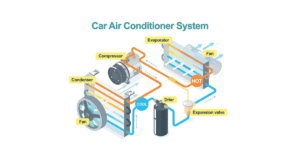 But have you ever wondered what’s actually inside your car’s AC system? As someone who has dealt with weak cooling, strange AC noises, and even full compressor failure, I can tell you this:
Understanding the car AC parts list can save you money, time, and serious frustration. In this in-depth, easy-to-read guide, we’ll break down:
- The complete car AC components list
- What each part does
- Signs of failure
- A comparison table of major AC parts
- A buyer’s guide for replacing components
- Maintenance tips
- FAQs
- And a detailed expansion to help you truly understand your car’s AC system
Let’s dive in.
What Is a Car AC System?
A car air conditioning system is a closed-loop system that cools and dehumidifies air before blowing it into your cabin. It works using refrigerant, pressure changes, and heat exchange.
Unlike your home AC, your car AC runs off the engine via a belt-driven compressor. Every part in the system must work together perfectly; if one fails, cooling performance drops fast.
Complete Car AC Parts List
Here’s a full breakdown of the essential car AC components:
- AC Compressor
- AC Condenser
- AC Evaporator
- Expansion Valve / Orifice Tube
- Receiver-Drier / Accumulator
- Refrigerant (R134a or R1234yf)
- AC Pressure Switch
- AC Blower Motor
- Cabin Air Filter
- AC Control Module
- Cooling Fan
- AC Hoses and Lines
- O-rings and Seals
- AC Belt
Now let’s break each one down in detail.
1. AC Compressor
The compressor is the heart of your car’s AC system. It pressurizes and circulates the refrigerant. Without it? No cooling. Period. Common signs of failure:
- Loud clicking or grinding
- AC not blowing cold air
- Clutch not engaging
- Oil leaks
The compressor is also the most expensive AC component to replace.
2. AC Condenser
The condenser sits at the front of your car, near the radiator. It releases heat absorbed from inside the cabin. It converts hot refrigerant gas into liquid. If your condenser is clogged or damaged:
- AC won’t cool properly
- Overheating issues may occur
Dust and road debris often damage it in hot climates.
3. AC Evaporator
Located inside the dashboard, the evaporator absorbs heat from the cabin air. Warm air passes over it. Cold air comes out of your vents. If it leaks:
- AC smells bad
- Weak airflow
- Refrigerant loss
Evaporator replacement is labor-intensive.
4. Expansion Valve (or Orifice Tube)
This part controls how much refrigerant enters the evaporator. Too much or too little refrigerant? Cooling suffers. Symptoms of failure:
- Inconsistent cooling
- AC freezes up
- Pressure imbalance
5. Receiver-Drier (or Accumulator)
This component:
- Removes moisture
- Filters debris
- Stores refrigerant
Moisture is the enemy of AC systems. This part protects the compressor.
6. Refrigerant
Modern cars use:
- R134a
- R1234yf
Refrigerant is the cooling substance circulating in the system. Low refrigerant = warm air.
7. AC Pressure Switch
This safety device:
- Prevents system damage
- Monitors pressure levels
- Turns the compressor on/off
If faulty, the AC won’t engage.
8. Blower Motor
This pushes cold air through vents. If your AC is cold but the airflow is weak, this might be the problem.
9. Cabin Air Filter
Filters dust and pollen before air enters the cabin. Clogged filter = weak airflow and bad smell.
10. AC Cooling Fan
Helps condenser release heat. If it fails:
- AC works while driving
- AC gets warm when idling
Comparison Table: Major Car AC Parts
| AC Part | Main Function | Cost Level | Failure Frequency | Replacement Difficulty |
| Compressor | Circulates refrigerant | High | Medium | Hard |
| Condenser | Releases heat | Medium | Medium | Moderate |
| Evaporator | Absorbs heat | High | Low | Very Hard |
| Expansion Valve | Controls refrigerant flow | Low | Medium | Moderate |
| Receiver-Drier | Removes moisture | Low | Medium | Easy |
| Blower Motor | Pushes air | Medium | Medium | Moderate |
How a Car AC System Works (Step-by-Step)
- The compressor pressurizes refrigerant gas.
- Refrigerant moves to the condenser.
- Condenser releases heat, turns gas into liquid.
- Liquid moves to the expansion valve.
- Pressure drops.
- Refrigerant enters the evaporator.
- The evaporator absorbs heat from the cabin.
- Cold air blows through vents.
- Cycle repeats.
It’s a continuous loop.
Buyer’s Guide: Replacing Car AC Parts
If you’re planning to repair or upgrade your AC system, here’s what to consider.
1. OEM vs Aftermarket
OEM (Original Equipment Manufacturer)
- Higher price
- Guaranteed fit
- Reliable lifespan
Aftermarket
- Cheaper
- Quality varies
- Budget-friendly
For compressors, I personally recommend OEM.
2. Climate Consideration
In hot regions like the USA:
- A strong condenser is critical
- High-quality refrigerant matters
- Clean cooling fans are essential
3. When to Replace the Entire System
Replace everything if:
- Compressor seized
- Metal debris in the system
- Multiple component failure
Sometimes, full replacement saves money long-term.
4. Labor Costs
Evaporator replacement is expensive due to dashboard removal. Always factor labor cost into the decision.
Maintenance Tips for Longer AC Life
- Run AC weekly (even in winter)
- Clean the condenser regularly
- Replace the cabin filter every 6–12 months
- Check refrigerant level yearly
- Fix small leaks early
Preventive maintenance saves thousands.
Common Car AC Problems and Causes
Warm Air:
- Low refrigerant
- Faulty compressor
- Clogged condenser
Bad Smell:
- Dirty evaporator
- Mold buildup
- Cabin filter issue
AC Works Only While Driving:
- Cooling fan failure
Strange Noise:
- Compressor clutch
- Belt issues
Read More: What Is A Coil In A Car
FAQs: Car AC Parts List
1. What is the most expensive car AC part?
The compressor is typically the most expensive component.
2. Can I drive with a bad AC compressor?
Yes, but debris can damage other components.
3. How long does a car AC system last?
Typically 8–12 years with maintenance.
4. How often should refrigerant be refilled?
It should not need refilling unless there’s a leak.
5. Why is my AC cold at night but not during the day?
Condenser or cooling fan issue.
6. Is an AC gas refill enough to fix the cooling?
Only if low refrigerant is the problem.
7. How do I know if the evaporator is bad?
Weak cooling + refrigerant leak + musty smell.
8. Does AC affect fuel economy?
Yes, slightly (especially older cars).
Final Thoughts
Understanding the full car AC parts list gives you control. You won’t get overcharged. You won’t panic when cooling drops. And you’ll know exactly what your mechanic is talking about. Car air conditioning is not magic; it’s science, pressure, and proper maintenance working together.
Whether you’re dealing with weak airflow, warm air, or total failure, knowing these parts helps you diagnose smarter and spend wiser.