I’ll be honest checking engine oil used to feel like something my dad did in the driveway while I awkwardly held a flashlight. Fast forward a few years, a couple of used cars, one nearly blown engine, and suddenly that “old-school habit” became one of the smartest things I do as a car owner.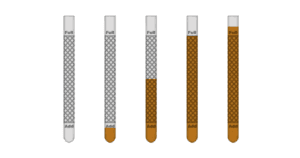 Even with modern vehicles, warning lights, and “maintenance minder” systems, nothing replaces physically checking your engine oil. It’s fast, free, and can literally save you thousands of dollars.
In this article, I’ll walk you through:
- How to check your engine oil step by step
- What oil level and color actually mean
- Common mistakes people make (I made most of them)
- Tools that make oil checks easier
- A buyer’s guide for oil-related tools
- A comparison table
- FAQs from real drivers
My Personal Wake-Up Call: The Day I Almost Killed My Engine
I once drove a Toyota Camry for nearly 3 months without checking the oil. No warning light. No weird noises. Everything felt “fine.”
Until one morning, the engine started ticking. Long story short:
- Oil level was dangerously low
- The oil was black and gritty
- I was one long road trip away from serious engine damage
That experience changed my habits permanently.
What Engine Oil Actually Does (In Plain English)
Before we get hands-on, here’s why oil matters:
Engine oil:
- Lubricates moving parts
- Reduces friction and heat
- Prevents metal-on-metal wear
- Helps clean internal engine components
- Protects against corrosion
No oil = friction
Low oil = overheating
Dirty oil = slow engine death
Simple as that.
How Do You Check Your Engine Oil? (Step-by-Step Guide)
Step 1: Park on Level Ground
This matters more than people realize. A slope can give you a false reading.
Pro tip: A flat driveway or parking lot is perfect.
Step 2: Turn Off the Engine and Let It Cool
Wait at least 5–10 minutes after driving.
Why?
- Hot oil hasn’t settled yet
- You’ll get a more accurate reading
- You won’t burn yourself (ask me how I know)
Step 3: Open the Hood
Pull the hood release inside your car, then lift the hood and secure it.
Most modern cars have:
- Hood latch under the dashboard
- Secondary latch under the hood
Step 4: Locate the Dipstick
The dipstick usually has:
- A bright yellow or orange handle
- A label like “ENGINE OIL”
If you can’t find it:
- Check your owner’s manual
- Look online for your specific model
Step 5: Pull the Dipstick and Wipe It Clean
Use:
- A paper towel
- A clean rag
- Shop towel
This first pull does not count for measurement.
Step 6: Reinsert the Dipstick Fully
Push it all the way in. No half measures.
Wait 2–3 seconds.
Step 7: Pull It Out Again and Read the Level
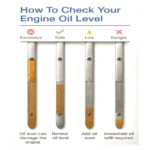
You’ll see:
- Two marks (MIN / MAX)
- Or crosshatch area
- Or holes indicating range
Oil should be between the MIN and MAX marks.
Step 8: Check Oil Color and Texture
More on this below but this step is just as important as level.
Understanding Oil Level: What’s Normal vs. Dangerous
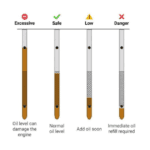
| Oil Level | What It Means | Action Needed |
| Above MAX | Overfilled | Drain excess oil |
| At MAX | Perfect | No action |
| Mid-range | Acceptable | Monitor |
| Near MIN | Low | Add oil soon |
| Below MIN | Dangerous | Add oil immediately |
Oil Color Guide: What You’re Really Looking At
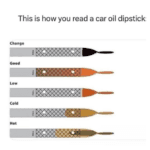
🟡 Light Amber
- Fresh or healthy oil
- Normal after oil change
🟤 Dark Brown
- Used oil
- Still okay if level is right
⚫ Black
- Old oil
- Time for a change soon
⚪ Milky / Foamy
- Possible coolant leak
- Stop driving and get checked
🔴 Reddish
- Possible transmission fluid contamination
- Rare, but serious
Common Mistakes People Make When Checking Oil
I’ve made these. So have my friends. Learn from us 😅
- Checking oil immediately after driving
- Not wiping the dipstick first
- Misreading the markings
- Overfilling “just to be safe”
- Ignoring oil color
- Assuming warning lights will save you
How Often Should You Check Engine Oil?
Here’s my real-world recommendation:
| Driving Type | Check Frequency |
| Daily commuter | Every 2 weeks |
| Older vehicles | Weekly |
| Long road trips | Before every trip |
| New car | Once a month |
Checking oil takes 2 minutes. Engine repairs take weeks.
Do Modern Cars Still Need Manual Oil Checks?
Short answer: Yes.
Even cars with:
- Oil life monitors
- Digital dashboards
- Warning lights
…can still burn or leak oil without triggering a warning.
Ask any mechanic they’ll tell you the same thing.
Comparison Table: Manual Dipstick vs. Electronic Oil Monitoring
| Feature | Dipstick | Electronic System |
| Accuracy | Very high | Moderate |
| Detects oil color | Yes | No |
| Detects contamination | Yes | No |
| Requires tools | No | No |
| Can fail electronically | No | Yes |
Buyer’s Guide: Helpful Tools for Checking Engine Oil
You don’t need much, but these help.
1. Oil Funnel
Prevents spills when topping off oil.
What to look for:
- Flexible neck
- Wide mouth
- Heat-resistant material
2. Shop Towels or Microfiber Rags
Avoid lint-heavy paper towels.
3. Disposable Gloves
Keeps hands clean especially helpful for beginners.
4. Flashlight or Headlamp
Great for nighttime or low-light garages.
5. Magnetic Oil Funnel (Optional Upgrade)
Hands-free, less mess, great for DIYers.
Choosing the Right Engine Oil (Quick Overview)
Always follow:
- Owner’s manual viscosity (e.g., 5W-30)
- API certification
- Manufacturer recommendations
Using the wrong oil can:
- Reduce fuel efficiency
- Increase engine wear
- Void warranties
When Checking Oil Isn’t Enough
Checking oil helps, but you still need regular oil changes. Signs you need a change:
- Oil is thick and black
- Engine sounds louder
- Oil smells burnt
- Oil change reminder appears
Read More: 12v Car Battery Charger | My Honest Experience
FAQs: How Do You Check Your Engine Oil
Can I check oil when the engine is hot?
You can, but it’s less accurate. Always wait 5–10 minutes.
What happens if I overfill engine oil?
Too much oil can:
- Cause foaming
- Reduce lubrication
- Damage seals
Is dark oil always bad?
No. Modern oil darkens quickly. Texture and smell matter too.
How much oil should I add if it’s low?
Add ¼ to ½ quart at a time, then recheck.
Can low oil damage my engine permanently?
Yes. Even short-term low oil can cause irreversible wear.
Do hybrids and EVs need oil checks?
Hybrids: Yes. EVs: No engine oil needed
Why isn’t my oil warning light on?
Warning lights usually activate when damage is already happening.
Final Thoughts: This One Habit Changed How I Treat My Car
Checking engine oil used to feel unnecessary. Now it feels essential. It’s:
- Free
- Fast
- Empowering
- Engine-saving
If you own a car, this is one of the simplest ways to protect your investment and avoid expensive surprises.