If there’s one car maintenance task I believe every driver should know how to do, no matter your age, experience level, or budget, it’s checking engine oil.
Not changing oil.
Not rebuilding an engine.
Just checking it.
Because here’s the truth, most people learn the hard way: 👉 Running low or dirty oil can quietly destroy your engine long before any warning light comes on.
I’ve owned beat-up used cars, brand-new vehicles, and everything in between. I’ve also paid for mistakes I could’ve avoided with a 30-second oil check. This article is everything I wish someone had explained to me early on: clear, simple, and real.
Let’s break it all down.
Why Checking Engine Oil Matters More Than You Think
Your engine oil does four critical jobs:
- Lubricates moving parts
- Reduces heat and friction
- Cleans internal engine components
- Protects against corrosion and wear
When oil gets low, dirty, or degraded, your engine starts suffering silently. No loud noise. No instant breakdown. Just slow, expensive damage.
What Happens If You Don’t Check Oil?
- Increased engine wear
- Overheating
- Sludge buildup
- Reduced fuel efficiency
- Premature engine failure
- $4,000–$10,000 engine replacement
Checking oil regularly is basically cheap insurance.
How Often Should You Check Engine Oil?
Here’s the realistic answer, not the marketing one:
| Driving Style | Recommended Check |
| Daily commuting | Every 2–4 weeks |
| Older vehicles | Weekly |
| Road trips | Before & after |
| Towing / heavy use | Weekly |
| New cars | Once a month |
Even if your car has an oil life monitor, you should still check manually. Sensors don’t tell you if oil is burning or leaking.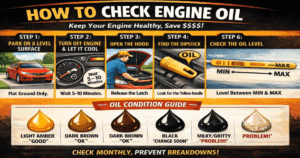
What You Need to Check Engine Oil (Spoiler: Almost Nothing)
You don’t need tools. You don’t need experience. You don’t even need gloves (though they help).
Basic Requirements:
- Your car
- A paper towel or rag
- 2 minutes of time
- Flat surface
That’s it.
Step-by-Step: How to Check Engine Oil the Right Way
This is the most important section, so read slowly.
Step 1: Park on a Level Surface
Oil pools unevenly on slopes. Always checkthe oil on flat ground.
✔ Driveway
✔ Parking lot
❌ Hills
❌ Slanted streets
Step 2: Turn Off the Engine and Let It Cool
This is where people mess up.
- Turn the engine off
- Wait 5–10 minutes
Why? Because hot oil is still circulating. Checking immediately gives a false low reading, and you could burn yourself.
Step 3: Open the Hood
Inside your car:
- Pull the hood release lever
- Go to the front
- Release the safety latch
- Secure the hood with the prop rod (if needed)
Step 4: Locate the Dipstick
Look for:
- A yellow or orange handle
- Usually labeled “OIL.”
- Often near the front of the engine
If you’re unsure, check your owner’s manual. It’s worth it.
Step 5: Pull the Dipstick Out & Wipe It Clean
This step is crucial.
- Pull the dipstick all the way out
- Wipe it clean with a rag or paper towel
Why? Oil splashes inside the engine and coats the dipstick randomly.
Step 6: Reinsert the Dipstick Fully
Push it all the way in until it seats properly. No half-measures here.
Step 7: Pull It Out Again & Read the Oil Level
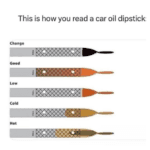
Look at the tip of the dipstick. You’ll see:
- Two holes
- Two lines
- Or “MIN” and “MAX” markings
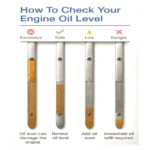
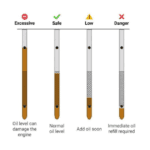
Ideal Oil Level:
✔ Oil should be between MIN and MAX
✔ Closer to MAX is better (but not over)
❌ Below MIN = add oil
❌ Above MAX = too much oil (bad!)
How to Read Engine Oil Condition (Color & Texture)
Oil level isn’t the whole story. Condition matters too.
Oil Color Guide
| Color | Meaning |
| Light amber | Perfect |
| Dark brown | Normal |
| Black | Old but usable |
| Milky/foamy | Coolant contamination 🚨 |
| Gritty | Internal wear 🚨 |
Rub a little oil between your fingers:
- Smooth = good
- Gritty = bad news
What If Your Oil Is Low?
First: don’t panic. Most cars burn a small amount of oil naturally, especially high-mileage engines.
What to Do:
- Check the owner’s manual for the correct oil type
- Add small amounts (¼–½ quart)
- Recheck level
- Stop when near MAX
Never dump a full quart blindly.
What Happens If You Overfill Engine Oil?
More oil ≠ is better. Overfilling can:
- Create foam
- Increase pressure
- Damage seals
- Reduce lubrication
If oil is above MAX, you may need to:
- Drain excess oil
- Visit a quick lube shop
Checking Engine Oil in Modern Cars (No Dipstick?)
Some newer cars:
- BMW
- Mercedes
- Audi
- Certain GM models
…use electronic oil level sensors.
How It Works:
- Access via dashboard menu
- The engine must be warm
- The car must be level
⚠️ These systems are convenient, but I still trust dipsticks more.
Common Mistakes People Make (I’ve Made These Too)
Let’s save you pain.
- Checking oil immediately after driving
- Not wiping the dipstick first
- Checking on a slope
- Confusing the transmission dipstick with the oil
- Overfilling
- Ignoring oil color
- Only checking when the warning light comes on
That light means damage may already be happening.
Engine Oil Types Explained (Simple Version)
Conventional Oil
- Cheapest
- More frequent changes
- Best for older engines
Synthetic Blend
- Balanced performance
- Good for moderate driving
Full Synthetic
- Best protection
- Longer intervals
- Ideal for modern engines
Comparison Table: Engine Oil Types
| Feature | Conventional | Synthetic Blend | Full Synthetic |
| Price | Low | Medium | High |
| Protection | Basic | Good | Excellent |
| Oil Change Interval | 3,000–5,000 mi | 5,000–7,500 mi | 7,500–10,000+ mi |
| Best For | Older cars | Daily drivers | Modern engines |
Buyer’s Guide: Choosing the Right Engine Oil
1. Check Owner’s Manual First
This tells you:
- Oil viscosity (e.g., 5W-30)
- Certification requirements
- Synthetic vs conventional
2. Match Your Driving Style
- Short trips → synthetic helps
- Extreme temps → full synthetic
- High mileage → high-mileage oil
3. Don’t Chase Brands Blindly
Top brands all meet standards:
- Mobil 1
- Valvoline
- Castrol
- Pennzoil
- Amazon Basics (surprisingly solid)
What matters most is correct spec, not hype.
How Checking Oil Saved Me Thousands (Real Talk)
I once noticed my oil level dropping every two weeks. No warning lightsThe carar ran fine. Turned out:
- Slow valve cover leak
- $120 fix early
- Would’ve been $3,000+ later
That habit alone paid for itself tenfold.
Read More: How Check Transmission Fluid
FAQs: How Do You Check Engine Oil | My Honest Experience
How often should I check my engine oil?
At least once a month or every 1,000 miles.
Can I check the oil when the engine is hot?
No. Always wait 5–10 minutes.
Is dark oil bad?
Not necessarily. Color alone doesn’t mean failure.
What if I don’t have a dipstick?
Use the vehicle’s onboard oil level system.
Can I mix oil brands?
Yes, if viscosity and specifications match.
Should oil be at MAX exactly?
Anywhere between MIN and MAX is safe.
Can low oil damage the engine?
Absolutely and quickly.
Final Thoughts: This One Habit Changes Everything
Checking engine oil is:
- Fast
- Free
- Foolproof
- Engine-saving
You don’t need to be a “car person.” You just need to care enough to pop the hood once in a while.
If more people did this, we’d see fewer breakdowns, fewer repair bills, and fewer roadside disasters. Your engine will thank you quietly, for a very long time.