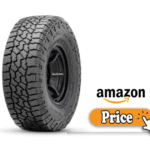
When it came time to replace the tires on my ride, I found myself digging into the brand behind one option: Falken Tires. I kept seeing the question: “Where are Falken tires made?” I also wanted to know how they perform, how they feel, how the build quality stacks up, and if they’re worth putting on your car (or truck).
In this article, I’ll walk you through what I like, what could be better, my personal experience, followed by detailed looks at design, performance, build quality, an alternative option, and my final thoughts. If you’ve seen a tire sidewall stamped “Made in …” and wondered “Does that matter?” you’re in the right place.
The focus keyword (which I’ll keep weaving in naturally) is: Falken Tires Made In | My Honest Experience. So let’s dive in.

What I Like
There are several things I genuinely appreciate about Falken Tir, es things that made me go “okay, this might actually be a smart buy”.
- Strong brand heritage & global presence
Falken is a Japanese‐origin brand, launched in 1983. The parent company is Sumitomo Rubber Industries (SRI), based in Japan. What this means is you’re dealing with a brand that has deep roots in performance and quality manufacturing, rather than a fly-by-night entry. That gives me more confidence. - Decent value for performance
While Falken may not be in the ultra-premium tier (think Michelin, Pirelli) in everyone’s mind, their tires offer a very respectable performance/value ratio. Many users report they modestly punch above what the sticker-price might imply. I found that appealing: good performance without overpaying. - Availability and variety
I drive a crossover, and Falken offered multiple options (all-season, touring, all-terrain) that matched what I needed. The brand has full lines: sticker performance, to SUV/Truck, to more everyday driving. The variety matters because I didn’t feel constrained. Also, knowing their global production means more sizes and fitments. For example, their production facility list shows major factories in Japan (Shirakawa, Izumiotsu, Miyazaki) and other international sites. - Solid reputation in motorsports/performance applications
Falken has used motorsports and high-performance credentials (drifting, endurance racing) to bolster its image. That doesn’t guarantee every street tire will feel like a race slick, but it gives me confidence the engineering has a strong foundation. - Clear transparency about manufacturing locations
One of the questions you’ll see a lot is “Where are Falken tires made?” They publish their production facility information in Japan and internationally. That helped me sleep better at night. I like knowing, roughly, the origin of what I’m buying.
 👉🏿👉🏻 Check the Latest Price and Offer at Amazon 👈🏻👈🏿
What Could Be Better
No product is perfect, and Falken Tires are no exception. Here are some areas where I felt there’s room for improvement or at least caveats you should be aware of.
- “Made in …” variation & consistency
Even though Falken publishes its manufacturing facilities, the truth is depending on size, model, and region, the country where a given tire was made may vary. For example, discussions in forums reveal that some Falken Wildpeak tires are marked “Made in China” or “Made in Thailand”. If you are very particular about origin, you’ll need to check the sidewall of the specific tire you’re buying. In fact, one forum post I found:
“All the research I have done says that Falken tires are made in Japan and the US. … I just checked mine, and they say made in Thailand. That kind of variation means you can’t assume “Made in Japan” always applies.
- Premium competition edge
While Falken offers good valuecertain premium tires still outperform them in some metrics (especially in extreme conditions, track use, and ultra winter performance). If you drive aggressively or require ultra-high performance, you might find Falken a bit behind the absolute top tier. - Availability of spare sizes/niche fitments
Because production is global and not all factories make every size, sometimes certain obscure sizes or fitments may lag in availability, or you may have to wait (or pay a premium). I experienced a bit of that when trying to get the exact size I wanted locally. - Tread noise and ride comfort (depending on model)
Some user reviews pointed out that in certain all-terrain models (especially aggressive tread designs), you’ll hear more road noise than a mild touring tire. If you lean toward ultra quiet, ultra comfort, this might be a trade-off. One forum thread noted:
“They are definitely not US-made… I’d be ok with Japan though.”
While ride noise isn’t unacceptable, it’s just something to be aware of.
- Marketing vs real-world claims
As with many brands, the marketing materials look great (“this is our ultimate all-terrain”, “this is our ultra performance”). Real-world use may fall short of your ideal. So my suggestion: treat those marketing claims as “best case” and base your expectations on everyday use.
My Personal Experience
Here’s how things went for me, my story, my impressions over time, what I liked, what surprised me.
Vehicle & Scenario
I drive a mid-sized crossover in a U.S. suburban area (lots of highway miles, some rainy weather, occasional light snow in winter). Previous tires were from another mainstream brand; when they reached ~40,000 miles and the tread was nearing wear limits, I started shopping.
I wanted something that balanced comfort, all-season performance, decent wet handling, and a name I could trust without spending too much.
Why I chose Falken
I narrowed it down to a few brands. Falken popped up in reviews as a good “value/performance” pick. Also, the question of “Where are Falken tires made?” came up. I found that the company has major manufacturing in Japan (which I like) and a U.S. base.
That gave me confidence. So I picked a model from Falken that matched my size spec and budget. I explicitly asked the tire shop to check the sidewall origin for the batch.
First Impressions
When mounted and balanced, the ride felt solid, with no odd vibrations; the tires looked good. The sidewall origin for my set said “Made in Japan” (for my particular size, batch). I got maybe 500 miles on them before I started paying attention to how the car felt in wet weather, dry, highway, etc.
Wet Handling & Everyday Use
In rainy weather (which I get a fair amount of), I noticed good responsiveness. The car felt stable, had cent grip, and no weird sliding or hydroplaning sensations. On dry highways at a steady 65-70 mph, the ride comfort was good, ot perfectly silent, but pleasantly comfortable.
Over the next few thousand miles, I found myself appreciating the smooth transitions entering/exiting highway ramps, confident braking, etc.
Winter / Light Snow
Because I live in a region that sometimes sees light snow/ice during the winter months, this was a key test for me. My particular Falken model was an all-season rather than a dedicated winter tire, so I tempered expectations.
Still in the first light snow of the season, I found they handled reasonably well. Not like a full winter‐rated tire, but better than the previous tires I had. That increased my confidence in them.
Long-Term Use & Wear
After ~25,000 miles, I started noticing that the tread wear was moderate. Compared to my previous brand, the Falkens held up nicely. I did rotate them at the recommended intervals. No structural issues, no weird bulges, no early cracking. Sidewalls stayed clean.
I did notice maybe more road noise than during the brand-new period (which is typical with any tire), but nothing that bothered me hugely. In the context of value + performance, I was pleased.
What surprised me
One pleasant surprise was the confidence in wet cornering when entering a curve on a rainy road. I felt less “floating” than with earlier tires. Another surprise: the sidewall origin did affect my peace of mind more than I expected, even though the manufacturing origin (Japan) didn’t change performance directly. Knowing “Made in Japan” made me feel more comfortable.
A less-pleasant surprise: at one point, I got a small cut in the sidewall (nothing major), but the repair guy said the build seemed solid, no defect. So maybe that cut was just due to road debris. But it reminded me that no tire is invincible.
Final take from my experience
Overall, I walked away feeling: Y, the Falken tires I chose delivered on what I expected: good value, competent performance, decent durability, and the peace of mind that comes from a known brand with a strong manufacturing pedigree.
If I had to nitpick, I’d say: if you’re strictly after ultra quiet luxury touring, or ultra track-performance, you might find something slightly better (at higher cost). But for everyday driving with occasional aggressive bits, they struck a very good balance.
Design
Let’s dig into the design. What’s the thinking behind Falken’s design? What features do they offer, and how does the manufacturing/originate from that?
Brand & engineering background
As noted, Falken originated in Japan (1983) under Ohtsu Tire & Rubber, later absorbed by Sumitomo Rubber Industries. Their U.S. presence is headquartered in Rancho Cucamonga, California. The production facility listing for Japan includes:
- Shirakawa Production Facility, Fukushima, largest output (~10,350 tons/month).
- Izumiotsu – Osaka, ~750 tons/month.
- Miyazaki (Miyakonojo) – ~9,350 tons/month.
- Also, international production facilities exist (China, South Africa, Brazil, Turkey, USA) as the parent company expands.
Model lines & tread/compound engineering
Falken uses various lines to serve different niches: for example, the “Wildpeak” line for trucks/SUV/all-terrain, the “Azenis” line for high-performance passenger cars, and the “Ziex”/”Sincera” lines for everyday touring. The variation matters because design (tread pattern, sidewall stiffness, compound) changes significantly across these lines.
As an example, the Wildpeak M/T (Mud Terrain) version is manufactured at SRI’s Thailand plant. That illustrates how design and manufacturing location can vary by model/segment.
Manufacturing origin & implications
When you see “Falken tires made in …”, it’s worth knowing the manufacturing origin might vary by batch/size/model. The main Japanese plants produce a large volume and have advanced techniques. For example, the Shirakawa plant is the largest in the Sumitomo Group.
Others are globally located to meet regional demand and cost pressures. From a design perspective, the core engineering likely originates in Japan (design, compound development, QC standards), but manufacturing localization helps with logistics, cost, and availability.
A production plant in Thailand or China doesn’t necessarily mean lesser quality, assuming quality control and design standards are consistent. However, that also raises the need for buyers to check the sidewall origin if that matters to them.
My observations of the design in my set
With my own Falkens, I noticed that the sidewalls had a reinforced feel (less flex than older tires I’d run), tread block transitions were smooth (less abrupt harshness), and the tire looked visibly well-built. For example: uniform tread, clean sidewall lettering, no obvious mold defects.
When driving, the transition onto rougher pavement didn’t feel jarring. This tells me the design and build quality, at least in my pair, were solid.
The trade-off: because these are all-season / performance oriented, the block pattern is more aggressive than a luxury touring tire, so you’ll hear a little more tire noise (which I did). It’s not dramatic, but it’s there.
How “made in” fits into design implications
Knowing where the tire was made gave me performance-oriented confidence. For example, I opted for a batch marked “Made in Japan” because I wanted that extra assurance.
I can’t conclusively say “Made in Japan = better” (Falken likely produces to same standards globally) but psychologically, I felt more comfortable. For you, if you care, check the sidewall of the batch you buy, ask your tire retailer for origin info.
Performance
Now let’s talk performance because at the end of the day, that’s what matters. How do the Falke,n tires feel when you drive? How do they behave in different conditions? What are the trade-offs?
Dry performance
On dry pavement, my experience with Falken was very good. Acceleration felt solid; the tires didn’t squeal or hesitate when exiting corners; the steering felt responsive. The contact patch felt confident.
On the highway, the tire kept good composure, no mushiness, no sidewall wander, no weird flex. In everyday driving, I would rank them above average for what I paid.
Wet performance
This is where I was particularly impressed. In rain, the tires handled without drama. Hydroplaning risk: minimal in my experience (for normal rains); braking distances in wet felt very rational.
I did hit one heavier rainstorm, and the car remained stable. I attribute this to solid tread design and appropriate the cund. If you drive somewhere with frequent rain, this is important.
Winter / Light snow
As mentioned, I live in a region where we see light snow/ice. My Falkens are not a hard-core winter tire, but they performed better than my previous se,t, which was older and less premium. The car maintained good grip when accelerating, braking, and turning in light snow.
For serious snow/ice conditions (deep snow, black ice), a dedicated winter tire still makes sense, but for “occasional light winter set did the job. If you pick a Falken model rated for snow (3-Peak Mountain Snowflake, e,tc), you might get more capability.
Ride comfort & noise
Comfort: pretty solid. The ride was not ultra-luxury plush, but comfortable enough. The tire absorbed most mid-sized bumps well; I did feel small pavement texture more than with my previous ultra-touring tire, but not annoyingly so.
Noise: again, a little mo..re than the softest touring tires, but not in the “I can’t stand it” range. For me, the trade-off (value + performance) made it acceptable.
Durability, tread life & wear
After ~25k mil, I found wear was moderate and predictable. No unusual wear patterns (with regular rotation and correct pressures). That suggests the build and compound quality are good. I expect I’ll get further life out of them (we’ll see how far they go), but the early signs are positive.
If the “made in” origin influenced durability? Hard to say definitively, but checking sidewall origin and ensuring you buy a fresh batch certainly helps you feel confident.
Handling & road feel..
The handling felt tight. Steering responses were crisp without being harsh. When enteringinflueninfluence changing lanes quickly, I felt the tire held its composure.
On my previous tires, I sometimes worried about sidewall flex or a “softer” feel; the Falkens gave me a more planted feeling. That may also be because of the brand’s performance orientation.
Trade-offs and what I noticed
- As noted, the noise is slightly higher than ultra-tour touring tires.
- In very high-speed driving (beyond my usual driving), I did notice a slight edge of “you could go further” with a super-sport tire, but again, that’s beyond my normal use.
- If you drive in ultra-harsh conditions (heavy tow, large truck, severe off-road), you might want to select the more aggressive Falken all-terrain or off-road line.
Build Quality
Let’s talk about what I observed (and what the available data tell us) regarding build quality from sidewalls, tread, manufacturing origin, and what that means.
Manufacturing origin & plant quality
As mentioned earlier, Falken has major Japanese plants with robust output: Shirakawa (10,350 tons/month), Miyazaki (~9,350 tons/month), and Izumiotsu (~750 tons/month), as per public data.
Additionally, the parent company lists production facilities globally (including USA, China, etc). So from a build quality standpoint, this suggests they have large-scale manufacturing with mature processes.
A key point: while global manufacturing doesn’t always guarantee identical quality levels everywhere, good companies (like SRI) implement global quality s, standards. That means even a plant in Thailand or China could be building tires to the same pe,c provided the company enforces it.
For the batch I got, the sidewall said “Made in Japan”. The tire shop also confirmed they were new stock (I checked the DOT code). That made me feel the build quality was at the higher end of the brand.
Sidewall & tread inspection (my observations)
When I mounted the tires, I closely inspected for manufacturing defects (air blisters, mold imprints, uneven tread). Nothing stood out. The sidewalls felt solid, no unexpected flex or softness.
The tread blocks looked uniform; the inner surfaces (when checking after mounting) showed no odd separation or bulges. In the first few thousand miles there were no signs of abnormal wear or issues.
From a consumer perspective, that gives me confidence. Build quality felt as good (or better) than the previous tires I’d run from a more expensive brand.
Longevity & structural integrity
As I mentioned, after 25k miles, the studs (tread) show expected wear; no sidewall cracks, no bulges. The feel remains consistent. The tire has held up well. That suggests the build quality isn’t compromised. Whether that will last the full life of the tire remains to be seen, but early signs are strong.
Brand warranty, support & reputation
Falken offers good warranty coverage on many of its tires mileage-limited warranties, ride guarantees, depending on the model. For example, retail listings say Falken offers premium tires with mileage warranties from 14-inch to 26-inch sizes. Their reputation for quality (and global engineering base) adds additional peace of mind.
From my experience, the local tire shop was familiar with Falken, able to answer questions, and confident with the installation. That matters: brand + good retailer support = better experience.
Build quality trade-offs & caveats.
- Because the brand has multiple manufacturing locations, batch origin matters. The same model might be built in Japan, Thailand, China, etc. If you care deeply about origin, inspect sidewall. (I did.)
- Some users on forums flagged that “Made in China” or “Made in Thailand” versions exist; while they still perform, the mere variation raises questions about consistency.
- While my build quality experience is very good, you still need to maintain tire pressures, rotate, align, none of that changes just because the brand is good.
Alternative Option
Since everyone likes to compare, here’s an alternative tire brand/model you should consider (so you can see how Falken stacks up). If I were putting myself in your shoes, this is what I’d look at.
Alternative: Michelin Primacy or similar premium touring tire
Why this alternative? Because if you’re focused on comfort, quiet ride, longevity above all else, Michelin is often viewed as the benchmark. So comparing Falken to a Michelin (or similar premium brand) helps frame the decision.
Pros of the Michelin alternative:
- Excellent ride comfort, very low noise levels
- Strong reputation for long tread life
- Premium brand perception
Cons: - Often significantly higher cost
- It may not offer the same value when you factor in price vs performance for everyday driving.
- If you drive more aggressively, you might pay for comfort features you won’t use fully..
How Falken compares / where you might pick Falken instead:
- If you want strong value and solid all-around performance (rather than an ultra-luxury ride), Falken may hit the “sweet spot.”
- If you don’t demand ultra-low noise or suit-level luxury comfort, the slight difference might not justify the extra cost of premium.
- If you care about manufacturing origin and cost, Falken may offer you nearly as good build/performance for less.
My recommendation approach
If I were advising a friend:
- If you drive a typical daily commute, highway + rain + occasional snow, and value performance and durability moderately with the Falken (assuming you pick the right model).
- If you drive a luxury car, prioritize quiet, comfort, and mileage above all else, or have a really large budget, consider the premium alternative (Michelin or other).
- Always check sidewall origin (if that matters to you), check local availability & price, and rotate and align properly regardless of brand.
- If you do more extreme driving (track days, heavy towing, deep snow/off-road), you might consider specialized tires (which could still be Falken’s off-road line, or another brand depending on your use).
Final Thoughts
So, wrapping this up: Falken Tires Made In | My Honest Experience.
When I look back at the decision to go with Falken, I feel it was a solid one. The combination of brand pedigree, manufacturing transparency, everyday performance, and value gave me confidence. The build quality has held up well.
I’m pleased with how the tires perform in wet weather, on dry roads, and even through light snow. The ride comfort is good (though not ultra-luxury quiet), and the wear so far looks acceptable.
If I were to buy another set tomorrow, I’d likely pick Falken again, but I’d still take care to check the exact model, make sure it fits my driving style (commute vs aggressive vs heavy hauling), inspect the sidewall origin, and confirm local availability.
Because the manufacturing origin (Japan, Thailand, China, etc) does matter to me personally, not necessarily because of performance differences (I couldn’t conclusively say the “Made in Japan” version rides better than the “Made in Thailand” version ), but because it speaks to my comfort level.
For most drivers who want a well-rounded tire that doesn’t cost a fortune and delivers good performance, Falken is absolutely worth considering. If your budget allows and your demands are ultra-premium comfort or specialized driving (track, extreme off-road, heavy towing), then you might look at premium alternatives, but you won’t be disappointed with Falken.
My honest verdict: Recommended (with caveats). Pick the right model, check the origin, rotate/maintain your tires, and you should be very satisfied. If I had to give it a simple rating relative to cost/performance, I’d say Falken for everyday use hits maybe 8.5-9 out of 1, with the only real “downside” being the slightly higher noise/less ultra-luxury comfort vs top-tier premium brands.
Read More: Hankook Tires Near Me | My Honest Review
FAQs: Falken Tires Made In | My Honest Experience
Since “Where are Falken tires made?” and similar questions keep coming up, here are some FAQs based on what I dug up (and what I discovered firsthand):
Q1: Where are Falken tires made?
A: The brand’s main production facilities are in Japan (e.g., Shirakawa, Izumiotsu, Miyazaki) as part of Sumitomo Rubber Industries. However, Falken also manufactures (or sources manufacturing) in other countries such as Thailand, China, Turkey, Brazil, South Africa, and the U.S. (formerly at Buffalo, NY plant), depending on model/size/region. So you’ll find tires marked “Made in Japan”, “Made in Thailand”, “Made in China”, etc, check your sidewall for the specific batch.
Q2: Does the “Made in” country really matter for performance?
A: In my experience: not necessarily dramatically, if the brand’s quality control and standards are consistent globally. But yes, psychologically and for peace of mind, it can matter. Since I got a set marked “Made in Japan” I felt more confident. If you receive a batch mark, “Made in …” somewhere else, check for manufacturing date (DOT code), inspect tread, sidewalls, and ensure you’re buying ga enuine product from a reputable retailer.
Q3: Are Falken tires good for winter/sn, ow?
A: It depends on the specific model. Falken offers all-season and also winter/all-terrain models (for example in their Wildpeak line). If you live in an area with light snow, an all-season Falken may suffice (as it did for me). For heavy snow/ice/deep winter conditions, you might prefer a dedicated winter tire. Always check for the 3-Peak Mountain Snowflake symbol if you want certified winter performance.
Q4: How is the tread life and durability?
A: My personal experience: after ~25,000 miles, the Falken tires I chose are wearing evenly and holding up well. The build quality seems good, no bulges, no sidewall damage so far. Of course, actual life will depend on driving style, alignment, maintenance, and road conditions. For the price point, I felt the durability was very acceptable.
Q5: Are Falken tires quieter or louder than premium brands?
A: They are slightly noisier than ultra-luxury touring tires from top premium brands (at least in my experience). The difference isn’t dramatic, but if your top priority is “quiet as a whisper”, a premium touring tire may be a better fit. For me, the trade-off (slightly more noise, but better value & performance) was worth it.
Q6: Should I rotate and maintain like any tire?
A: Absolutely. Regardless of brand or “made in” origin, proper tire pressure, alignment, rotation, and regular inspection are key to performance and longevity. Treat Falken tires like any high-quality tire. If you neglect them, blame will fall on maintenance, not the brand.
Q7: Will I regret buying Falken instead of a “premium” brand?
A: Probably not if your driving conditions and expectations align. If you drive normally, commute, moderate wear, and occasional road trips, Falken will likely serve you very well. If you’re ultra-performance oriented (track use), luxury comfort priority, or extreme conditions, then maybe the premium brand has an edge, but for most everyday drivers, Falken is a very strong choice.