A few years ago, I started hearing a dull clunk every time I drove over speed bumps. The steering felt slightly loose. Nothing dramatic, just annoying. I assumed it was the shocks or maybe the ball joints.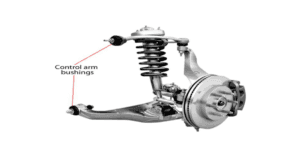 Turns out? It was worn-out control arm bushings. And here’s the thing: bushings are small, inexpensive components. But when they fail, your entire driving experience changes. If you’ve ever noticed:
- Clunking noises
- Vibrations in the steering wheel
- Uneven tire wear
- Loose or unstable handling
Your bushings might be the hidden culprit. In this complete guide, I’ll break down:
- What bushings are
- How they work
- Types of car bushings
- Rubber vs polyurethane comparison
- Signs of failure
- Replacement cost
- Buyer’s guide
- Frequently asked questions
Let’s simplify it.
What Are Bushings In A Car?
Bushings are cushioned mounting components made from rubber, polyurethane, or similar flexible materials. They sit between metal parts to reduce friction, absorb vibration, and prevent metal-to-metal contact.
Think of them as shock absorbers for joints. They are found in:
- Suspension systems
- Control arms
- Sway bars
- Engine mounts
- Transmission mounts
- Shock mounts
Without bushings, your car would feel harsh, noisy, and unstable.
What Do Bushings Actually Do?
Bushings perform three main functions:
1. Absorb Road Shock
They soften the impact from potholes and bumps.
2. Reduce Vibration
They isolate vibrations before they reach the cabin.
3. Allow Controlled Movement
They let suspension components move smoothly while keeping alignment intact. Without bushings:
- Suspension would be rigid
- Steering would feel rough
- Parts would wear out faster
Where Are Bushings Located In A Car?
Bushings are everywhere. The most common locations include:
- Control arm bushings
- Sway bar bushings
- Shock absorber bushings
- Subframe bushings
- Engine mount bushings
- Leaf spring bushings
Each plays a specific role in handling and comfort.
Most Important Types of Car Bushings
1. Control Arm Bushings
These connect the control arm to the vehicle frame. They maintain wheel alignment and absorb suspension movement. Symptoms when worn:
- Clunking over bumps
- Steering wander
- Uneven tire wear
2. Sway Bar Bushings
These stabilize your vehicle during turns. Symptoms when worn:
- Body roll increases
- Rattling noise
- Loose cornering feel
3. Shock Absorber Bushings
These cushion the mounting points of shocks. Symptoms:
- Knocking noise
- Excessive vibration
4. Engine and Transmission Mount Bushings
These isolate engine vibration. Symptoms:
- Engine shaking
- Hard gear shifts
- Thumping when accelerating
Rubber vs Polyurethane Bushings (Comparison Table)
| Feature | Rubber Bushings | Polyurethane Bushings |
| Ride Comfort | Excellent | Moderate |
| Durability | Moderate | Very High |
| Noise Level | Low | Slightly Higher |
| Handling Performance | Good | Excellent |
| Cost | Lower | Higher |
| Best For | Daily driving | Performance & racing |
Best for Comfort: Rubber
Best for Performance: Polyurethane
Signs Your Car Bushings Are Bad
Here’s what I personally noticed before replacing mine:
- Clunking sounds over bumps
- Steering feels loose
- Vibrations at higher speeds
- Uneven tire wear
- Vehicle pulls to one side
- Excessive body roll
If ignored, bad bushings can lead to:
- Alignment issues
- Premature tire wear
- Suspension damage
Why Bushings Wear Out
Bushings live a hard life. They face:
- Constant movement
- Road salt
- Heat
- Oil contamination
- Water exposure
- Heavy loads
Over time, rubber dries, cracks, and collapses. Most bushings last:
- 80,000 to 150,000 km (50,000–100,000 miles)
Driving style matters a lot.
How Bushings Affect Ride Quality (Deep Technical Expansion)
To understand bushings deeply, let’s look at suspension mechanics. When your wheel hits a bump:
- The control arm moves upward.
- The bushing compresses.
- Energy transfers into heat.
- Vibration is absorbed.
- Suspension geometry remains controlled.
If bushings fail:
- Movement becomes uncontrolled.
- Alignment angles change.
- Tire contact patch shifts.
- Handling becomes unpredictable.
That’s why even a small rubber part can drastically impact safety.
Replacement Cost: What To Expect
Bushings themselves are inexpensive. Typical costs:
| Item | Cost Range |
| Rubber Bushing | $10 – $50 |
| Polyurethane Bushing | $30 – $100 |
| Labor (Per Control Arm) | $100 – $300 |
| Full Suspension Bushing Job | $400 – $1,500 |
Labor is high because:
- Press tools are required
- Suspension disassembly is needed
Sometimes replacing the entire control arm is cheaper than pressing new bushings.
Should You Replace Just Bushings or Entire Control Arms?
It depends. Replace just bushings if:
- Ball joints are still good
- The control arm isn’t bent
- You want to save money
Replace the entire control arm if:
- Ball joints are worn
- Labor cost is similar
- You want quicker installation
Many mechanics prefer full arm replacement for efficiency.
Buyer’s Guide: Choosing the Right Bushings
If you’re buying bushings, here’s what to consider:
1. Driving Style
- Comfort-focused daily driving → Rubber
- Aggressive driving or track use → Polyurethane
2. Climate
- Hot climates wear rubber faster.
- Polyurethane handles extreme temperatures better.
3. Noise Tolerance
Polyurethane can:
- Transmit slightly more road noise
- Feel stiffer
If you prefer smoothness, stick with rubber.
4. OEM vs Aftermarket
OEM:
- Balanced comfort
- Factory ride quality
Aftermarket:
- Performance-oriented
- Longer lifespan (in some cases)
Choose reputable brands for safety.
Pros and Cons of Upgrading to Polyurethane
Pros
- Longer lifespan
- Sharper steering response
- Better handling
- More resistant to oil and heat
Cons
- Slightly harsher ride
- Possible squeaking if not lubricated
- Higher cost
What Happens If You Don’t Replace Worn Bushings?
Ignoring bad bushings can lead to:
- Suspension misalignment
- Excessive tire wear
- Steering instability
- Increased braking distance
- Component damage
- Safety risks
It’s a small repair that prevents bigger problems.
Can You Drive With Bad Bushings?
Short term? Yes. Long term? Not recommended. It affects:
- Handling
- Tire wear
- Safety
If clunking is loud or steering feels unstable, repair soon.
DIY or Professional Replacement?
DIY requires:
- Jack stands
- Press tools
- Torque wrench
- Mechanical skill
For most people, professional replacement is safer. Improper installation can:
- Cause alignment issues
- Lead to suspension failure
How Often Should Bushings Be Inspected?
Inspect:
- Every 20,000–30,000 km
- During tire rotation
- When doing suspension work
Early detection saves money.
Read More: What Is A Car Accumulator
FAQs: What Are Bushings In A Car
1. What are bushings in a car made of?
Usually rubber or polyurethane. Some heavy-duty vehicles use metal-sleeved bushings.
2. How long do bushings last?
Typically 50,000–100,000 miles depending on driving conditions.
3. Can bad bushings cause vibration?
Yes. They allow excessive movement and transmit road vibration.
4. Are bushings expensive to replace?
Parts are cheap. Labor is the main cost.
5. Do bushings affect alignment?
Absolutely. Worn bushings can shift suspension geometry.
6. Should I replace all bushings at once?
Not always. Replace as needed unless doing a full suspension overhaul.
7. Do polyurethane bushings squeak?
They can if not properly lubricated.
8. Can bad bushings cause tire wear?
Yes. Misalignment and instability accelerate tire wear.
9. Is it safe to ignore minor clunking?
It’s best not to. Small problems grow.
10. Do bushings improve ride comfort?
Yes. Healthy bushings make driving smooth and quiet.
Final Thoughts: Small Parts, Big Impact
Bushings might be small rubber components hidden in your suspension, but they play a massive role in:
- Comfort
- Safety
- Handling
- Tire longevity
- Overall driving feel
When mine were replaced, the difference was night and day. The steering tightened up. The noise disappeared. The car felt stable again.
If your car feels loose, noisy, or unstable, don’t overlook the bushings.
They’re small.
They’re affordable.
And they matter more than most drivers realize.