A few summers ago, my car started overheating in traffic. On the highway, it was perfectly fine. But in slow city driving? The temperature gauge kept creeping up. At first, I thought it was the thermostat.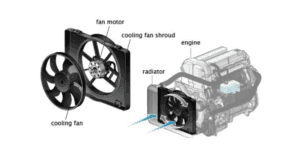 Then maybe low coolant. But after some testing, I discovered the real issue: the cooling fan wasn’t turning on. That experience taught me how important the car cooling fan really is, especially in hot climates and heavy traffic.
In this detailed guide, I’ll break down everything I learned about car cooling fan repair, from symptoms and diagnosis to repair costs, DIY steps, and whether you should fix it yourself or call a mechanic.
Let’s get into it.
What Does a Car Cooling Fan Do?
Your car’s cooling fan (also called the radiator fan) pulls air through the radiator when your vehicle isn’t moving fast enough to create airflow naturally.
When driving at highway speed, air flows through the radiator automatically. But when:
- Sitting in traffic
- Idling at a stoplight
- Driving slowly
- Running the AC
Your cooling fan kicks in to prevent engine overheating. Most modern cars use electric cooling fans, while older vehicles may use mechanical fans powered by the engine.
Common Signs Your Cooling Fan Needs Repair
Here’s what I noticed and what you should watch for:
1. Engine Overheating in Traffic
Temperature rises while idling but drops when driving fast.
2. AC Stops Blowing Cold Air
The AC system relies on airflow over the condenser. A bad fan can make AC weak or warm.
3. Cooling Fan Doesn’t Turn On
Pop the hood and check if the fan spins when the engine gets hot.
4. Check Engine Light
Some vehicles trigger codes related to fan circuits or overheating.
5. Loud or Grinding Noise
Worn bearings inside the fan motor can cause unusual noise.
What Causes Cooling Fan Failure?
From my research and hands-on troubleshooting, these are the most common causes:
- Blown fuse
- Bad relay
- Faulty temperature sensor
- Damaged wiring
- Failed fan motor
- Faulty fan control module
Sometimes it’s a small electrical issue. Other times, you’ll need a full fan replacement.
Cooling Fan Repair Cost (Realistic Breakdown)
Here’s a practical cost comparison based on common repair scenarios:
| Repair Type | DIY Cost | Mechanic Cost | Difficulty Level | Recommended? |
| Replace Fuse | $5 – $15 | $50 – $100 | Easy | Yes |
| Replace Relay | $15 – $40 | $80 – $200 | Easy | Yes |
| Replace Temp Sensor | $20 – $70 | $150 – $300 | Moderate | Maybe |
| Replace Fan Motor | $100 – $300 | $400 – $750 | Moderate/Hard | Depends |
| Replace Fan Assembly | $150 – $400 | $500 – $900 | Moderate/Hard | Often Yes |
Costs vary by vehicle make and region.
DIY vs Mechanic: What Should You Do?
Here’s my honest comparison after handling it myself:
| Factor | DIY Repair | Professional Mechanic |
| Cost | Much cheaper | Expensive |
| Time | 1–3 hours | 1–2 hours |
| Skill Required | Basic to Moderate | None |
| Tools Needed | Basic socket set | None |
| Risk | Wiring mistakes possible | Low |
If the issue is a fuse or relay, absolutely DIY. If it involves full fan assembly replacement and you’re not confident with wiring or removing radiator shrouds, a mechanic might be safer.
Step-by-Step: How to Diagnose a Bad Cooling Fan
Here’s the exact process I used:
Step 1: Check the Fuse
Locate your fuse box (usually under the hood).
Find the cooling fan fuse.
Replace if blown.
Step 2: Check the Relay
Swap the relay with another identical relay in the box. If the fan starts working, the relay is bad.
Step 3: Direct Power Test
Disconnect the fan connector.
Apply 12V power directly from the battery.
If the fan doesn’t spin → motor is bad.
Step 4: Check Coolant Temperature Sensor
If the fan never turns on despite high temperatures, the sensor may be faulty.
Replacing a Cooling Fan: What to Expect
Replacing the full assembly usually involves:
- Disconnecting battery
- Draining some coolant
- Removing radiator shroud
- Unbolting fan assembly
- Installinga new unit
- Reconnecting wiring
Time required: 1–3 hours. It’s not extremely difficult, just time-consuming.
Why Ignoring Cooling Fan Issues Is Dangerous
A faulty cooling fan can lead to:
- Severe engine overheating
- Blown head gasket
- Warped cylinder head
- Complete engine failure
Overheating repair can cost thousands,s far more than a simple fan repair.
Buyer’s Guide: Choosing the Right Cooling Fan Replacement
When buying a cooling fan, consider:
1. OEM vs Aftermarket
OEM = exact factory replacement
Aftermarket = cheaper, but quality varies
2. Full Assembly vs Motor Only
Full assembly is easier but costs more.
3. Compatibility
Check year, make, and model carefully.
4. Warranty
Choose at least a 1-year warranty.
5. Brand Reputation
Look for reviews and reliability history.
Electric vs Mechanical Cooling Fans
Most modern vehicles use electric fans, but older models may use mechanical fans driven by a belt.
| Feature | Electric Fan | Mechanical Fan |
| Control | Sensor-based | Engine RPM |
| Efficiency | More efficient | Less efficient |
| Fuel Economy | Better | Slightly worse |
| Repair Cost | Moderate | Lower |
| Common Today | Yes | Mostly older cars |
Electric fans are more precise and improve fuel economy.
Can You Drive With a Bad Cooling Fan?
Short answer: Not recommended. You may manage short highway trips (with good airflow), but city driving can cause overheating quickly. If your temperature gauge rises, stop immediately.
Preventive Maintenance Tips
To avoid cooling fan problems:
- Check coolant levels regularly
- Inspect wiring annually
- Replace coolant every 2–3 years
- Keep the radiator clean
- Test fan operation before summer
Long-Term Ownership Perspective
After repairing mine, I realized how overlooked this component is. The cooling fan only runs when needed, so many drivers don’t notice issues until overheating happens.
In hot climates, especially, cooling fan reliability is critical. Regular inspection can save thousands in engine repair.
Read More: What Is a Fuel Pump in a Car
FAQs: Car Cooling Fan Repair
Q1: How long does a cooling fan last?
Typically 8–15 years, depending on usage and climate.
Q2: Can a bad cooling fan drain the battery?
Yes, if stuck running continuously due to a relay failure.
Q3: Is a cooling fan the same as a radiator fan?
Yes, they’re commonly used interchangeably.
Q4: Why does my fan run even after the engine is off?
Normal for a few minutes. If it runs excessively long, a relay or sensor issue may exist.
Q5: How long does it take to replace?
1–3 hours DIY.
Q6: Can overheating damage the engine permanently?
Yes. It can cause catastrophic internal damage.
Q7: Does AC affect cooling fan operation?
Yes. Turning on AC usually forces the fan to run.
Q8: What happens if I ignore it?
Risk of engine overheating and major repairs.
Final Thoughts: Is Cooling Fan Repair Worth It?
Absolutely. Compared to the cost of engine damage, cooling fan repair is relatively affordable and straightforward. In many cases, it’s a simple fuse or relay replacement.
If you’re comfortable with basic tools, you can save hundreds. If not, a mechanic can handle it quickly. Either way, you don’t ignore the signs. Your engine depends on it.