Checking your engine oil is one of the simplest yet most important maintenance tasks you can perform on your vehicle. Whether you drive a brand-new sedan, a family SUV, or an older pickup truck, engine oil plays a critical role in protecting your engine from wear and overheating.
Many drivers ignore oil checks until a warning light appears on the dashboard. Unfortunately, waiting that long can lead to costly engine repairs. The good news is that checking engine oil takes less than five minutes and requires no special mechanical knowledge. I learned the importance of routine oil inspections after owning several vehicles over the years. In one instance, a small oil leak caused my engine oil level to drop significantly between oil changes. Had I not checked the dipstick regularly, the engine could have suffered serious damage.
In this guide, you’ll learn exactly how to check your engine oil, understand what the results mean, identify potential problems, and develop good maintenance habits that can extend the life of your vehicle.
Why Engine Oil Matters
Before learning how to check engine oil, it’s helpful to understand why it matters. Engine oil performs several critical functions:
- Lubricates moving engine parts
- Reduces friction and wear
- Helps cool engine components
- Prevents corrosion
- Removes contaminants
- Improves engine efficiency
Without sufficient oil, metal components inside the engine can grind against each other, causing severe damage in a surprisingly short period of time.
Quick Comparison Table: Healthy Oil vs Problem Oil
| Condition | Appearance | What It Means | Recommended Action |
| Healthy Oil | Amber or light brown | Normal condition | Continue driving |
| Slightly Dark Oil | Dark brown | Oil aging normally | Monitor condition |
| Very Black Oil | Thick and dirty | An oil change may be needed | Schedule service |
| Milky Oil | Cream-colored | Possible coolant contamination | Immediate inspection |
| Low Oil Level | Below the minimum mark | Insufficient lubrication | Add oil promptly |
| Overfilled Oil | Above the maximum mark | Can cause engine issues | Remove excess oil |
When Should You Check Your Engine Oil?
Most automotive experts recommend checking engine oil:
- Once per month
- Before long road trips
- After purchasing a used vehicle
- When dashboard oil warnings appear
- If your vehicle consumes oil
- After noticing leaks
For older vehicles, checking every two weeks is often a smart practice.
Tools You’ll Need
Fortunately, checking oil requires very little equipment.
Essential Items
- Clean paper towel
- Rag or microfiber cloth
- Gloves (optional)
Helpful Extras
- Flashlight
- Funnel
- Correct replacement oil
Most drivers already have everything needed in their garage.
Step-by-Step Guide: How To Check Your Engine Oil
Step 1: Park on a Level Surface
- Find a flat parking area.
- Checking oil on an incline can produce inaccurate readings because the oil collects unevenly in the oil pan.
- Turn off the engine and engage the parking brake.
Step 2: Allow the Engine to Cool
- Many manufacturers recommend waiting 5 to 15 minutes after shutting off the engine.
- This allows oil to drain back into the oil pan, providing a more accurate measurement.
- Some vehicles have specific manufacturer recommendations, so consult your owner’s manual.
Step 3: Open the Hood
Locate the hood release inside the cabin. After opening the hood, secure it using either:
- Hood strut supports
- Prop rod
Make sure the hood is stable before proceeding.
Step 4: Locate the Dipstick
The engine oil dipstick usually has:
- Yellow handle
- Orange handle
- Brightly colored loop
The exact location varies by vehicle. Most dipsticks are positioned near the front or side of the engine.
Step 5: Remove the Dipstick
Pull the dipstick out completely. The first reading often isn’t accurate because oil may have splashed onto the stick while driving.
Step 6: Wipe It Clean
- Use a clean rag or paper towel.
- Remove all oil from the dipstick.
- This prepares it for an accurate reading.
Step 7: Reinsert the Dipstick
- Push the dipstick fully back into its tube.
- Ensure it seats completely.
- Partial insertion may create a false reading.
Step 8: Remove It Again
Pull the dipstick out slowly. Hold it horizontally. Now examine:
- Oil level
- Oil color
- Oil consistency
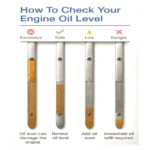
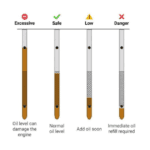
Step 9: Read the Oil Level
Most dipsticks include markings such as:
- MIN and MAX
- LOW and FULL
- Cross-hatched area
Ideally, the oil should be near the FULL mark.
If Oil Is Low
Add the manufacturer-recommended oil gradually. Avoid overfilling.
If Oil Is Full
No action is needed.
If Oil Is Above Full
Excess oil may require removal.
Step 10: Inspect Oil Condition
The oil’s appearance provides valuable clues. Healthy oil generally appears:
- Amber
- Light brown
- Smooth
Potential problems include:
Thick Black Oil
Indicates aging oil.
Milky Oil
May signal coolant contamination.
Metallic Particles
Could indicate internal engine wear.
Burnt Smell
May suggest overheating.
Understanding Oil Level Markings
Many drivers find dipsticks confusing. Here’s a simple explanation.
| Reading | Meaning |
| At Full Mark | Ideal |
| Slightly Below Full | Usually acceptable |
| Near Minimum | Add oil soon |
| Below Minimum | Add oil immediately |
| Above Maximum | Potential overfill issue |
What Happens If Engine Oil Is Too Low?
Low engine oil can create serious problems. Potential consequences include:
Increased Friction
Engine components rely on oil lubrication. Without enough oil, wear accelerates dramatically.
Overheating
- Oil helps transfer heat away from engine parts.
- Insufficient oil can lead to dangerous temperatures.
Reduced Fuel Economy
The engine works harder when lubrication is poor.
Engine Failure
In extreme situations, low oil may cause catastrophic engine damage.
What Happens If Engine Oil Is Overfilled?
Many people assume more oil is always better. That’s incorrect. Overfilling can cause:
- Foaming oil
- Increased pressure
- Seal damage
- Reduced lubrication
- Catalytic converter damage
Always stay within manufacturer specifications.
Common Signs Your Vehicle Needs an Oil Check
Watch for these warning signs:
Oil Warning Light
One of the most obvious indicators.
Engine Knocking
May indicate insufficient lubrication.
Burning Oil Smell
Can suggest leaks or overheating.
Excessive Exhaust Smoke
Sometimes associated with oil consumption.
Poor Engine Performance
Low oil can negatively affect operation.
My Personal Experience Checking Engine Oil
Over the years, I’ve made engine oil checks part of my monthly vehicle maintenance routine. One winter morning, I noticed the oil level on my SUV was significantly lower than normal. There were no dashboard warnings, unusual noises, or obvious leaks.
After further inspection, a worn valve cover gasket was allowing a slow oil leak. Because I discovered the issue early, the repair was inexpensive and prevented engine damage. That experience reinforced how valuable a simple dipstick inspection can be.
How Often Should You Add Oil?
Ideally, you shouldn’t need frequent top-offs. However, some engines naturally consume oil. Factors affecting consumption include:
- Vehicle age
- Engine design
- Driving habits
- Climate conditions
- Mileage
If you’re adding oil frequently, investigate possible leaks or excessive consumption.
Conventional vs Synthetic Oil
Choosing the right oil matters.
Comparison Table
| Feature | Conventional Oil | Synthetic Oil |
| Cost | Lower | Higher |
| Engine Protection | Good | Excellent |
| Temperature Resistance | Moderate | Superior |
| Oil Change Intervals | Shorter | Longer |
| Cold Weather Performance | Average | Excellent |
| Engine Cleanliness | Moderate | Better |
For most modern vehicles, synthetic oil offers superior protection and longevity.
Mistakes to Avoid When Checking Engine Oil
Many drivers make simple mistakes.
Checking on Uneven Ground
Produces inaccurate readings.
Reading Immediately After Driving
Oil hasn’t settled yet.
Using the Wrong Oil Type
Always follow manufacturer recommendations.
Ignoring Oil Color
Condition matters as much as level.
Overfilling
Can be just as harmful as low oil.
Buyer’s Guide: What You Need for Proper Engine Oil Maintenance
If you’re serious about maintaining your vehicle, consider keeping these items on hand.
Engine Oil
Always buy the viscosity grade recommended in your owner’s manual.
Examples include:
- 0W-20
- 5W-20
- 5W-30
- 10W-30
Funnel
Prevents spills during oil top-offs.
Microfiber Towels
Useful for dipstick cleaning and spill removal.
Oil Drain Pan
Helpful if you perform your own oil changes.
Gloves
Keeps hands clean during maintenance.
Flashlight
Makes dipstick markings easier to read.
What to Look For When Buying Engine Oil
- Correct viscosity rating
- Manufacturer approval certifications
- Synthetic or conventional compatibility
- Trusted brand reputation
- Suitable climate performance
Long-Term Benefits of Checking Engine Oil Regularly
Routine oil checks can provide:
Longer Engine Life
Proper lubrication reduces wear.
Lower Repair Costs
Problems are caught early.
Better Fuel Economy
Efficient engines consume less fuel.
Improved Reliability
Fewer unexpected breakdowns.
Higher Resale Value
Documented maintenance helps preserve vehicle value.
Read More: Which Car Has The Largest Fuel Tank
FAQs: How To Check Your Engine Oil
How often should I check my engine oil?
Most experts recommend checking once a month and before long trips.
Can I check the engine oil when the engine is hot?
Yes, but many manufacturers recommend waiting several minutes after shutting off the engine for a more accurate reading.
What color should engine oil be?
Healthy oil is usually amber or light brown.
Is black oil always bad?
Not necessarily. Oil naturally darkens over time. However, extremely dirty oil may indicate it’s time for a change.
What happens if my oil level is below the minimum mark?
You should add oil immediately to prevent engine damage.
Can too much oil hurt my engine?
Yes. Overfilling can create pressure issues and reduce lubrication effectiveness.
Why does my car keep losing oil?
Possible causes include leaks, worn engine components, or normal oil consumption in older engines.
Should I use synthetic oil?
Synthetic oil generally provides better protection, especially for modern engines.
Can I drive with low oil?
It’s not recommended. Low oil can quickly lead to severe engine damage.
What if my oil looks milky?
Milky oil may indicate coolant contamination and should be inspected by a qualified mechanic immediately.
Final Thoughts
Learning how to check your engine oil is one of the easiest and most valuable automotive skills a driver can develop. The process takes only a few minutes, requires almost no tools, and can save thousands of dollars in repair costs.
Regular inspections help you catch leaks, monitor engine health, and ensure proper lubrication before problems become serious. Whether you’re a first-time vehicle owner or an experienced driver, making engine oil checks part of your routine maintenance schedule is a smart investment in your vehicle’s longevity and performance.
A few minutes spent checking your oil today can prevent major engine headaches tomorrow.