There are few things more confusing than turning off your vehicle, grabbing your keys, and then hearing the radiator cooling fan continue running. The first time it happened to me, I honestly thought something was seriously wrong with the engine.
After parking my car in the driveway, I noticed a loud humming noise coming from under the hood. The engine was off, the keys were in my hand, yet the cooling fan continued spinning for several minutes. Like many drivers, I immediately assumed the worst.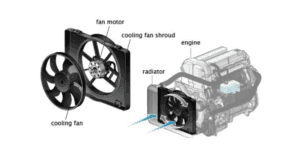 The good news is that a cooling fan staying on after engine shutdown is not always a problem. In some situations, it’s completely normal. However, when the fan runs excessively long, drains the battery, or never shuts off, it can indicate a faulty relay, coolant sensor, wiring issue, or control module problem.
In this comprehensive guide, I’ll explain everything I’ve learned about cooling fans that remain on after a vehicle is switched off, including the causes, diagnosis methods, repair costs, and the best solutions.
Understanding How a Cooling Fan Works
Modern vehicles rely on electric cooling fans to regulate engine temperature. The cooling system consists of:
- Radiator
- Coolant
- Thermostat
- Temperature sensors
- Fan relay
- Electric cooling fan
- Engine Control Module (ECM)
When the engine temperature rises beyond a predetermined threshold, the cooling fan activates and pulls air through the radiator. This process removes excess heat and prevents overheating.
In many modern vehicles, the cooling fan is controlled electronically, allowing it to continue operating briefly even after the engine has been shut down.
Is It Normal for a Cooling Fan to Stay On After Turning Off the Car?
Yes, sometimes. Many modern cars are programmed to keep the fan running for a short period after shutdown. This is known as:
- After-run cooling
- Residual cooling
- Heat soak protection
When the engine is switched off, temperatures under the hood may actually rise for several minutes because coolant circulation stops. The fan helps remove trapped heat and protect:
- Engine components
- Sensors
- Turbochargers
- Plastic parts
- Electrical connectors
In most cases, the fan should stop within:
- 1 to 10 minutes
Anything significantly longer may indicate a problem.
Common Reasons the Cooling Fan Stays On
1. Normal Heat Soak Operation
This is the most common and harmless cause.
Signs
- Fan runs 2–10 minutes
- Vehicle recently driven
- Hot weather conditions
- No warning lights
My Experience
During summer driving, my vehicle’s cooling fan frequently remained on for about five minutes after parking. The dealership confirmed this was normal operation.
Repair Needed?
No.
2. Faulty Cooling Fan Relay
The relay acts like an electrical switch.
If it becomes stuck in the closed position, power continuously flows to the fan.
Symptoms
- The fan never turns off
- Runs overnight
- Battery drains
- The fan starts immediately after reconnecting the battery
Repair Cost
- Parts: $15–$80
- Labor: $50–$150
Difficulty
Easy to moderate.
3. Defective Coolant Temperature Sensor
The coolant temperature sensor tells the computer how hot the engine is.
If the sensor falsely reports overheating conditions, the fan may continue running unnecessarily.
Symptoms
- Check engine light
- Incorrect temperature readings
- Poor fuel economy
- Fan operation at unusual times
Typical Cost
- Parts: $20–$100
- Labor: $75–$200
4. Malfunctioning Engine Control Module (ECM)
Although less common, an ECM problem can keep the cooling fan activated.
Symptoms
- Multiple electrical issues
- The fan stays on randomly
- Error codes
- Communication faults
Repair Cost
- Reprogramming: $100–$300
- Replacement: $500–$2,000+
5. Wiring Problems
Damaged wiring can create unintended electrical pathways.
Causes
- Rodent damage
- Corrosion
- Moisture intrusion
- Previous repair mistakes
Symptoms
- Intermittent fan operation
- Blown fuses
- Electrical malfunctions
6. Failed Fan Control Module
Many modern vehicles use dedicated fan control modules.
When these fail, the fan may remain energized continuously.
Symptoms
- Fan speed is stuck on high
- The fan never shuts off
- Battery drain
Typical Cost
- Parts: $100–$400
- Labor: $100–$250
Comparison Table: Normal vs Problematic Cooling Fan Operation
| Condition | Normal Cooling Fan | Faulty Cooling Fan |
| Runs after shutdown | Yes | Yes |
| Duration | 1–10 minutes | 15+ minutes or never stops |
| Battery drain | No | Often |
| Check engine light | Usually no | Often |
| Engine overheating | No | Possible |
| Requires repair | No | Usually |
| Fan speed | Normal operation | May stay on high speed |
| Frequency | During hot conditions | Constant |
Warning Signs You Shouldn’t Ignore
If any of these symptoms occur, further inspection is recommended:
Battery Dies Overnight
A continuously running fan can quickly drain the battery.
Burning Smell
Electrical components may overheat.
Fan Runs for Hours
This almost always indicates a malfunction.
Dashboard Warning Lights
Engine or cooling system warnings suggest underlying issues.
Unusual Noises
Grinding or rattling may indicate fan motor failure.
How I Diagnosed My Cooling Fan Issue
When my cooling fan stayed on unexpectedly, I followed a simple troubleshooting process.
Step 1: Observe Fan Runtime
I timed how long it remained active.
Five minutes proved normal.
Step 2: Check the Temperature Gauge
The engine wasn’t overheating.
Step 3: Scan for Error Codes
Using a basic OBD-II scanner revealed no issues.
Step 4: Inspect Relays
A quick relay inspection confirmed proper operation.
This simple process prevented unnecessary repairs.
How to Troubleshoot a Cooling Fan That Won’t Turn Off
Check Coolant Level
Low coolant can trigger abnormal fan behavior.
Look for:
- Empty reservoir
- Leaks
- Discolored coolant
Test the Relay
Swap the cooling fan relay with an identical relay if available.
If the problem disappears, you’ve likely found the culprit.
Read Diagnostic Trouble Codes
An OBD-II scanner can identify:
- Sensor faults
- Temperature issues
- ECM communication problems
Monitor Engine Temperature
Compare:
- Dashboard reading
- Scanner data
Large differences often indicate a bad sensor.
Inspect Wiring
Look for:
- Frayed wires
- Melted insulation
- Corrosion
- Loose connectors
Repair Cost Comparison
| Problem | Estimated Cost |
| Relay replacement | $50–$150 |
| Coolant temperature sensor | $100–$300 |
| Wiring repair | $100–$500 |
| Fan motor replacement | $200–$700 |
| Fan control module | $200–$650 |
| ECM repair | $500–$2,000+ |
Can You Drive with the Cooling Fan Staying On?
The answer depends on the cause.
Usually Safe
If:
- The fan stops within minutes
- No warning lights
- Temperature remains normal
Potentially Unsafe
If:
- The fan never turns off
- Battery drains
- Vehicle overheats
- Electrical issues appear
Ignoring these symptoms can lead to more expensive repairs later.
Impact on Battery Life
One of the biggest concerns is battery drain. A cooling fan can consume:
- 10–30 amps of power
If left running overnight, many batteries will be unable to start the vehicle the next morning. Repeated deep discharges also shorten battery lifespan.
Impact on Fuel Economy
A faulty cooling fan system can affect fuel efficiency indirectly. Possible reasons include:
- Incorrect sensor data
- Rich fuel mixtures
- ECM compensation strategies
While losses are usually small, they can become noticeable over time.
Cooling Fan Problems by Vehicle Age
New Vehicles (0–5 Years)
Most commonly:
- Software-related behavior
- Normal after-run cooling
Mid-Age Vehicles (5–10 Years)
Most commonly:
- Relay failures
- Sensor failures
Older Vehicles (10+ Years)
Most commonly:
- Wiring deterioration
- Fan motor wear
- Corrosion
Buyer’s Guide: What to Look for When Replacing Cooling System Components
If your diagnosis points to a replacement part, choosing quality components matters.
Cooling Fan Relays
Look for:
- OEM compatibility
- Heat-resistant construction
- Manufacturer warranty
Avoid ultra-cheap generic relays.
Coolant Temperature Sensors
Choose:
- OEM sensors
- Trusted aftermarket brands
- Correct calibration specifications
Poor-quality sensors often create inaccurate readings.
Cooling Fan Assemblies
Prioritize:
- Balanced blades
- OE-style connectors
- Proper airflow ratings
Cheap fan assemblies may produce excessive noise.
Fan Control Modules
Important considerations:
- Vehicle compatibility
- Weather resistance
- Warranty coverage
Electronic modules should ideally match OEM specifications.
OBD-II Diagnostic Tools
For DIY owners, a scanner can save significant money. Features to look for:
- Live temperature monitoring
- Code reading
- Code clearing
- Sensor data display
Preventing Future Cooling Fan Problems
Regular maintenance significantly reduces cooling system failures.
Maintain Coolant Levels
Check monthly.
Replace Coolant on Schedule
Old coolant contributes to corrosion.
Keep Connectors Clean
Electrical corrosion causes many fan issues.
Address Warning Lights Immediately
Early diagnosis prevents major failures.
Inspect Wiring Annually
Especially on older vehicles.
Read More: Which Car Has The Largest Fuel Tank
FAQs: Cooling Fan Stays On When Car Is Off
Why does my cooling fan stay on after I turn the car off?
Many modern vehicles use after-run cooling systems that continue operating briefly to reduce engine heat.
How long should a cooling fan run after shutdown?
Typically between one and ten minutes.
Can a cooling fan drain my battery?
Yes. If it remains on for extended periods, battery discharge is very likely.
Is it safe to disconnect the fan?
No. Disconnecting the fan without diagnosing the issue can lead to engine overheating.
Can a bad relay cause the fan to stay on?
Yes. A stuck relay is one of the most common causes.
Does low coolant make the fan run continuously?
It can. Low coolant may trigger abnormal temperature readings.
How much does it cost to fix a cooling fan that won’t turn off?
Most repairs range from $50 to $650, depending on the failed component.
Will a check engine light appear?
Often yes, especially when sensors or electronic controls are involved.
Can I replace a cooling fan relay myself?
In many vehicles, relay replacement is a simple DIY repair.
Should I worry if the fan runs for five minutes after parking?
Usually not. Five minutes is commonly considered normal after-run cooling operation.
My Overall Verdict
After researching, diagnosing, and dealing with cooling fan behavior myself, I’ve learned that a fan remaining on after engine shutdown isn’t automatically a reason to panic.
In many modern vehicles, this is simply part of the cooling strategy designed to protect engine components from heat soak.
However, if the fan runs excessively long, drains the battery, or never shuts off, the issue should be investigated promptly. The most common causes are stuck relays, faulty coolant temperature sensors, damaged wiring, or failing fan control modules.
The good news is that most cooling fan problems are relatively affordable to repair when caught early. Ignoring them, on the other hand, can lead to battery failures, overheating risks, and more expensive repairs down the road.
If your cooling fan stays on for just a few minutes after shutting off the engine, you’re probably seeing normal operation. If it runs for hours, it’s time to start troubleshooting.