Checking your engine oil is one of the simplest yet most important maintenance tasks every vehicle owner should know. Whether you drive a brand-new car, an older sedan, a pickup truck, or an SUV, maintaining the proper oil level helps protect your engine from excessive wear, overheating, and costly repairs.
I learned the importance of checking oil the hard way. Years ago, I ignored a dashboard warning light, assuming everything was fine. A routine inspection later revealed that my engine oil was dangerously low. Fortunately, I caught the issue before serious damage occurred. Since then, checking oil has become part of my regular maintenance routine. The good news is that checking your oil takes less than five minutes and requires no special mechanical skills.
In this guide, you’ll learn exactly how to check your oil, understand what the readings mean, recognize warning signs, and make informed decisions about oil maintenance.
Why Engine Oil Matters
Engine oil performs several critical functions:
- Lubricates moving engine parts
- Reduces friction and wear
- Helps cool engine components
- Prevents sludge buildup
- Protects against corrosion
- Improves engine efficiency
Without enough oil, metal parts can grind against each other, leading to severe engine damage.
Think of engine oil as the lifeblood of your vehicle. Just as your body needs proper circulation, your engine relies on oil circulation for healthy operation.
Quick Overview: How to Check Your Oil
| Step | Action | Why It Matters |
| 1 | Park on level ground | Ensures accurate reading |
| 2 | Turn off the engine | Allows oil to settle |
| 3 | Wait 5-10 minutes | Improves accuracy |
| 4 | Locate dipstick | Measures oil level |
| 5 | Remove and wipe the dipstick | Clears old oil |
| 6 | Reinsert fully | Gets proper measurement |
| 7 | Remove again and inspect | Check level and condition |
| 8 | Add oil if needed | Maintains engine protection |
Understanding Engine Oil Basics
Before checking your oil, it’s useful to understand what you’re looking for. Most vehicles have:
- Oil filler cap
- Oil dipstick
- Oil filter
- Oil pan
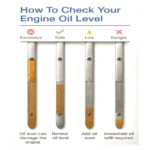
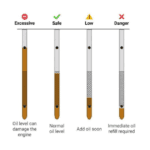
The dipstick provides a visual indication of the oil level in the engine. Most dipsticks feature:
- MIN mark
- MAX mark
- Cross-hatched safe zone
The oil level should remain between the minimum and maximum indicators.
Step-by-Step Guide: How To Check Your Oil
Step 1: Park on a Flat Surface
A level surface is essential.
If your vehicle is parked on an incline, the oil may collect on one side of the oil pan, resulting in an inaccurate reading.
Choose:
- Garage floor
- Driveway
- Parking lot
Avoid steep slopes.
Step 2: Turn Off the Engine
- Never check oil immediately after aggressive driving.
- Turn off the engine and allow it to rest.
- This lets the oil drain back into the oil pan.
Step 3: Wait Several Minutes
Most manufacturers recommend waiting:
- 5 minutes minimum
- 10 minutes ideal
This ensures an accurate reading.
Step 4: Locate the Dipstick
Open the hood and find the dipstick. Most dipsticks feature:
- Yellow handle
- Orange handle
- Clearly marked loop
Consult your owner’s manual if necessary.
Step 5: Remove the Dipstick
- Pull the dipstick out completely.
- You’ll notice oil coating the end.
- At this point, don’t read it yet.
- The oil may have splashed during engine operation.
Step 6: Wipe It Clean
Use:
- Clean paper towel
- Shop rag
- Lint-free cloth
Wipe the entire measuring section clean.
Step 7: Reinsert Fully
- Push the dipstick all the way back into its tube.
- Ensure it seats completely.
- Partial insertion can produce false readings.
Step 8: Remove and Read
Pull the dipstick out again.
Observe:
- Oil level
- Oil color
- Oil consistency
The oil should sit between the MIN and MAX marks.
Understanding Oil Level Readings
Full
- Oil reaches near the MAX mark.
- Excellent condition.
- No action required.
Mid-Range
- Oil falls halfway between indicators.
- Still acceptable.
- Continue monitoring.
Low
- Oil sits near the MIN mark.
- Top off soon.
Below Minimum
- Oil falls below the MIN line.
- Add oil immediately.
- Avoid extensive driving.
How Much Oil Should You Add?
If oil is low:
- Add small amounts
- Recheck frequently
Typically:
| Oil Level | Suggested Addition |
| Slightly Low | 0.25 Quart |
| Near Minimum | 0.5 Quart |
| Below Minimum | 1 Quart Then Recheck |
Never overfill.
Too much oil can be just as harmful as too little.
Checking Oil Color and Condition
Oil condition matters as much as oil level.
Healthy Oil
Characteristics:
- Amber
- Light brown
- Smooth texture
This indicates good condition.
Dark Oil
- Dark oil isn’t automatically bad.
- Modern detergent oils naturally darken over time.
- However, very dark oil may indicate it’s approaching replacement time.
Milky Oil
Milky appearance may suggest:
- Coolant contamination
- Head gasket issues
Seek professional diagnosis immediately.
Gritty Oil
Oil should feel smooth.
If gritty:
- Contamination may exist
- Internal wear may be occurring
Further inspection is recommended.
When Should You Check Your Oil?
Experts recommend:
- Monthly inspections
- Before long road trips
- After towing
- Before extreme weather changes
Older vehicles may require more frequent monitoring.
Signs Your Oil Needs Attention
Watch for:
Oil Warning Light
One of the most important indicators.
Never ignore it.
Engine Noise
Low oil can cause:
- Ticking
- Knocking
- Clicking
These noises often indicate lubrication issues.
Burning Oil Smell
Possible causes:
- Oil leak
- Oil dripping onto hot surfaces
Immediate inspection is recommended.
Excessive Exhaust Smoke
Blue smoke often indicates oil consumption.
This may signal:
- Worn piston rings
- Valve seal issues
Common Mistakes When Checking Oil
Checking on Uneven Ground
Creates inaccurate readings.
Reading Immediately After Shutdown
Oil hasn’t settled yet.
Using the Wrong Oil Type
Always follow manufacturer recommendations.
Overfilling
Can create:
- Foaming
- Increased pressure
- Seal damage
Ignoring Oil Condition
Level alone doesn’t tell the whole story. Always inspect the appearance.
My Personal Experience Checking Oil
- Over the years, I’ve checked oil on everything from compact cars to trucks and SUVs.
- One lesson stands out: consistency matters more than complexity.
- Many drivers assume modern vehicles don’t require manual checks because technology monitors everything electronically. While sensors help, they aren’t perfect.
- A quick monthly oil inspection can reveal leaks, consumption problems, and maintenance needs long before warning lights appear.
- The peace of mind alone makes it worthwhile.
Benefits of Regular Oil Checks
Longer Engine Life
Proper lubrication reduces wear.
Improved Fuel Economy
Engines operate more efficiently.
Lower Repair Costs
Early detection prevents major failures.
Better Performance
Consistent oil levels support optimal operation.
Increased Reliability
Fewer surprises during daily driving.
Buyer’s Guide: Choosing Engine Oil
Selecting the right oil matters. Consider the following factors.
Viscosity Rating
Common examples:
- 0W-20
- 5W-20
- 5W-30
- 10W-30
Always follow manufacturer recommendations.
Conventional Oil
Advantages:
- Lower cost
- Widely available
Best for:
- Older vehicles
- Light-duty use
Synthetic Blend
Advantages:
- Improved protection
- Moderate pricing
Best for:
- Mixed driving conditions
Full Synthetic
Advantages:
- Superior protection
- Better temperature resistance
- Longer service intervals
Best for:
- Modern engines
- Extreme climates
- High-performance vehicles
Oil Type Comparison Table
| Feature | Conventional Oil | Synthetic Blend | Full Synthetic |
| Cost | Lowest | Moderate | Highest |
| Engine Protection | Good | Better | Excellent |
| Temperature Resistance | Fair | Good | Excellent |
| Longevity | Lower | Medium | Highest |
| Sludge Resistance | Fair | Good | Excellent |
| Best For | Older Cars | Everyday Drivers | Modern Engines |
How Often Should Oil Be Changed?
General guidelines:
- Conventional: 3,000–5,000 miles
- Synthetic Blend: 5,000–7,500 miles
- Full Synthetic: 7,500–15,000 miles
Always prioritize manufacturer recommendations.
Seasonal Oil Checking Tips
Summer
High temperatures increase stress on oil. Check levels more frequently.
Winter
- Cold weather affects viscosity.
- Use recommended winter-grade oils.
Long Road Trips
- Inspect oil before departure.
- Check again during extended journeys.
Digital Oil Monitoring Systems
Many modern vehicles use electronic sensors. Benefits include:
- Continuous monitoring
- Dashboard alerts
- Maintenance reminders
However, manual dipstick checks remain valuable for verification.
Read More: Car Cooling Fan Replacement Cost
FAQs: How To Check Your Oil
How often should I check my oil?
Most experts recommend checking at least once per month and before long trips.
Can I check the oil when the engine is hot?
Yes, but allow the engine to sit for several minutes so oil can settle.
What happens if oil is low?
Low oil can cause excessive engine wear, overheating, and severe damage.
Is dark oil bad?
Not necessarily. Modern oils naturally darken with use.
Should oil be at the maximum mark?
Anywhere between MIN and MAX is generally acceptable.
Can too much oil damage an engine?
Yes. Overfilling can create pressure issues and oil foaming.
Why does my car consume oil?
Possible causes include worn piston rings, valve seals, or leaks.
What color should healthy oil be?
Typically amber or light brown.
Can I add oil without changing it?
Yes, topping off is normal when levels drop.
Do newer cars still need manual oil checks?
Absolutely. Electronic sensors help, but manual inspections remain important.
What if I cannot find the dipstick?
Consult your owner’s manual. Some modern vehicles use electronic oil monitoring systems.
Is synthetic oil worth the extra cost?
For many drivers, yes. Synthetic oil offers better protection, longer service intervals, and improved performance in extreme temperatures.
Final Thoughts
Learning how to check your oil is one of the easiest and most valuable skills any driver can develop. The process takes only a few minutes, requires no specialized tools, and can help prevent thousands of dollars in engine repairs.
Regular inspections provide early warning signs of leaks, oil consumption, contamination, and maintenance issues. Whether you’re a first-time car owner or an experienced driver, checking oil monthly remains a smart habit that pays dividends in reliability and engine longevity.
Simply remember: park level, wait a few minutes, check the dipstick carefully, and keep oil within the recommended range. Your engine will thank you for it.