If you’ve ever pulled up to a fuel station and paused for a second thinking, “Wait, which side is my fuel tank on?” you’re definitely not alone. The fuel tank is one of those parts of a car you don’t think about until you need it.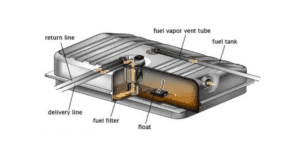 But understanding where it’s located and why it’s placed there can actually help you drive smarter, maintain your vehicle better, and even stay safer on the road.
In this guide, I’ll break it all down in a simple, real-world way based on both practical experience and how modern cars are engineered.
What Is a Fuel Tank?
A fuel tank is the container that stores fuel (petrol or diesel) before it’s delivered to your engine. It’s a critical part of your car’s fuel system, working alongside:
- Fuel pump
- Fuel lines
- Injectors
Without it, your car simply doesn’t run.
Where Is the Fuel Tank Located in a Car?
🚗 Short Answer:
In most modern cars, the fuel tank is located:
👉 Under the rear section of the vehicle, typically beneath the back seats or trunk area.
Why Is the Fuel Tank Placed There?
From personal experience and industry design logic, the placement isn’t random; it’s intentional and smart.
1. Safety First
Positioning the tank at the rear (but protected inside the chassis) helps reduce risk in frontal collisions.
2. Better Weight Distribution
Keeping the fuel mass near the center-rear improves:
- Balance
- Stability
- Handling
3. Space Efficiency
Modern cars maximize cabin and trunk space by placing the tank underneath.
4. Lower Center of Gravity
A lower-mounted tank improves:
- Cornering
- Overall driving stability
Fuel Tank Location by Vehicle Type
Not all vehicles are designed the same. Here’s how location can vary:
| Vehicle Type | Typical Fuel Tank Location | Notes |
| Sedan | Under the rear seats or the trunk floor | Most common setup |
| Hatchback | Beneath the rear seats | Compact design |
| SUV | Under the rear passenger area | Larger tanks |
| Pickup Truck | Between frame rails (mid or rear) | Protected placement |
| Sports Car | Center or rear-mid | Balance-focused |
| Older Vehicles | Sometimes the rear trunk area | Less safe design |
Real-Life Example (Personal Insight)
I once worked on a compact hatchback where the fuel tank sat directly under the rear seat. We had to lift the seat cushion just to access the fuel pump,p something many drivers don’t realize exists there.
On the other hand, in an SUV I checked, the tank was deeper under the chassis, requiring a lift to even see it properly.
👉 The takeaway: Location varies slightly, but it’s almost always in the rear half of the car.
How to Find Your Fuel Tank (Quick Tips)
If you’re unsure where yours is:
✔ Check the Fuel Gauge Arrow
Most cars have a small arrow next to the fuel icon pointing to:
- Left = fuel door on left
- Right = fuel door on right
✔ Look Under the Car
You’ll usually see a flat, wide container near the rear axle.
✔ Check the Owner’s Manual
Always the most accurate source for your specific model.
Fuel Tank Materials: What Are They Made Of?
Modern fuel tanks are typically made from:
- High-density plastic (HDPE) – lightweight, rust-proof
- Steel or aluminum – older vehicles or heavy-duty use
Fuel Tank Capacity Comparison
Fuel tank size depends on vehicle type:
| Vehicle Type | Average Tank Capacity |
| Small Car | 35–45 liters |
| Sedan | 45–65 liters |
| SUV | 60–90 liters |
| Pickup Truck | 70–120 liters |
Why Fuel Tank Location Matters
You might not think about it daily, but it affects:
🔧 Maintenance
- Easier or harder access for repairs
- Fuel pump location
🛡️ Safety
- Rear placement reduces fire risk in frontal crashes
⛽ Refueling Convenience
- Knowing which side saves time at fuel stations
🚗 Driving Performance
- Impacts vehicle balance and handling
Common Fuel Tank Problems
From experience, here are the most common issues:
1. Fuel Leaks
- Caused by corrosion or damage
- Strong fuel smell is a warning sign
2. Clogged Fuel Pump
- Often located inside the tank
- Leads to poor engine performance
3. Damaged Tank
- Road debris or accidents
4. Evaporation System Issues
- Modern cars use EVAP systems to control emissions
Buyer’s Guide: What to Look for in a Fuel Tank System
If you’re buying a car (new or used), here’s what to consider:
1. Tank Material
- Plastic tanks are more durable against rust
- Metal tanks may last longer in harsh conditions
2. Capacity
Choose based on your needs:
- City driving → smaller tank is fine
- Long trips → bigger tank is better
3. Placement Safety
Modern cars are safer due to improved tank placement and shielding.
4. Ease of Maintenance
Some cars make fuel pump access easier than others.
5. Fuel Efficiency
Bigger tanks don’t mean better efficiency, but they affect range.
Pros and Cons of Rear-Mounted Fuel Tanks
👍 Pros
- Safer in front-end collisions
- Better weight distribution
- Efficient use of space
👎 Cons
- Vulnerable in rear-end collisions (though protected)
- Harder to access for repairs in some vehicles
My Honest Take
After working around different vehicles, I can confidently say:
👉 The rear-mounted fuel tank design is one of the smartest automotive decisions ever made.
It balances safety, performance, and practicality in a way that most drivers never even notice but benefit from every day.
Read More: Alto Car AC Belt Price
FAQs: Where Is The Fuel Tank Located In A Car
1. Is the fuel tank always at the back of a car?
Most modern cars have it in the rear, but some sports cars place it closer to the center for balance.
2. Why is the fuel tank not in the front?
Front placement increases fire risk in collisions and affects weight distribution.
3. Can I see my fuel tank easily?
Not usually, it’s mounted underneath the car and often shielded.
4. Where is the fuel pump located?
Inside the fuel tank in most modern vehicles.
5. Is it dangerous if the fuel tank is damaged?
Yes. Fuel leaks can lead to fire hazards and should be fixed immediately.
6. How do I know which side my fuel tank is on?
Check the arrow on your fuel gauge.
7. Do electric cars have fuel tanks?
No. They use battery packs instead.
8. How long does a fuel tank last?
Typically, the life of the vehicle is unless damaged.
Final Thoughts
The fuel tank might be out of sight, but it’s never out of importance. Knowing where it’s located and why gives you a better understanding of your car’s design, safety, and performance.
Next time you fuel up, you’ll know exactly what’s happening beneath your car and why it’s designed that way.