If you’ve ever had a check engine light turn on, there’s a good chance the culprit was the oxygen sensor, often called the O2 sensor. I learned this the hard way during a road trip when my car suddenly started burning more fuel than usual.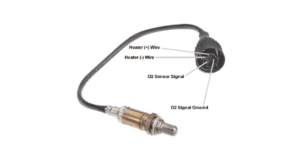 After a quick diagnostic scan, the mechanic pointed straight to the O2 sensor. At first glance, it’s a small and inexpensive part tucked into your car’s exhaust system.
But don’t let its size fool you, the oxygen sensor plays a critical role in your engine’s efficiency, emissions, and fuel economy. In this guide, I’ll walk you through:
- What an O2 sensor actually does
- How does it help your engine run efficiently
- Symptoms of a failing oxygen sensor
- Replacement options and comparisons
- A practical buyer’s guide if you’re replacing one
- Answers to common questions drivers ask
Whether you’re a curious car owner or planning a repair, this easy-to-read guide will help you understand why this tiny sensor matters so much.
What Is an O2 Sensor?
An O2 sensor (oxygen sensor) measures the amount of unburned oxygen in your vehicle’s exhaust gases.
Your car’s engine control unit (ECU) uses this information to adjust the air-fuel mixture entering the engine.
In simple terms:
- Too much oxygen → mixture is lean
- Too little oxygen → mixture is rich
The ECU constantly adjusts the fuel injection based on the O2 sensor’s data. This keeps the engine running at the ideal stoichiometric ratio (about 14.7 parts air to 1 part fuel for gasoline engines).
Why does this matter? Because the correct ratio improves:
- Fuel efficiency
- Engine performance
- Emissions control
- Catalytic converter life
Without a working oxygen sensor, your car would essentially be running blind.
Where Is the O2 Sensor Located?
Most modern vehicles have multiple oxygen sensors. Typically, they are installed in the exhaust system, usually:
- Upstream sensor – before the catalytic converter
- Downstream sensor – after the catalytic converter
Upstream O2 Sensor
- Measures oxygen levels coming from the engine
- Sends data to Ethe CU to adjust the fuel mixture
Downstream O2 Sensor
- Monitors catalytic converter efficiency
- Ensures emissions systems are working
Many cars today have 2–4 sensors, especially vehicles with V6 or V8 engines.
How an Oxygen Sensor Works (In Simple Terms)
The oxygen sensor works using a ceramic zirconia element that reacts to oxygen levels. Here’s the simplified process:
- Exhaust gases pass the sensor.
- The sensor compares oxygen levels in the exhaust to outside air.
- It generates a small voltage signal.
- The ECU reads the voltage.
- The ECU adjusts the fuel injection accordingly.
Typical voltage signals range between:
- 0.1 volts → lean mixture
- 0.9 volts → rich mixture
The ECU constantly adjusts the mixture hundreds of times per minute. This feedback loop is called closed-loop fuel control.
Why the O2 Sensor Is So Important
The oxygen sensor influences several major aspects of vehicle performance.
1. Fuel Efficiency
A faulty sensor can cause your engine to run rich, meaning it burns more fuel than necessary. This can reduce fuel economy by 10–40%.
2. Emissions Control
The O2 sensor ensures proper combustion, which reduces harmful gases like:
- Carbon monoxide (CO)
- Nitrogen oxides (NOx)
- Hydrocarbons
Without it, your vehicle would fail emissions testing.
3. Catalytic Converter Protection
An incorrect air-fuel mixture can overheat and destroy the catalytic converter, which is far more expensive than replacing a sensor.
4. Engine Performance
Bad sensors can cause:
- Rough idle
- Poor acceleration
- Engine hesitation
- Misfires
Signs of a Bad O2 Sensor
Oxygen sensors usually last 60,000–100,000 miles, but they eventually fail. Here are common warning signs.
1. Check Engine Light
The most common symptom is the check engine light. Diagnostic codes like:
- P0130
- P0135
- P0141
Often, it indicates oxygen sensor problems.
2. Poor Fuel Economy
If you notice your car suddenly using much more fuel, the O2 sensor could be sending incorrect data.
3. Rough Engine Idle
A failing sensor can make the engine run too rich or too lean. This causes:
- Engine shaking
- Rough idle
- Stalling
4. Strong Fuel Smell
Excess fuel from a rich mixture may produce a gasoline smell from the exhaust.
5. Failed Emissions Test
Many vehicles fail emissions inspections due to bad oxygen sensors.
Types of Oxygen Sensors
Not all O2 sensors are the same. Understanding the types helps when replacing one.
1. Zirconia Oxygen Sensors
Most common type. Features:
- Uses zirconium dioxide ceramic
- Produces a voltage signal
- Widely used in gasoline engines
2. Wideband Oxygen Sensors
More advanced sensors used in modern vehicles. Advantages:
- More precise air-fuel measurement
- Faster response
- Improved fuel efficiency
3. Titania Oxygen Sensors
Less common type. Instead of voltage, they change resistance based on oxygen levels.
Oxygen Sensor Comparison Table
Below is a comparison of the most common O2 sensor types.
| Sensor Type | Accuracy | Cost | Common Use | Pros | Cons |
| Zirconia Sensor | Moderate | Low | Most gasoline cars | Affordable, reliable | Less precise |
| Wideband Sensor | Very High | Higher | Modern engines | Accurate air-fuel monitoring | Expensive |
| Titania Sensor | Moderate | Medium | Older vehicles | Durable | Less common |
Personal Experience: When My O2 Sensor Failed
A few years ago, my sedan started showing strange symptoms. First, my fuel economy dropped dramatically. Then the check engine light appeared.
At first, I assumed it was something major like a fuel injector problem. But after scanning the car with an OBD2 tool, the error code pointed to the upstream oxygen sensor.
The replacement cost:
- Sensor: about $60
- Labor: around $80
Total repair: $140
Immediately after replacing it:
- Fuel economy improved
- The engine ran more smoothly
- The check engine light disappeared
It was one of the cheapest fixes with the biggest improvement I’ve ever experienced.
Buyer’s Guide: Choosing the Right O2 Sensor
If you’re replacing an oxygen sensor, choosing the correct one matters. Here’s what to consider.
1. Vehicle Compatibility
Always verify:
- Make
- Model
- Engine type
- Year
Even small engine differences can require different sensors.
2. OEM vs Aftermarket
OEM Sensors
- Made by the original manufacturer
- Perfect compatibility
- More expensive
Aftermarket Sensors
- Usually cheaper
- Wide variety of brands
- Quality varies
Trusted aftermarket brands often perform just as well as OEM.
3. Sensor Position
Make sure you buy the correct sensor for its position:
- Upstream sensor
- Downstream sensor
They are not always interchangeable.
4. Connector Type
Some sensors come with:
- Pre-installed connectors
- Universal wiring
Plug-and-play connectors make installation much easier.
5. Brand Reputation
Reliable brands include:
- Bosch
- Denso
- NGK
- Delphi
These brands supply sensors for many vehicle manufacturers.
Installation: Is It DIY Friendly?
Replacing an O2 sensor is surprisingly simple. Basic steps:
- Locate the sensor in the exhaust system
- Disconnect the electrical connector
- Use an O2 sensor socket
- Unscrew the old sensor
- Install the new one
Total time:
15–45 minutes
However, sensors may be stuck due to heat and rust, which can make removal difficult.
Maintenance Tips for Oxygen Sensors
To extend the life of your sensors:
- Fix engine misfires quickly
- Avoid using leaded fuel
- Repair oil leaks
- Replace air filters regularly
Contaminants like oil, coolant, or fuel additives can damage sensors.
The Cost of Replacing an O2 Sensor
Replacement cost varies based on the vehicle. Typical price range:
| Item | Average Cost |
| Oxygen Sensor | $40 – $200 |
| Labor | $50 – $150 |
| Total Repair | $90 – $350 |
Luxury vehicles or wideband sensors may cost more.
How Often Should O2 Sensors Be Replaced?
Most manufacturers recommend replacement between:
60,000 – 100,000 miles
Even if they haven’t completely failed, older sensors become slower and less accurate. Replacing them can restore fuel economy and engine performance.
Environmental Benefits of a Working O2 Sensor
A properly functioning oxygen sensor reduces harmful emissions significantly. It helps decrease:
- Carbon monoxide
- Unburned hydrocarbons
- Nitrogen oxides
This makes the sensor critical for cleaner air and environmental protection.
Read More: How To Check My Oil In My Car
FAQs: What Does An O2 Sensor Do In A Car
1. Can I drive with a bad O2 sensor?
Yes, but it’s not recommended. A failing sensor can:
- Waste fuel
- Damage the catalytic converter
- Causes engine performance issues.
2. How long does an oxygen sensor last?
Most last between 60,000 and 100,000 miles, depending on driving conditions.
3. How many O2 sensors does a car have?
Most vehicles have 2 to 4 sensors, depending on the engine and exhaust configuration.
4. Will a bad O2 sensor cause poor acceleration?
Yes. An incorrect air-fuel mixture can cause hesitation or sluggish acceleration.
5. Can I replace an oxygen sensor myself?
Yes. Many car owners replace them with basic tools and an O2 sensor socket.
6. What happens if the sensor sends incorrect data?
The ECU may inject too much fuel, causing:
- Poor fuel economy
- Higher emissions
- Engine performance problems
7. Does replacing an O2 sensor improve MPG?
Yes. Replacing a faulty sensor can improve fuel economy by up to 40% in some cases.
Final Thoughts
The oxygen sensor may be a small component, but it has a massive impact on how efficiently your car runs. From fuel economy to emissions control, it plays a vital role in modern engine management systems.
The good news is that O2 sensors are relatively inexpensive and easy to replace, making them one of the most cost-effective repairs in automotive maintenance.
If your check engine light turns on or your fuel economy drops suddenly, don’t ignore it. Your oxygen sensor might be trying to tell you something.