If you’ve ever driven on a hot summer afternoon and suddenly realized your car’s air conditioner is blowing warm air instead of that refreshing cold breeze, you probably wondered: what actually makes a car’s AC system work?
I’ve been there myself. A few years ago, my car’s AC stopped cooling during a long road trip. At first, I thought it was just low refrigerant. But after a visit to the mechanic, I learned that a car air conditioning system is made up of several different parts, and any one of them can cause problems.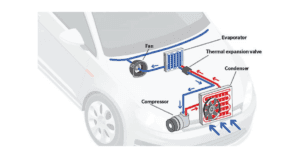 Once I understood the system, things made much more sense. A car AC system is basically a compact cooling machine that removes heat from the air inside your vehicle and replaces it with cool, dry air.
It works using a closed loop of refrigerant and a set of specialized components. The main parts of a car’s AC system include:
- AC Compressor
- Condenser
- Receiver/Dryer or Accumulator
- Expansion Valve or Orifice Tube
- Evaporator
- Refrigerant
- AC Pressure Switches
- Cabin Air Filter
- AC Lines and Hoses
- Blower Motor
Each of these components plays a specific role in the cooling cycle. In this guide, I’ll walk you through:
- All major parts of a car’s AC system
- How each component works
- Common problems
- Buying tips for replacements
- Maintenance advice
- And answers to the most common questions drivers ask**
Let’s start with the basics.
How a Car Air Conditioning System Works
Before we break down each component, it helps to understand the cooling cycle. The system works in four main stages:
- Compression
- Condensation
- Expansion
- Evaporation
Here’s a simplified version:
- The compressor pressurizes refrigerant gas.
- The condenser cools the gas into a liquid.
- The expansion valve releases pressure.
- The evaporator absorbs heat from the cabin air.
That’s how warm air becomes cool air. Once you understand this loop, the individual parts become much easier to understand.
Main Parts of a Car AC System
Let’s break down each component.
1. AC Compressor
The AC compressor is often called the heart of the car air conditioning system. Without it, nothing else works.
What It Does
The compressor:
- Pressurizes refrigerant
- Circulates refrigerant through the system
- Starts the cooling cycle
It is powered by the engine via a serpentine belt. When you turn on the AC, the compressor clutch engages and begins compressing refrigerant gas.
Common Issues
Typical compressor problems include:
- Worn clutch
- Seized compressor
- Refrigerant leaks
- Internal contamination
If your AC makes loud grinding noises, the compressor may be failing.
2. Condenser
The condenser looks very similar to a small radiator and is usually located in front of the car’s radiator.
What It Does
The condenser removes heat from the refrigerant. It takes hot, high-pressure gas from the compressor and turns it into cool liquid refrigerant.
Airflow from the radiator fan and driving wind helps cool the condenser.
Common Issues
- Dirt or debris blocking airflow
- Bent cooling fins
- Leaks caused by road debris
- Corrosion
A clogged condenser can cause weak cooling performance.
3. Receiver Dryer
The receiver dryer is used in vehicles with thermal expansion valve systems.
What It Does
It performs three critical jobs:
- Removes moisture from refrigerant
- Filters contaminants
- Stores excess refrigerant
Moisture is extremely dangerous for AC systems because it can create acid and ice formation.
Common Issues
- Saturated desiccant
- Internal clogging
- Refrigerant contamination
Mechanics often replace the receiver dryer whenever the system is opened.
4. Accumulator
Vehicles that use an orifice tube system use an accumulator instead of a receiver dryer.
What It Does
The accumulator:
- Filters refrigerant
- Removes moisture
- Prevents liquid refrigerant from reaching the compressor
Liquid refrigerant can destroy compressors, so this component protects the system.
5. Expansion Valve (TXV)
The expansion valve, also called the thermal expansion valve (TXV), regulates refrigerant flow.
What It Does
It reduces pressure in the refrigerant before it enters the evaporator. When pressure drops, refrigerant becomes extremely cold. That’s the key to cooling.
Common Problems
- Valve clogging
- Sticking valve
- Poor temperature control
Symptoms often include inconsistent cooling.
6. Orifice Tube
Some vehicles use an orifice tube instead of an expansion valve. It performs a similar function but in a simpler design.
What It Does
- Restricts refrigerant flow
- Creates a pressure drop
- Helps create cold refrigerant mist
Orifice tubes are cheaper but less precise.
7. Evaporator
The evaporator sits inside the dashboard near the cabin blower motor.
What It Does
This is where the actual cooling happens. Warm cabin air blows across the evaporator coils. The refrigerant absorbs heat and evaporates into a gas.
The result:
Cold air enters your car’s interior.
Common Issues
- Mold buildup
- Refrigerant leaks
- Blocked airflow
A dirty evaporator can cause bad smells inside the car.
8. Refrigerant
Refrigerant is the chemical fluid that transfers heat. Older cars used R-12, but modern vehicles use R-134a or R-1234yf.
What Refrigerant Does
It changes between:
- Liquid
- Gas
This phase change allows the system to absorb and release heat. Low refrigerant is the most common reason a car’s AC stops cooling.
9. AC Pressure Switches
These switches protect the AC system.
Types
- High-pressure switch
- Low-pressure switch
They shut off the compressor if the pressures become unsafe.
This prevents catastrophic damage.
10. Cabin Air Filter
Many people forget the cabin air filter, but it plays a big role.
What It Does
It filters air entering the cabin by removing:
- Dust
- Pollen
- Pollution
- Debris
A clogged filter can reduce airflow and make the AC feel weak.
11. Blower Motor
The blower motor pushes air through the system. Without it, even a perfectly working AC system won’t blow air into the cabin.
12. AC Hoses and Lines
These connect all components and carry refrigerant through the system. Leaks often occur at hose connections.
Comparison Table of Major Car AC Components
| Component | Function | Location | Common Problems |
| Compressor | Pressurizes refrigerant | Engine bay | Seizing, clutch failure |
| Condenser | Removes heat from refrigerant | Front of radiator | Dirt, leaks |
| Receiver Dryer | Removes moisture and contaminants | AC line near the condenser | Saturation |
| Expansion Valve | Controls refrigerant flow | Near evaporator | Clogging |
| Evaporator | Absorbs cabin heat | Inside dashboard | Mold, leaks |
| Blower Motor | Circulates cabin air | Under dashboard | Motor failure |
Buyer’s Guide: Choosing Car AC Replacement Parts
When replacing AC components, quality matters a lot. Here’s what I’ve learned from experience.
1. Choose OEM or High Quality Aftermarket
OEM parts match factory specifications. Good aftermarket brands can be just as reliable. Cheap, no-name parts often fail quickly.
2. Match Refrigerant Compatibility
Ensure the part supports your refrigerant type:
- R134a
- R1234yf
Incorrect parts can damage the system.
3. Replace Related Parts Together
For example:
If replacing the compressor, also replace:
- Receiver dryer
- Expansion valve
- O-rings
This prevents contamination.
4. Look for Warranty
Reliable AC parts often include 1–2 year warranties. This shows manufacturer confidence.
5. Professional Installation Matters
AC systems require:
- Vacuum pump
- Refrigerant charging
- Pressure testing
Incorrect installation can destroy new parts.
Common Signs Your Car’s AC System Has Problems
Watch for these warning signs.
Weak Cooling
Usually caused by:
- Low refrigerant
- Dirty condenser
- Bad compressor
AC Blows Warm Air
Possible issues include:
- Compressor failure
- Refrigerant leak
- Expansion valve blockage
Strange Smells
Usually, mold is in the evaporator.
Loud Noises
Often compressor or clutch problems.
Maintenance Tips to Keep Your Car’s AC Running Longer
Here are simple habits that extend system life.
Run AC Weekly
Even in winter. This keeps seals lubricated.
Replace Cabin Air Filter
Every 12,000–15,000 miles.
Keep Condenser Clean
Remove leaves and debris from the front grille.
Fix Small Leaks Early
Ignoring small leaks can destroy compressors.
Read More: How To Add Oil To A Car
FAQs: What Are The Parts Of A Car AC System
What are the 5 main parts of a car AC system?
The five key components are:
- Compressor
- Condenser
- Expansion valve
- Evaporator
- Receiver dryer or accumulator
These work together to cool cabin air.
What is the most important part of a car’s AC?
The compressor is considered the most important component because it circulates refrigerant through the entire system. Without it, cooling cannot occur.
Why does the car’s AC stop cooling?
Common reasons include:
- Low refrigerant
- Compressor failure
- Blocked condenser
- Faulty expansion valve
- Electrical problems
How long does a car AC compressor last?
Most compressors last 8–12 years, depending on usage and maintenance.
Can I drive with a bad AC compressor?
Yes, but the AC system will not cool properly. In severe cases, a seized compressor can damage the drive belt system.
Final Thoughts
Understanding the parts of a car’s AC system makes troubleshooting much easier. While the system may seem complicated at first, it really comes down to a simple cooling cycle powered by a few key components.
The most important pieces include:
- Compressor
- Condenser
- Expansion device
- Evaporator
- Refrigerant
When all of these work together properly, you get the cold, comfortable airflow that makes summer driving enjoyable.
If your AC starts acting up, knowing these parts will help you diagnose problems faster, talk to mechanics confidently, and avoid unnecessary repairs.