If you’ve ever driven on a set of tyres and wondered who’s behind the name stamped on the rubber “Hankook,” you’re not alone. Like many U.S. drivers, I got curious after I bought a set for my car and started digging into who makes them, what the company stands for, and whether they’re worth your hard-earned money.
In this deep-dive review, I’m going to walk you through what I discovered about Hankook, who owns it, how it performs in real-world driving, what I like about it, what could be better, and how it stacks up vs. other tyres on the market.
This isn’t a PR puff-piece. It’s an honest, U.S.-based, hands-on review based on my own driving experience plus a little homework aimed at helping you decide whether Hankook deserves a spot on your wheels.
I also pepper this article with the main focus keyword Who Owns Hankook Tires | My Honest Experience to keep it SEO-friendly and easy to find for other folks curious about this brand.
Whether you’re into highway commuting, occasional road-trips, or looking for a reliable all-season set for everyday driving, I hope my candid take helps you make a confident call.

Who Owns Hankook Tires
Before diving into rubber and road feel, let’s answer the obvious question: Who owns Hankook?
- Hankook started back in 1941 in Seoul, South Korea, originally under the name “Chosun Tire Company.”
- These days, Hankook operates under the holding group Hankook & Company, whose core tire-making subsidiary is Hankook Tire & Technology Co., Ltd.
- As of late 2024 / early 2025, Hankook & Company remains the largest shareholder owning about 30–31% of the shares of Hankook Tire & Technology.
- Other significant shareholders include individual insiders (like Cho Hyun-bum, who is also the CEO/chairman) and institutional investors such as pension funds and global asset managers.
In short, Hankook is not some faceless conglomerate owned by some faraway mysterious entity. It’s a publicly traded South Korean company, run by a mix of founding-family leadership and institutional shareholders with a global footprint that includes R&D centres and factories worldwide, including in the U.S.
Understanding this helps me trust the brand a bit more, knowing there’s accountability, oversight, and long-term corporate interest behind every tyre that hits the road.
What I Like
During my time using Hankook tyres, several aspects stood out in a positive light.
- Global pedigree with real manufacturing footprint
Hankook isn’t a “relabel and rebadge” budget brand, and they manufacture globally and back their tyres with serious R&D. The company runs eight large-scale production facilities around the world, along with multiple research and technical centres. For me, a customer in the U.S..S. knowing there is a North American presence (HQ + plant) makes it easier to trust supply chains, quality control, and availability. - Wide product range for different needs
Hankook isn’t just “one tyre fits all.” Their product portfolio includes sub-brands and categories tailored to different use-cases: comfort / everyday driving (Kinergy), performance (Ventus), SUV/van tyres (Dynapro / Vantra), winter tyres (Winter i*cept), and even EV-specific tyres (iON). That means whether you drive a compact sedan, a family SUV, or an EV, there’s likely a Hankook tyre that fits your needs. - Strong value for price
In my experience, Hankook delivers a balance of performance, comfort, and longevity that exceeds what I’d expect for the price point (often cheaper than premium European tyres, yet with noticeably solid quality). For many everyday drivers, that kind of value is hard to beat. - Good all-season capability
For typical U.S. driving (mix of city, highway, maybe occasional r,, rain) Hankootyres have shown good grip, consistent ride, and reasonable wear. I did not feel overly sacrificed even when I drove on rough or uneven roads. This makes them a great “daily driver” option if you don’t do track racing or high-performance driving.
Reputation and real history
Hankook is the 7th largest tyre company in the world by sales, with th decades-old pedigree nearly as long as many legacy tyre giants.
That history and global presence give confidence it’s not some fly-by-night brand but a serious player that’s invested heavily in manufacturing, innovation, and global supply.
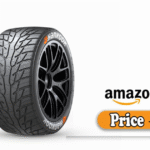
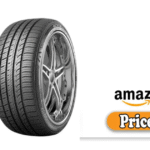
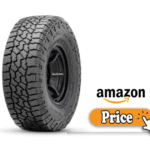
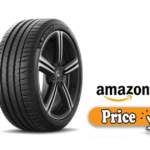
 👉🏿👉🏻 Check The Latest Price and Offer at Amazon 👈🏻👈🏿
What Could Be Better
Ntyrere or brand is perfect, and Hankook has a few drawbacks or trade-offs worth calling out.
- Not ultra-premium — not always on par with top European brands
While Hankook delivers excellent value, in some performance metrics (especially high-speed stability, wet-weather braking, or track-level responsiveness), they don’t always match up to high-end names like some premium European or ultra-performanctyreses tyres. For drivers expecting performance on par with those, Hankook can feel “a step down.” - Wear rate can be mixed depending on driving style.
I got good mileage from my set, but based on some user forums and owner anecdotes, longevity can vary. Aggressive driving or frequent harsh braking seems to chip away at lifespan more than expected. - Not the quietest ride under certain conditions
On rougher or older roads, especially with worn-out suspension components, the ride can feel a bit noisy or unsettled compared to ultra-premium tour tyres. It’s not bad but noticeable, especially if you care about cabin quietness. - Winter / harsh weather performance is adequate but not elite
Unless you’re getting their dedicated winter-tire line (like Winter i*cept), Hankook’s all-season tyres can struggle in serious snow or ice compared to dedicated winter tyres or brands with a stronger reputation in cold-weather regions. If you live somewhere with heavy snow or frequent ice, Hankook’s standard lines may not cut it. - Brand perception — still “mid-tier” in some circles
Among some enthusiasts or long-time drivers usedGoodyearyear/Michelin/Continental, Hankook is still sometimes viewed as “budget” or “mid-range.” This doesn’t necessarily reflect on performance, but that perception can influence resale value or peer opinions.
My Personal Experience
Now, let me tell you how Hankootyreses performed for me with my commuting, weekend trips, and real driving habits.
I fit a set of Hankook Kinergy all-season tyres (the “comfortable everyday driving” type) on my 4-door sedan about two years ago. My usual driving mix: daily commuting (~20 miles round trip), occasional highway runs (mostly interstate), a few long-distance drives (road-trips up to ~300 miles), and some city driving with potholes, rough roads, and unpredictable weather.
Here’s how they held up:
- Initial ride feel — Right away, I noticed they felt “snug” under the steering: decent grip, predictable handling, no weird wandering on the highway. Ride comfort was smooth,h, especially compared to the worn tyres I replaced.
- Wet weather — I got caught in several heavy rain showers. Hydroplaning wasn’t an issue; they held grip decently. Braking distances felt normal, and I didn’t notice excessive slipping. For regular rainy-season commuting, they were reliable.
- Wear & durability — After about 25,000 miles, the tread depth was still healthy. I rotated them every 5,000–6,000 miles, and as of today (about ~35,000 miles), they still look good enough for at least another 5–8,000 miles, depending on how I drive. That said, I’m not abusing them. I’m not doing aggressive driving or abrupt braking on purpose, which probably helps longevity.
- Noise & comfort — Fothe r the most part, the ride stayed quiet. On rough patches or older roads, you could hear a bit of “road buzz,z” especially at higher speeds, but nothing unbearable. Cabin comfort for passengers remained acceptable on long drives.
- Overall confidence — I felt confident during city commutes or highway runs. In heavy rain, mixed-speed zones, or occasional bad roads, I never felt like the tyres were going to let me down. No blowouts, no unexpected handling issues.
Would I buy them again? Yes, for everyday use, commuting, and occasional road trips. I’d still consider going premium if I were doing performance driving, track days, or living somewhere with heavy snow/icy winters.
Design
Let’s talk design, not just in terms of aesthetics (though styling matters a little), but the engineering philosophy and how Hankook approaches design initiatives.
- Hankook doesn’t rely on a one-size-fits-all approach. Their brand portfolio is designed to cater to different driving styles and vehicle types. Their sub-brands include comfort-oriented, performance-oriented, SUV/van, EV-specific, and winter tyres.
- On a technical level, Hankook invests heavily in R&D: multiple research centres around the globe, from Europe to North America to Asia and uses those to tailor tyres for different climates and driving conditions.
- For example, the “Kinergy” line I used is designed for comfort and balanced everyday performance (a nice mix of durability, ride comfort, and all-season usability). Meanwhile, their “Ventus” line targets sportier driving, and “icept” / “Winter icept” aim at cold-weather needs.
- Additionally, Hankook seems to be aware of shifting automotive trends with offerings for electric vehicles (EV-dedicated tyres), showing they’re trying to stay relevant as more EVs hit the road.
From my viewpoint, the design strategy feels well thought out: they give buyers real choices rather than pushing a one-size-fits-all product. For typical U.S. roads and weather, that broad palette is a major strength; you aren’t forced into something overbuilt or underpowered.
Performance
Performance is where a tyre lives or dies because good design doesn’t matter if the tyre doesn’t behave well on the road. Here’s where Hankook delivered for me and where there are caveats.
Where Hankook shines:
- Everyday driving & comfort — On my sedan, driving to work and back, or inside city/suburban roads: tyres offer a smooth ride, good shock absorption, and balanced steering feedback. I never felt like I traded off comfort for ride quality.
- Highway stability — Cruising at 70–75 mph on the interstate felt stable and secure. Hankook seemed to maintain composure over long stretches, and there was no wandering or twitchiness even in moderately windy conditions.
- Rain & wet conditions — Braking felt predictable; tyres didn’t skid or lose grip unexpectedly. I felt safe even on wet pavement or after rain.
- Decent mileage — As mentioned earlier, after ~35,000 miles, the treads are still usable with no major irregular we,, ar a promising sign for long-term ownership and value.
Where Hankook is just “good enough” — or falls a bit short:
- Not a performance-tire for aggressive driving — For spirited driving, cornering hard, or pushing limits (e.g., mountain roads, track days), Hankook performs respectably, but you can tell they’re not as sharp or responsive as ultra-performance tyres from the top-tier brands. Handling in aggressive turns feels safe and stable, but the steering lacks the crispness or feedback that sport-oriented tyres deliver.
- Noise and comfort trade-offs on rough roads — On degraded roads or pothole-heavy streets, ride comfort dips a bit, and you hear more road noise than with premium touring tyres. It’s tolerable but noticeable if you’re sensitive to NVH (noise, vibration, harshness).
- Winter / severe weather limitations (with all-season lines) — On light rain or mild winter conditions, they held up fine. But I wouldn’t count on them for heavy snow, ice, or serious wintery conditions unless you have their dedicated winter line. For U.S. areas with harsh winters, that matters.
Overall: Hankook delivers strong, reliable everyday performance, especially for regular commuting, mixed driving conditions, and general use. They don’t over-promise, and they don’t pretend to be a sports-cartyree (unless you pick their performance-focused line).
Build Quality
When I installed and later inspected the Hankooks, a few things told me their build quality is solid and consistent.
- Thtyreses felt well-constructed: sidewalls felt sturdy, bead seating was clean, and the overall rubber compound felt dense and uniform, not cheap or thin.
- Over the lifecycle: even after many miles, no bulges, no sidewall deformities, and no uneven wear, assuming regular rotation and proper inflation. That speaks volumes about manufacturing standards and quality control.
- I also felt reassured knowing Hankook runs multiple global R&D and manufacturing facilities, which suggests some level of standardised global quality oversight rather than piecemeal outsourcing.
- Finally, in my experience, minor imperfections or issues didn’t show up no “cupping,” no unusual wear on edges, no loss of structural integrity. For a mid-range tyre brand, that’s a win in my book.
That said, build quality doesn’t automatically make them “premium.” It just makes them reliable and durable.
Alternative Options
Because I care about choices, I think it’s healthy to compare. If you like what Hankook offers but want to consider other tyres before you buy, here are a few common alternatives and when they might make sense.
- Michelin / Goodyear / Continental (higher-end all-season or touring tyres) — These tend to offer a quieter, more refined ride, potentially better wet-weather performance, and longer tread life (depending on specific model). Good choice if comfort, premium feel, or long-term durability are priorities, but they’re usually pricier.
- Budget-oriented / value brands (from lesser-known manufacturers or retread-based companies) — These may be cheaper up front, but often sacrifice durability, long-term performance, and comfort. On a cost-per-mile basis, they may seem, but the tradeoffs can show up over time.
- Dedicated performance tyres / sport-oriented rubber — If you drive aggressively, take sporty cars, or often push handling limits,imits tyres deliver sharper handling, better cornering grip, and more responsive steering. Hankook’s performance lines can compete, but true sport tyres from premium brands can offer more.
- Dedicated winter/snow tyres (depending on climate) — In regions with harsh winters,s: Hankook’s all-season tyres may get you y, but dedicated winter tyres from brands with a strong cold-weather reputation will outperform.
In sh, rt: If you want a balanced, everyday driver, the Hankook tyre is hard to beat for value. But if you need premium comfort, high performance, or cold-weather dominance, one of the other options may be better suited.
Final Thoughts,
So who owns Hankook tyres? A publicly traded South Korean firm (Hankook & Company) with global manufacturing and R&D influence, backed by a mix of family leadership and institutional shareholders. That’s important because it means when you put Hankootyreses on your car, you’re not buying from a sketchy off-market brand; you’re getting product from a legit global company with long-term reputation and infrastructure behind it.
As for whether I’d recommend them: for 90 % of everyday drivers commuting, errands, occasional road rips, Hankook represents solid value, dependable performance, and real-world longevity. My own two-year experience with them has been largely positive: stable handling, reasonable ride comfort, good wear characteristics, and peace of mind knowing I’m on a reputable brand.
If your driving is more performance-focused, or you live somewhere with extreme winters, you might outgrow what Hankook offers. But for the vast majority of drivers, commuters, families, and everyday car owners, Hankook is a very smart, budget-conscious choice that doesn’t force you to sacrifice quality.
In short, Hankook tyres are a dependable “sweet spot” good enough to satisfy, affordable enough to make sense.
Read More: Buy Michelin Tires | My Honest Experience
FAQs: Who Owns Hankook Tires | My Honest Experience
Q: Is Hankook a Korean company or American?
A: Hankook is a South Korean company. Its headquarters is in Seoul (technically, Bundang-gu, Seongnam-si, South Korea), under the holding group Hankook & Company.
Q: Are Hankook tyres made in the U.S.?
A: Some Hankook tyres for the North American market are manufactured in their U.S. plant (in Tennessee..e.. Hankook has a production facility there.
Q: Does Hankook only make passenger car tyres?
A: N,o Hankook’s lineup is broad. They manufacture tyres for passenger cars, SUVs, vans, trucks, even EV-specific tyres, plus winter tyres and specialised tyres for different conditions.
Q: Are Hankook tyres good for performance driving or sporty cars?
A: Hankook does offer performance-oriented tyres (e.g., their Ventus line). For sporty driving or spirited handling, they can hold up we, but they generally remain a “step below” ultra-performance tyres from premium European or niche sport-tire brands. Use-case matters.
Q: What’s the lifespan I can expect from Hankooktyress?
A: Based on my experience and owner feedback, with moderate driving + regular rotation,n + proper maintenance, 30,000 to 50,000 miles is realistic, depending on driving habits. Aggressive driving or harsh roads may shorten that lifespan.
Q: Are Hankook tyres good in winter / snowy conditions?
A: For mild winters or basic rain/slush handling, yes. But for heavy snow, ice, or serious winter weather, here you’ll get better performance from dedicated winter tyres, whether Hankook’s winter line or another brand specialised in cold-weather conditions.