If you’ve ever wondered, “How do you check oil in a car?”, you’re not alone. Checking engine oil is one of the simplest yet most important maintenance tasks every vehicle owner should know. It takes less than five minutes, requires no special tools, and can help prevent expensive engine repairs. I remember the first time I checked my own oil. I expected it to be complicated, but it turned out to be surprisingly easy. After learning the proper technique, I realized that regularly monitoring oil levels can save money, improve engine performance, and extend a vehicle’s lifespan.
In this comprehensive guide, you’ll learn everything about checking engine oil, including step-by-step instructions, common mistakes, warning signs, oil types, maintenance schedules, and buying recommendations.
Quick Comparison Table: Healthy vs. Problematic Engine Oil
| Feature | Healthy Engine Oil | Problematic Engine Oil |
| Color | Amber to light brown | Very dark black |
| Consistency | Smooth and slippery | Thick, gritty, sludgy |
| Oil Level | Between Min and Max marks | Below Min mark |
| Smell | Mild petroleum smell | Burnt odor |
| Engine Performance | Smooth operation | Rough running |
| Fuel Economy | Normal | Reduced efficiency |
| Risk of Damage | Low | High |
Why Engine Oil Is So Important
Engine oil performs several critical functions:
- Lubricates moving engine parts
- Reduces friction
- Prevents overheating
- Removes contaminants
- Protects against corrosion
- Improves fuel efficiency
- Extends engine life
Without proper oil levels, metal engine components can rub together, causing excessive wear and potentially catastrophic engine failure.
Signs Your Oil Needs Checking
Many drivers only think about oil during an oil change, but there are warning signs that indicate you should inspect it immediately:
Oil Warning Light
The oil pressure light is one of the most important indicators. Never ignore it.
Engine Noise
Low oil often causes:
- Knocking sounds
- Ticking noises
- Increased engine vibration
Burning Smell
A burning oil smell may indicate:
- Oil leaks
- Oil burning internally
- Overheating components
Poor Fuel Economy
Insufficient lubrication increases friction, forcing the engine to work harder.
Dark Exhaust Smoke
Blue or gray smoke may indicate oil consumption issues.
Step-by-Step: How Do You Check Oil?
Checking oil is simple if done correctly.
Step 1: Park on Level Ground
Always park on a flat surface.
An uneven surface can produce inaccurate readings.
Step 2: Turn Off the Engine
Shut off the engine and wait approximately 5–10 minutes.
This allows oil to drain back into the oil pan.
Step 3: Open the Hood
Locate the hood release lever inside the vehicle.
Raise the hood and secure it safely.
Step 4: Find the Dipstick
The dipstick usually has a brightly colored handle:
- Yellow
- Orange
- Red
Consult your owner’s manual if necessary.
Step 5: Remove the Dipstick
Pull it out completely.
The first reading is usually inaccurate because oil splashes during operation.
Step 6: Wipe It Clean
Use:
- Paper towel
- Clean rag
- Shop towel
Remove all oil from the dipstick.
Step 7: Reinsert the Dipstick
Push it fully back into the tube.
Make sure it is seated completely.
Step 8: Remove Again and Read
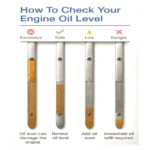
Pull it out once more and observe the oil level. Most dipsticks have:
- MIN and MAX markings
- Crosshatched area
- Dots or holes
The oil should be between the minimum and maximum marks.
Understanding Dipstick Readings
Full
Oil reaches near the MAX mark.
This is ideal.
Slightly Low
Oil falls midway between MIN and MAX.
Still acceptable.
Low
Oil is near or below MIN.
Add oil immediately.
Overfilled
Oil exceeds MAX.
Too much oil can be harmful and should be corrected.
What Oil Color Means
Oil color can reveal valuable information.
| Oil Color | Meaning |
| Amber | Fresh oil |
| Light Brown | Normal condition |
| Dark Brown | Aging oil |
| Black | Time for an oil change |
| Milky | Possible coolant contamination |
| Metallic | Internal engine wear |
How Often Should You Check Oil?
Most experts recommend:
Older Vehicles
Check every:
- 500 miles
- Weekly
Modern Vehicles
Check every:
- 1,000 miles
- Monthly
Before Long Trips
Always inspect oil before:
- Road trips
- Vacations
- Heavy towing
Common Mistakes When Checking Oil
Checking Immediately After Driving
Hot oil hasn’t settled yet.
Results may be inaccurate.
Not Using a Level Surface
Slopes can significantly affect readings.
Reading the Wrong Side of the Dipstick
Always inspect both sides.
Use the lower reading if uncertain.
Overfilling
Adding too much oil can cause:
- Foaming
- Reduced lubrication
- Seal damage
Ignoring Oil Condition
Level isn’t everything.
Dirty oil may need replacement.
What to Do If Oil Is Low
If oil falls below the minimum mark:
Step 1
Determine the correct oil grade. Examples:
- 0W-20
- 5W-20
- 5W-30
- 10W-30
Step 2
Remove the oil filler cap.
Step 3
Add oil gradually.
Usually:
- ½ quart
- 1 quart at a time
Step 4
Wait several minutes.
Step 5
Recheck the dipstick.
Repeat as necessary.
Conventional vs Synthetic Oil
Comparison Table
| Feature | Conventional Oil | Synthetic Oil |
| Cost | Lower | Higher |
| Engine Protection | Good | Excellent |
| Cold Weather Performance | Moderate | Excellent |
| Longevity | Shorter | Longer |
| High Temperature Protection | Good | Excellent |
| Fuel Economy | Good | Better |
| Sludge Resistance | Moderate | Excellent |
Why Synthetic Oil Is Popular
Many modern engines recommend synthetic oil because it:
- Flows better in cold weather
- Resists breakdown
- Reduces wear
- Lasts longer
Although more expensive initially, it often saves money over time.
How Oil Protects Your Engine
Engine components move thousands of times per minute. Oil forms a protective barrier between:
- Pistons
- Bearings
- Camshafts
- Crankshafts
Without oil, metal surfaces contact each other directly, creating destructive friction.
Understanding Oil Consumption
Some oil usage is normal. Typical consumption:
- Up to one quart every 1,000–2,000 miles in older vehicles
Excessive consumption may indicate:
- Worn piston rings
- Valve seal problems
- Turbocharger issues
- Oil leaks
Oil Leaks: What to Watch For
Signs include:
- Dark spots under the vehicle
- Burning oil smell
- Frequent top-offs
- Low dipstick readings
Common leak locations:
- Valve cover gasket
- Oil pan gasket
- Oil filter
- Drain plug
Seasonal Oil Checks
Summer
Hot temperatures stress oil. Check more frequently during:
- Heavy towing
- Long trips
- Extreme heat
Winter
Cold temperatures can:
- Thicken oil
- Increase startup wear
Verify proper oil viscosity before winter.
Benefits of Regular Oil Checks
Checking oil regularly provides:
Longer Engine Life
Proper lubrication reduces wear.
Better Fuel Economy
Less friction means greater efficiency.
Improved Reliability
Reduces risk of breakdowns.
Lower Repair Costs
Prevents catastrophic engine damage.
Higher Resale Value
Demonstrates proper maintenance.
My Personal Experience
Over the years, I’ve found that a quick monthly oil check can reveal problems before they become expensive repairs. On one vehicle, a steadily dropping oil level helped identify a small valve cover leak before it caused major issues.
The process takes only a few minutes, yet it provides peace of mind and helps keep the engine running smoothly.
Buyer’s Guide: What You Need for Checking Oil
Although checking oil requires minimal equipment, a few items make the process easier.
Essential Items
Clean Microfiber Cloth
Helps wipe the dipstick clean.
Disposable Gloves
Keeps hands clean.
Funnel
Prevents spills when adding oil.
Flashlight
Useful in low-light conditions.
Correct Motor Oil
Always keep one spare quart available.
What to Look for When Buying Motor Oil
Manufacturer Approval
Follow vehicle specifications.
Proper Viscosity
Examples:
- 0W-20
- 5W-20
- 5W-30
Synthetic or Conventional
Choose based on vehicle requirements.
Climate Compatibility
Consider local temperatures.
Brand Reputation
Select reputable manufacturers with proven quality.
Read More: What Does The Antenna On A Car Do
FAQs: How Do You Check Oil
How do you check oil accurately?
Park on level ground, turn off the engine, wait several minutes, wipe the dipstick clean, reinsert it fully, then remove it again to read the level.
Should I check oil when the engine is hot or cold?
Warm engines provide accurate readings after waiting 5–10 minutes for oil to drain into the pan.
How often should I check my oil?
At least once per month and before long trips.
What if my oil is below the minimum mark?
Add the correct oil immediately and recheck the level.
What color should engine oil be?
Healthy oil is usually amber or light brown. Very dark, milky, or metallic oil may indicate issues.
Can too much oil damage an engine?
Yes. Overfilling can cause foaming, pressure issues, and seal damage.
How long does it take to check the oil?
Most people can complete the process in less than five minutes.
Do newer cars still have dipsticks?
Many do, but some newer models use electronic oil monitoring systems.
Why does my oil level keep dropping?
Possible causes include leaks, oil burning, worn engine components, or normal consumption.
Is synthetic oil worth the extra cost?
For many drivers, yes. Synthetic oil generally provides better protection, longer service intervals, and improved performance.
Final Thoughts
Knowing how to check oil is one of the most valuable skills any vehicle owner can learn. It’s quick, easy, and can prevent thousands of dollars in engine repairs.
By checking your oil regularly, monitoring its condition, and maintaining proper levels, you’ll improve engine performance, extend your vehicle’s lifespan, and drive with greater confidence.
Whether you’re a first-time car owner or an experienced driver, making oil checks part of your routine maintenance schedule is one of the smartest habits you can develop.