If you’ve ever heard a mechanic mention an accumulator and wondered what it actually does, you’re definitely not alone. The term sounds technical and mysterious, and most drivers never think about it until something goes wrong with the air conditioning or hydraulic system.
I personally didn’t know much about accumulators until my car’s air conditioning started blowing warm air during a summer road trip. After a bit of research and a conversation with my mechanic, I realized this small component plays a much bigger role than most people realize.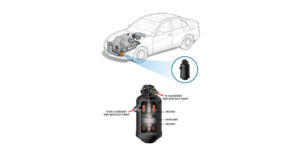 Depending on the type of vehicle, an accumulator can serve different purposes, but in most passenger cars, it is primarily associated with the air conditioning (A/C) system. In certain vehicles, especially those with hydraulic suspension or transmission systems, accumulators can also store pressure and help maintain smooth operation.
Let’s take a closer look at what an accumulator does, why it’s important, and how to know when it may need replacement.
What Is an Accumulator in a Car?
An accumulator is a storage chamber designed to hold refrigerant, pressure, or hydraulic fluid depending on the system in which it operates.
In most modern vehicles, the term “accumulator” usually refers to the A/C accumulator, a component located between the evaporator and compressor. Its primary job is to:
- Store excess refrigerant
- Remove moisture from the refrigerant
- Filter contaminants
- Prevent liquid refrigerant from entering the compressor
Without an accumulator, your car’s air conditioning system would be far more vulnerable to damage.
Why Is an Accumulator Important?
At first glance, it may seem like a simple metal canister. However, it performs several critical functions.
It Protects the Compressor
The A/C compressor is one of the most expensive air conditioning components. Compressors are designed to compress gas, not liquid.
If liquid refrigerant reaches the compressor, severe damage can occur. The accumulator ensures only refrigerant vapor reaches the compressor.
It Removes Moisture
Moisture inside the A/C system is bad news. Water can:
- Cause corrosion
- Freeze inside components
- Reduce cooling performance
- Damage seals and hoses
The accumulator contains a desiccant material that absorbs moisture before it becomes a problem.
It Filters Debris
Tiny metal particles and contaminants can circulate inside the system over time. The accumulator traps these particles and helps keep the refrigerant clean.
How Does a Car Accumulator Work?
The process is actually quite simple.
- Refrigerant leaves the evaporator.
- It enters the accumulator.
- Excess liquid refrigerant is temporarily stored.
- Moisture is removed by the desiccant.
- Refrigerant vapor exits toward the compressor.
This cycle repeats continuously whenever the A/C system operates.
Main Functions of an A/C Accumulator
| Function | Why It Matters |
| Stores refrigerant | Prevents flooding of the compressor |
| Removes moisture | Prevents corrosion and freezing |
| Filters contaminants | Extends component lifespan |
| Regulates refrigerant flow | Improves cooling efficiency |
| Protects expensive components | Reduces repair costs |
Types of Automotive Accumulators
Not every accumulator serves the same purpose.
1. Air Conditioning Accumulator
This is the most common type found in passenger vehicles. Functions include:
- Refrigerant storage
- Moisture removal
- Compressor protection
2. Hydraulic Accumulator
Used in certain vehicles equipped with:
- Hydraulic suspension systems
- Advanced braking systems
- Specialty transmissions
These accumulators store hydraulic pressure to ensure smooth system operation.
3. Transmission Accumulator
Automatic transmissions may use accumulators to:
- Cushion gear changes
- Reduce harsh shifting
- Improve driving comfort
Although different from A/C accumulators, the operating principle is similar.
Signs of a Bad Accumulator
One thing I learned from experience is that accumulators usually don’t fail suddenly. They often give warning signs.
1. Weak Air Conditioning
The most noticeable symptom is poor cooling performance. Your A/C may:
- Blow slightly cool air
- Take longer to cool
- Stop cooling entirely
2. Strange Noises
Damaged accumulators may contribute to:
- Clicking noises
- Hissing sounds
- Compressor noise
3. Refrigerant Leaks
Corrosion or damage may lead to visible leaks around the accumulator. Signs include:
- Oily residue
- Green UV dye
- Refrigerant odor
4. Moisture Contamination
A saturated desiccant can no longer remove moisture effectively. This can eventually damage:
- Compressor
- Expansion valve
- Condenser
5. Compressor Failure
In severe cases, accumulator failure can indirectly destroy the compressor. Unfortunately, compressor replacement can become very expensive.
My Personal Experience with a Faulty Accumulator
A few years ago, my vehicle’s air conditioning gradually became weaker. At first, I assumed the refrigerant simply needed recharging. However, after inspection, the mechanic discovered moisture contamination inside the system and recommended replacing the accumulator.
The repair wasn’t particularly expensive compared to replacing the compressor. That experience taught me that relatively inexpensive components can prevent major repair bills.
Accumulator vs Receiver Drier
Many people confuse these two components. Although they perform similar functions, they are used in different A/C system designs.
| Feature | Accumulator | Receiver-Drier |
| Used With | Orifice Tube Systems | Expansion Valve Systems |
| Location | Low-pressure side | High-pressure side |
| Stores Refrigerant | Yes | Yes |
| Removes Moisture | Yes | Yes |
| Compressor Protection | Excellent | Good |
Both components help remove moisture and contaminants, but they are not interchangeable.
What Happens If the Accumulator Fails?
Ignoring a faulty accumulator can lead to several issues.
Reduced Cooling Performance
The air conditioner may become ineffective.
Moisture Buildup
Corrosion can begin inside expensive components.
Compressor Damage
Liquid refrigerant may reach the compressor.
Increased Repair Costs
Replacing an accumulator is far cheaper than replacing an entire A/C system.
How Long Does an Accumulator Last?
There is no universal replacement interval. Most accumulators can last:
8–15 years
However, lifespan depends on:
- Climate conditions
- Vehicle usage
- Moisture contamination
- Refrigerant leaks
- Maintenance habits
Many mechanics recommend replacing the accumulator whenever:
- The compressor is replaced
- The A/C system is opened
- Major A/C repairs are performed
Can You Drive with a Bad Accumulator?
Technically, yes. The vehicle will still drive normally because the accumulator primarily affects the A/C system.
However, continuing to operate the A/C with a failed accumulator may cause:
- Compressor damage
- Moisture contamination
- Costly repairs
Therefore, delaying repairs is generally not advisable.
Buyer’s Guide: Choosing a Replacement Accumulator
If you need a replacement accumulator, several factors should be considered.
1. Compatibility
Always verify compatibility with:
- Vehicle year
- Make
- Model
- Engine type
Incorrect parts may not fit properly.
2. OEM vs Aftermarket
OEM Parts
Pros:
- Exact fit
- Factory quality
- Reliable performance
Cons:
- Higher price
Aftermarket Parts
Pros:
- More affordable
- Wider availability
Cons:
- Quality varies significantly
Personally, I prefer reputable aftermarket brands or OEM replacements for critical A/C components.
3. Desiccant Quality
Higher-quality desiccants provide:
- Better moisture absorption
- Longer service life
- Improved system protection
4. Corrosion Resistance
Choose components with:
- Durable coatings
- Rust-resistant construction
- Strong weld quality
5. Warranty Coverage
A longer warranty usually indicates better manufacturer confidence.
Average Replacement Cost
Accumulator replacement costs generally range between:
| Service | Average Cost |
| Part Only | $30–$150 |
| Labor | $80–$250 |
| Total Replacement | $120–$400+ |
Costs vary depending on:
- Vehicle type
- Accessibility
- Refrigerant recharge requirements
Luxury vehicles may cost considerably more.
Tips for Extending Accumulator Life
Run the A/C Regularly
Operating the system periodically helps maintain lubrication.
Fix Refrigerant Leaks Quickly
Leaks introduce moisture into the system.
Replace Components Together
If replacing the compressor, replacing the accumulator at the same time is often recommended.
Avoid Cheap Parts
Low-quality components may fail prematurely.
Service the A/C System Properly
Professional evacuation and recharge procedures help protect the entire system.
Is the Accumulator the Same as a Car Battery?
No.
The term “accumulator” sometimes refers to rechargeable batteries in older terminology, especially in certain countries.
In automotive repair discussions, however, “accumulator” usually refers to the A/C accumulator or a hydraulic pressure storage device.
Read More: Club Car Carburetor Diagram
FAQs: What Does The Accumulator Do In A Car
1. What exactly does an accumulator do in a car?
It stores refrigerant, removes moisture, filters contaminants, and protects the A/C compressor from liquid refrigerant damage.
2. Is an accumulator necessary?
Yes. Without it, the air conditioning system becomes much more vulnerable to moisture contamination and compressor failure.
3. How do I know if my accumulator is bad?
Common symptoms include:
- Weak A/C performance
- Refrigerant leaks
- Strange noises
- Moisture contamination
4. Can a bad accumulator damage the compressor?
Yes. This is one of the primary reasons accumulators exist.
5. Should I replace the accumulator when replacing the compressor?
Most technicians strongly recommend doing so.
6. How long does an accumulator last?
Typically between 8 and 15 years depending on usage and maintenance.
7. Can I replace an accumulator myself?
It is possible, but the A/C system usually requires specialized tools and refrigerant handling procedures.
8. Is an accumulator expensive?
The component itself is relatively affordable. Labor and refrigerant service generally account for most of the repair cost.
9. Does every car have an accumulator?
No. Some vehicles use a receiver-drier instead, depending on the A/C system design.
10. Can a bad accumulator cause warm air from the vents?
Yes. Reduced cooling performance is one of the most common signs of accumulator problems.
Final Thoughts
The accumulator may not receive much attention, but it plays an extremely important role in protecting your vehicle’s air conditioning system. Its ability to:
- Store refrigerant
- Remove moisture
- Filter contaminants
- Protect the compressor
makes it one of the unsung heroes of automotive climate control. After dealing with an accumulator-related repair myself, I now understand why mechanics often recommend replacing it during major A/C service.
Considering how expensive compressor repairs can become, replacing a failing accumulator is often money well spent. Regular A/C maintenance and early attention to cooling issues can save you from much larger repair bills down the road.