I’ll be honest, if you had asked me a few years ago what a car accumulator was, I probably would’ve guessed it had something to do with the battery. Turns out, I wasn’t completely wrong, but I was far from right.
My first real encounter with an accumulator happened when my car’s AC started acting weird. Cooling was inconsistent, and sometimes it would blow warm air out of nowhere.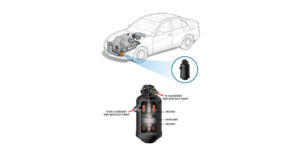 After a bit of trial and error (and a visit to the mechanic), I discovered the issue wasn’t the compressor; it was the accumulator. That’s when I realized:
This small, often-overlooked component plays a big role in your car’s performance, especially in systems like air conditioning and braking. So let me break it down for you in the simplest, most practical way possible.
What Is An Accumulator In A Car?
An accumulator is a storage device used in certain car systems to store pressure, energy, or fluid and release it when needed.
Think of it like a buffer or reserve tank; it helps maintain consistent performance even when demand fluctuates.
Where Is an Accumulator Used in a Car?
Accumulators are used in a few key systems:
1. Air Conditioning System (Most Common)
- Stores refrigerant
- Removes moisture
- Prevents liquid from entering the compressor
2. Brake System (ABS)
- Stores hydraulic pressure
- Helps maintain braking performance
3. Hydraulic Systems
- Used in suspension or transmission systems (in some vehicles)
How the AC Accumulator Works (My Real Experience)
Since most people encounter accumulators in the AC system, let’s focus there. Here’s what it does:
- Receives refrigerant from the evaporator
- Separates liquid from gas
- Stores excess refrigerant
- Removes moisture using a desiccant
- Sends clean refrigerant gas to the compressor
Why This Matters
When mine failed:
- AC cooling became inconsistent
- Moisture entered the system
- Compressor performance dropped
After replacing it? 👉 Cold air came back instantly, and the system ran more smoothly.
Comparison Table: Accumulator vs Receiver-Drier
| Feature | Accumulator | Receiver-Drier |
| Used In | Orifice tube systems | Expansion valve systems |
| Location | Between evaporator & compressor | Between the condenser & expansion valve |
| Main Function | Stores refrigerant, removes moisture | Filters and dries refrigerant |
| Protects Compressor | Yes | Yes |
| Common in | Most American/Japanese cars | European vehicles |
| My Experience | Fixed my AC instantly | Less common in my vehicles |
Signs of a Bad Accumulator
Here are the symptoms I noticed (and you might too):
- ❄️ Weak or inconsistent AC cooling
- 🔊 Unusual noises from the AC system
- 💧 Moisture or contamination in system
- 🔥 Compressor overheating
- 🚫 AC stops working completely
If you notice these, don’t ignore them, as it can lead to expensive compressor damage.
My Replacement Experience: Step-by-Step Insight
I didn’t replace it myself (AC systems can be tricky), but here’s what the mechanic did:
- Recovered refrigerant
- Removed old accumulator
- Installed a new one
- Vacuumed the system
- Refilled refrigerant
Result:
- Ice-cold air
- Stable performance
- No more random warm airflow
Buyer’s Guide: Choosing the Right Accumulator
If you’re planning to replace one, here’s what I learned:
Key Factors to Consider
1. Compatibility
Always match your car’s make and model.
2. Build Quality
Look for:
- Durable aluminum housing
- High-quality desiccant
3. Brand Reputation
Cheap parts can fail quickly.
4. System Type
Know whether your car uses:
- Accumulator
- Receiver-drier
My Recommendations
Best Overall:
OEM or OEM-equivalent accumulator
- Perfect fit
- Reliable performance
Budget Option:
Aftermarket brands
- Affordable
- Decent performance
Premium Choice:
High-end branded accumulator
- Better moisture control
- Longer lifespan
⚠️ Common Mistakes I Learned to Avoid
- ❌ Skipping accumulator replacement during AC repair
- ❌ Installing low-quality parts
- ❌ Ignoring early AC warning signs
- ❌ Not vacuuming the system properly
These mistakes can cost you a compressor, which is much more expensive.
When Should You Replace an Accumulator?
Here’s the rule I now follow:
Replace When: The
- AC system is opened
- Compressor fails
- Every major AC service
Typical Lifespan:
- 5–10 years (depending on usage)
Real Performance Difference (Before vs After)
| Condition | Before Replacement | After Replacement |
| Cooling | Weak & inconsistent | Strong & stable |
| Compressor Load | High | Normal |
| Noise | Noticeable | Quiet |
| Comfort | Frustrating | Refreshing |
Read More: Car Expansion Valve Stuck Open Symptoms
FAQs: What Is A Accumulator In A Car
1. What does an accumulator do in a car?
It stores and regulates fluid or pressure, most commonly in the AC system.
2. Is an accumulator the same as a receiver-drier?
No. They serve similar purposes but are used in different systems.
3. Can I drive with a bad accumulator?
Yes, but your AC performance will suffer, and it can damage the compressor.
4. How much does an accumulator cost?
- Part: Affordable
- Labor: Moderate (due to AC system work)
5. Do I need to replace it with the compressor?
Yes, it’s highly recommended.
6. What happens if I don’t replace it?
Moisture and debris can damage the entire AC system.
7. How long does it last?
Typically 5–10 years.
8. Can I replace it myself?
Not recommended unless you have proper AC tools.
9. Why is my AC blowing warm air?
A failing accumulator could be one reason.
10. Is it worth replacing?
Absolutely, it protects much more expensive components.
Final Thoughts: Small Part, Big Impact
If there’s one takeaway from my experience: 👉 The accumulator is a silent protector of your AC system. It:
- Keeps moisture out
- Protects the compressor
- Ensures consistent cooling
Ignoring it can lead to:
- Expensive repairs
- Poor performance
- System failure
But replacing it at the right time? That’s one of the smartest maintenance decisions you can make.