If you’ve ever had your car suddenly start shaking, misfiring, or losing power, there’s a good chance coil packs were involved. I learned this the hard way when my engine started running rough out of nowhere, and it felt like it was “limping” instead of driving.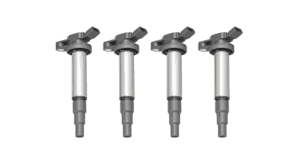 At first, I thought it was spark plugs. Turns out, it was actually a faulty ignition coil pack a small part with a big job. Modern cars don’t use old-school distributors anymore.
Instead, they rely on coil packs to deliver spark directly to each cylinder. And when one fails, your car lets you know loudly. In this guide, I’ll break everything:
- What coil packs are
- How they work
- Signs of failure
- Costs and replacement tips
- A detailed comparison table
- Buyer’s guide + FAQs
What Are Coil Packs?
A coil pack (ignition coil) is an electronic component that:
👉 Converts low battery voltage into high voltage
👉 Sends that voltage to spark plugs
👉 Ignites the air-fuel mixture in the engine
Without coil packs → no spark → no combustion → no engine power
Simple Analogy
Think of a coil pack like a mini power transformer:
- Battery = low power
- Coil pack = boosts power
- Spark plug = uses power to ignite fuel
Types of Coil Packs
1. Coil-On-Plug (COP)
- One coil per spark plug
- Most modern cars use this
- Better performance and efficiency
2. Coil Pack (Shared Coils)
- One unit powers multiple cylinders
- Found in older or budget cars
3. Distributor-Based Ignition (Old System)
- Single coil + distributor
- Mostly outdated
Signs of a Bad Coil Pack (From Experience)
When mine failed, I noticed:
- Engine misfires (shaking)
- Loss of power during acceleration
- Check engine light
- Poor fuel economy
- Rough idle
👉 Worst moment:
Driving uphill, the car suddenly struggled as if it had lost half its strength.
Comparison Table: Coil Pack Types
| Type | Performance | Reliability | Cost | Best For | My Verdict |
| Coil-On-Plug (COP) | ⭐⭐⭐⭐⭐ | ⭐⭐⭐⭐ | $$ | Modern cars | Best overall |
| Shared Coil Pack | ⭐⭐⭐ | ⭐⭐⭐ | $ | Older vehicles | Budget option |
| Distributor System | ⭐⭐ | ⭐⭐ | $ | Classic cars | Outdated |
How Coil Packs Work (Deep Dive)
Here’s what happens step-by-step:
- The battery sends 12 volts to the coil
- Coil pack amplifies it to 20,000–50,000 volts
- High voltage travels to the spark plug
- Spark ignites a fuel-air mixture
- The engine produces power
👉 This process happens thousands of times per minute
Why Coil Packs Fail
From what I’ve seen, the most common reasons are:
1. Heat Damage
- Engine heat wears them out over time
2. Worn Spark Plugs
- Forces coil to work harder → early failure
3. Oil Leaks
- Oil in the spark plug wells damages coils
4. Electrical Issues
- Wiring faults or voltage spikes
Cost of Replacing Coil Packs
| Item | Cost Range |
| Single Coil Pack | $50 – $150 |
| Full Set | $200 – $600 |
| Labor | $50 – $150 |
👉 My cost: ~$120 for one coil (DIY install)
My Personal Experience (Honest Review)
When my coil pack failed:
- The car felt like it had lost power instantly
- Engine vibration was obvious
- Fuel economy dropped noticeably
I replaced:
- One faulty coil
- All spark plugs (recommended)
👉 Result:
- Smooth driving again
- Better acceleration
- No more warning lights
Lesson learned:
If one coil fails, others may follow soon.
Buyer’s Guide: Choosing the Right Coil Pack
1. OEM vs Aftermarket
OEM (Original)
- Perfect fit
- More reliable
- Higher price
Aftermarket
- Cheaper
- Quality varies
👉 My advice:
Use OEM for long-term reliability.
2. Brand Matters
Trusted brands:
- Bosch
- Denso
- NGK
- Delphi
Avoid unknown cheap brands, they fail faster.
3. Replace One or All?
- One failed coil → replace just one (budget fix)
- High mileage → replace all (prevent future issues)
4. Compatibility Check
Always confirm:
- Engine size
- Model year
- VIN compatibility
5. Warranty
Look for:
- 1-year warranty minimum
Symptoms You Shouldn’t Ignore
If you notice these, check coil packs:
- Jerking while driving
- Engine hesitation
- Loud engine vibration
- Increased fuel consumption
- Flashing check engine light
👉 Ignoring this can damage:
- Catalytic converter
- Engine internals
DIY or Mechanic?
DIY Friendly:
- Most coil packs are easy to replace
- Just unplug and swap
Mechanic Needed:
- Hard-to-reach engines
- Diagnostic uncertainty
Can You Drive With a Bad Coil Pack?
Short answer: Not recommended
Why?
- Causes engine misfires
- Damages the catalytic converter
- Reduces fuel efficiency
- May leave you stranded
Read More: How To Take Fuel Out Of A Car Tank
FAQs: What Are Coil Packs On A Car
1. What does a coil pack do in a car?
It converts battery voltage into high voltage to ignite fuel.
2. How do I know if my coil pack is bad?
Look for misfires, rough idle, and power loss.
3. Can a bad coil pack damage the engine?
Yes, especially the catalytic converter.
4. Should I replace all coil packs at once?
Not required, but recommended for high-mileage cars.
5. How long do coil packs last?
Typically 60,000–100,000 miles.
6. Can I drive with a faulty coil pack?
You can, but it’s risky and not recommended.
7. Do coil packs improve performance?
Only if replacing faulty ones.
8. Are coil packs expensive?
Moderately priced, $50 to $150 each.
Final Verdict (Honest Opinion)
After dealing with this myself, here’s the truth:
👉 Coil packs are small but critical components.
When they fail:
- Your car loses power
- Fuel efficiency drops
- Driving becomes rough and unreliable
👉 My recommendation:
- Don’t ignore early symptoms
- Replace spark plugs along with coils
- Invest in quality parts