Like a lot of people in the U.S., I assumed oil changes were something that just… happened. You drive your car, a dashboard light comes on, you swing by a shop, hand over your keys, and boom, problem solved.
Until one day, my car started making a noise that sounded like a blender full of rocks. I didn’t use to check my oil. At all. Like a lot of people in the U.S., I assumed oil changes were something that just… happened.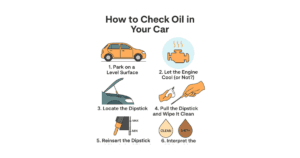 You drive your car, a dashboard light comes on, you swing by a shop, hand over your keys, and boom, problem solved. Until one day, my car started making a noise that sounded like a blender full of rocks. That was the day I learned two things:
- Engine oil is not optional
- Checking your oil level is way easier than most people think
This article is my honest, personal, hands-on experience with checking oil level,s mistakes, learning curve, and all written for everyday drivers who want to protect their car without becoming a mechanic.
If you’ve ever wondered:
- How do I check my oil level?
- How often should I check it?
- What does “low oil” actually look like?
- Can I do this myself, or will I mess something up?
You’re in the right place.
Why Checking Your Oil Level Actually Matters (More Than You Think)
Let’s get one thing straight: Your engine oil is your engine’s lifeblood. Oil does five critical jobs:
- Lubricates moving parts
- Reduces heat
- Cleans internal engine components
- Prevents corrosion
- Helps seal piston rings
When oil gets low or dir,ty your engine pays the price.
What Happens If You Don’t Check Your Oil?
From personal experience and very expensive lessons others have learned:
- Increased engine wear
- Overheating
- Sludge buildup
- Poor fuel economy
- Engine knocking
- Complete engine failure (yes, really)
And here’s the kicker: 👉 Most modern cars can burn oil without showing leaks. So just because there’s no puddle in your driveway doesn’t mean you’re safe.
My Wake-Up Call: The Moment I Started Checking My Oil
I was driving a mid-mileage sedan, and nothing fancy, nothing old. About 80,000 miles on it. One afternoon, I noticed a faint ticking noise. I ignored it.
Bad move.
A week later, the noise got louder. No warning light. No dramatic dashboard message. Just… noise.
When I finally checked the oil:
- The dipstick was bone dry
- Oil level was dangerously low
- The oil that was there looked like used coffee
That 30-second oil check could’ve saved me hundreds of dollars.
How Often Should You Check Your Oil Level?
This is where most people mess up.
General Rule (U.S. Driving Conditions):
- Once a month
- Before long road trips
- Every 1,000 miles for older vehicles
- More often,ften if your car burns oil
If you drive:
- In hot climates
- In stop-and-go traffic
- A turbocharged engine
- A high-mileage vehicle
👉 Check it more often, not less.
Tools You Need (Spoiler: Almost None)
Here’s the good news: Checking your oil level doesn’t require a garage full of tools.
Basic Checklist:
- Clean rag or paper towel
- Your car (parked on level ground)
- 2–5 minutes of your time
That’s it.
Step-by-Step: How I Check My Oil Level Using a Dipstick
This is the classic method and still the most reliable.
Step 1: Park on Level Ground
This matters more than people realize. A sloped driveway can give you a false reading.
Step 2: Turn Off the Engine
Wait 5–10 minutes so the oil drains back into the pan.
Step 3: Open the Hood
Look for the brightly colored dipstick handle (usually yellow or orange).
Step 4: Pull Out the Dipstick
Wipe it clean with your rag.
Step 5: Reinsert the Dipstick Fully
Push it all the way in.
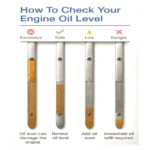
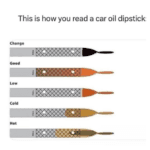
Step 6: Pull It Out Again and Read the Level
You’ll see:
- Two marks
- A crosshatched area
- Or holes labeled MIN and MAX
The oil level should fall between those marks.
Step 7: Check Oil Condition
- Amber/light brown: Healthy
- Dark brown/black: Normal but aging
- Milky: Possible coolant issue
- Gritty: Time for a change
What “Low Oil” Actually Looks Like (Real Talk)
Low oil doesn’t always mean “empty.”
- Below minimum mark = danger zone
- Just touching the minimum mark = top it off
- Midway = acceptable
- Near max = ideal
🚫 Do not overfill. Too much oil is just as bad as too little.
How Much Oil Should You Add If It’s Low?
This surprised me the first time:
- One quart can raise the oil level significantly
- Add oil slowly
- Recheck after each small pour
Most engines take 4–6 quarts total, but topping off usually means much less.
Checking Oil in Cars WITHOUT Dipsticks (Newer Vehicles)
Some newer cars use electronic oil monitoring systems.
How It Works:
- Access through the dashboard menu
- Requires the car to be warm or recently driven
- Displays digital oil level
My Honest Take:
They’re convenient,nien,t but I trust dipsticks more.
Dipstick vs Electronic Oil Monitoring (Comparison Table)
| Feature | Dipstick | Electronic System |
| Accuracy | Very High | Moderate |
| Ease of Use | Easy | Very Easy |
| Maintenance Needed | Minimal | Sensor-dependent |
| Works Without Battery | Yes | No |
| Older Vehicles | Yes | Rare |
| Newer Vehicles | Sometimes | Common |
Winner: Dipstick (for reliability)
Buyer’s Guide: What You Need for Easy Oil Checks
1. Engine Oil (Top-Off Only)
Always match:
- Viscosity (e.g., 5W-30)
- Manufacturer specs
2. Funnel
Cheap, clean, and prevents spills.
3. Clean Rags
Reusable shop towels work best.
4. Gloves (Optional)
Keeps hands clean.
5. Owner’s Manual
Tells you:
- Oil type
- Capacity
- Checking procedure
Common Oil-Checking Mistakes I’ve Made (So You Don’t)
- Checking immediately after turning off the engine
- Not wiping the dipstick before reading
- Overfilling
- Ignoring oil color
- Assuming “no warning light” means “no problem.”
Learn from my pain.
How Oil Level Affects Fuel Economy & Performance
Low oil increases:
- Friction
- Heat
- Engine strain
Result?
- Worse gas mileage
- Sluggish acceleration
- Shorter engine life
Healthy oil = smoother drive.
Oil Check vs Oil Change: Not the Same Thing
Checking oil:
- Ensures proper level
- Prevents damage
Oil change:
- Replaces dirty oil
- Resets engine protection
You need both.
Read More: How Check Transmission Fluid
FAQs: How To Check Your Oil Level In Your Car | My Honest Experience
1. Can I check oil when the engine is hot?
Wait at least 5 minutes for an accurate reading.
2. How long does it take?
Less than 5 minutes.
3. Should oil be checked cold or warm?
Warm engine, then rested.
4. What if my oil is black?
Color alone doesn’t mean it’s bad; texture matters.
5. Can low oil damage my engine?
Yes. Quickly.
6. How often should oil be topped off?
As needed, never ignore low levels.
7. Is overfilling oil dangerous?
Absolutely. It can cause foaming and seal damage.
8. Do all cars have dipsticks?
No. Many newer models don’t.
9. Can I mix oil brands?
Yes, if viscosity and specs match (temporary only).
10. What if I don’t know which oil to use?
Check the owner’s manual or oil cap.
Final Thoughts: Why I’ll Never Skip Checking My Oil Again
Checking your oil level isn’t about being “car-smart.” It’s about being engine-smart. Five minutes a month can:
- Save thousands in repairs
- Extend engine life
- Give you peace of mind
I learned the hard way. You don’t have to.