A car’s air conditioning system is one of those features we often take for granted until it stops working on a hot summer day. Whether you’re a vehicle owner, DIY mechanic, or simply curious about automotive systems, understanding the names and functions of car AC parts can save you time, money, and frustration.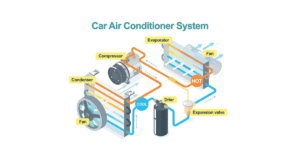 When I first started learning about automotive air conditioning systems, I quickly realized that many people know what the AC does but have little idea about the components working behind the scenes. The good news is that once you understand the major parts, diagnosing common AC problems becomes much easier.
In this comprehensive guide, we’ll explore the most important car AC components, their functions, common problems, and what to look for when replacing them.

Main Car AC Parts With Pictures
Essential Car AC Components
| AC Part | Function | Location | Common Failure Symptoms |
| AC Compressor | Compresses refrigerant | Engine bay | Warm air, strange noises |
| Condenser | Releases heat | Front of radiator | Poor cooling |
| Evaporator | Absorbs cabin heat | Dashboard | Weak cooling |
| Expansion Valve | Controls refrigerant flow | Near evaporator | Inconsistent cooling |
| Receiver Drier | Removes moisture | AC line system | Reduced performance |
| Accumulator | Stores refrigerant | Low-pressure side | Poor AC operation |
| AC Pressure Switch | Monitors pressure | Refrigerant lines | Compressor not engaging |
| Blower Motor | Circulates air | HVAC housing | Weak airflow |
| Cabin Air Filter | Filters incoming air | Behind the glove box | Reduced airflow |
| Refrigerant Lines | Transport refrigerant | Throughout system | Refrigerant leaks |
How a Car AC System Works
Before discussing individual parts, it’s important to understand how the entire system functions. The air conditioning system removes heat from the cabin and releases it outside the vehicle.
Refrigerant circulates through various components while changing from liquid to gas and back again. The basic process is:
- The compressor compresses refrigerant.
- A condenser removes heat.
- Receiver drier filters moisture.
- The expansion valve reduces pressure.
- The evaporator absorbs cabin heat.
- Refrigerant returns to the compressor.
This cycle repeats continuously whenever the AC is operating.

1. AC Compressor
The compressor is often called the heart of the car AC system.
Function
The compressor pressurizes refrigerant and pumps it throughout the system.
Location
Usually mounted on the engine and driven by a serpentine belt.
Signs of Failure
- AC is blowing warm air
- Clicking noises
- Compressor clutch not engaging
- Refrigerant leaks
- Squealing sounds
Replacement Cost
Typically ranges from $400 to $1,500 depending on vehicle make and model.
2. AC Condenser
The condenser resembles a small radiator.
Function
It removes heat from the refrigerant after it leaves the compressor.
Location
Usually mounted in front of the radiator.
Common Problems
- Bent fins
- Road debris damage
- Refrigerant leaks
- Internal blockages
Symptoms
- Poor cooling performance
- High AC pressures
- Warm cabin air
3. Evaporator Core
The evaporator is responsible for producing cold air.
Function
Absorbs heat from cabin air.
Location
Inside the dashboard HVAC housing.
Failure Symptoms
- Weak cooling
- Musty odor
- Refrigerant leaks
- Water leakage inside the cabin
Why It Matters
The evaporator is where the cooling effect actually happens.
4. Expansion Valve
The expansion valve controls refrigerant flow into the evaporator.
Function
- Lowers refrigerant pressure
- Regulates refrigerant volume
- Maintains cooling efficiency
Symptoms of Failure
- AC system freezing
- Inconsistent temperatures
- Reduced cooling
5. Receiver Dryer
The receiver drier acts like a filter and moisture remover.
Functions
- Removes contaminants
- Absorbs moisture
- Stores refrigerant
Common Problems
- Internal blockage
- Saturated desiccant
- Reduced cooling efficiency
6. Accumulator
Vehicles using an orifice tube often use an accumulator instead of a receiver drier.
Function
- Prevents liquid refrigerant from reaching the compressor
- Stores excess refrigerant
- Filters contaminants
Signs of Failure
- Compressor damage risk
- Poor cooling
- System contamination
7. Orifice Tube
The orifice tube is a fixed metering device.
Purpose
Controls refrigerant flow through the AC system.
Symptoms of Problems
- AC not cooling
- Restricted refrigerant flow
- Ice formation
8. AC Pressure Switch
The pressure switch protects the AC system.
Function
- Monitors refrigerant pressure
- Prevents compressor damage
- Controls compressor operation
Symptoms
- Compressor not turning on
- Intermittent cooling
- AC system shutdown
9. Blower Motor
The blower motor pushes air through the HVAC system.
Function
Moves air through the evaporator and cabin vents.
Failure Signs
- Weak airflow
- No airflow
- Unusual noises
- The fan only works at certain speeds
10. Cabin Air Filter
The cabin air filter improves air quality.
Function
Filters:
- Dust
- Pollen
- Dirt
- Debris
Symptoms of a Dirty Filter
- Reduced airflow
- Bad odors
- Increased blower noise
11. Refrigerant Lines and Hoses
These lines connect all AC components.
Function
Transport refrigerant through the system.
Common Issues
- Cracks
- Corrosion
- Leaks
- Loose fittings
12. AC Compressor Clutch
The compressor clutch engages and disengages compressor operation.
Symptoms of Failure
- The compressor won’t engage
- Clicking sounds
- Intermittent cooling
13. Cooling Fan
The cooling fan helps the condenser release heat.
Importance
Without adequate airflow across the condenser, AC performance drops significantly.
Symptoms of Failure
- Poor cooling at idle
- Overheating
- High AC pressure
Detailed Comparison of Major Car AC Components
| Component | Importance | Lifespan | Failure Cost | DIY Friendly |
| Compressor | Very High | 8-15 Years | High | No |
| Condenser | High | 8-12 Years | Medium | Moderate |
| Evaporator | Very High | 10-15 Years | High | Difficult |
| Expansion Valve | Medium | 8-12 Years | Low-Medium | Moderate |
| Receiver Drier | Medium | 5-10 Years | Low | Moderate |
| Accumulator | Medium | 5-10 Years | Low | Moderate |
| Blower Motor | High | 8-12 Years | Medium | Yes |
| Cabin Filter | Medium | 1-2 Years | Very Low | Yes |
Buyer’s Guide: Choosing Car AC Replacement Parts
Replacing AC components can be expensive, so choosing quality parts matters.
OEM vs Aftermarket Parts
OEM Parts
Advantages:
- Perfect fit
- Factory quality
- Reliable performance
Disadvantages:
- Higher cost
Aftermarket Parts
Advantages:
- Lower price
- Wide availability
Disadvantages:
- Quality varies
What to Check Before Buying
Vehicle Compatibility
Always verify:
- Make
- Model
- Year
- Engine size
Warranty Coverage
Look for:
- At least a 12-month warranty
- Manufacturer support
Brand Reputation
Choose reputable brands known for HVAC components.
Material Quality
Look for:
- Corrosion-resistant materials
- Durable seals
- Quality construction
Common Car AC Problems and Related Parts
| Problem | Likely Cause |
| Warm air | Compressor, low refrigerant |
| Weak airflow | Cabin filter, blower motor |
| AC cycles rapidly | Pressure switch |
| Strange noises | Compressor clutch |
| Water inside the cabin | Evaporator drain |
| AC works while driving only | Cooling fan |
| Musty smell | Evaporator contamination |
| Refrigerant leak | Hoses, condenser, evaporator |
Maintenance Tips for Longer AC Life
Run AC Regularly
Operate the AC for at least 10 minutes weekly.
Replace Cabin Filter
Change every 12,000–15,000 miles.
Keep the condenser clean
Remove debris and dirt regularly.
Fix Leaks Immediately
Small leaks become expensive repairs.
Schedule AC Service
Professional inspections can prevent major failures.
Why Understanding AC Parts Matters
Knowing the names and functions of AC components helps you:
- Diagnose problems faster
- Avoid unnecessary repairs
- Communicate effectively with mechanics
- Save money on maintenance
- Extend AC system lifespan
Even basic knowledge can prevent costly misdiagnoses and improve ownership experience.
Read More: What Does The Antenna On A Car Do
FAQs: Car AC Parts Name List With Pictures
What are the main parts of a car AC system?
The primary parts are the compressor, condenser, evaporator, expansion valve, receiver drier or accumulator, refrigerant lines, pressure switches, and blower motor.
Which AC part makes the air cold?
The evaporator core is responsible for producing cold air by absorbing heat from the cabin.
What is the most expensive AC component?
The AC compressor is typically the most expensive component to replace.
How long does a car AC compressor last?
Most compressors last between 8 and 15 years with proper maintenance.
Can a dirty cabin filter affect AC cooling?
Yes. A clogged cabin air filter restricts airflow and reduces cooling efficiency.
What causes AC refrigerant leaks?
Leaks commonly occur in hoses, condensers, evaporators, O-rings, and fittings.
How often should the cabin air filter be replaced?
Most manufacturers recommend replacement every 12,000 to 15,000 miles or annually.
Can I replace AC parts myself?
Simple components such as cabin air filters may be DIY-friendly, but refrigerant-related repairs often require specialized tools and certification.
Why does my car’s AC blow warm air?
Common causes include low refrigerant, compressor failure, condenser issues, or electrical faults.
Which AC part removes moisture from the system?
The receiver drier or accumulator removes moisture and contaminants from the refrigerant.
Conclusion
Understanding the complete car AC parts name list helps every vehicle owner become more informed about their air conditioning system. From the compressor and condenser to the evaporator and expansion valve, every component plays a vital role in keeping the cabin cool and comfortable.
Whether you’re troubleshooting a cooling problem, planning maintenance, or buying replacement parts, knowing these components can save time and money. Regular inspections, proper maintenance, and quality replacement parts will ensure your car’s AC system continues delivering reliable performance for years to come.