If you’ve ever seen a check engine light illuminate and heard a mechanic mention a “MAP sensor,” you’re not alone. Most drivers have no idea what this small component does, yet it plays a major role in your vehicle’s performance, fuel economy, and emissions.
The MAP sensor (Manifold Absolute Pressure sensor) is one of the most important sensors in a modern engine management system. It measures the air pressure inside the intake manifold and sends that information to the engine control unit (ECU). The ECU then uses this data to determine the ideal amount of fuel to inject into the engine.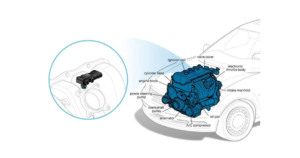 In simple terms, the MAP sensor helps your car’s computer understand how hard the engine is working so it can maintain the correct air-fuel mixture.
After working on several vehicles and troubleshooting countless check-engine-light issues, I’ve found that MAP sensors are often overlooked until they start causing noticeable problems. The good news? Understanding them isn’t nearly as complicated as it sounds.
Quick Overview of MAP Sensors
| Feature | Description |
| Full Name | Manifold Absolute Pressure Sensor |
| Purpose | Measures pressure in intake manifold |
| Location | Intake manifold or connected via vacuum hose |
| Main Function | Helps ECU calculate fuel delivery |
| Common Lifespan | 100,000+ miles |
| Failure Symptoms | The poor fuel economy, rough idle, and check engine light |
| Replacement Cost | $50–$300 depending on vehicle |
| DIY Friendly | Usually yes |
How Does a MAP Sensor Work?
To understand the MAP sensor, think of your engine as a giant air pump. Every time you press the accelerator, the throttle opens and allows more air into the engine. The MAP sensor monitors pressure changes inside the intake manifold.
The sensor sends a voltage signal to the ECU, indicating:
- Engine load
- Air density
- Intake manifold pressure
- Engine operating conditions
Using this information, the ECU calculates:
- Fuel injector pulse width
- Ignition timing
- Emission control adjustments
The result is smoother operation, better fuel economy, and lower emissions.
Why Is the MAP Sensor Important?
Modern engines rely heavily on accurate sensor data. A functioning MAP sensor helps:
Improve Fuel Efficiency
The ECU delivers the exact amount of fuel needed.
Enhance Engine Performance
Correct pressure readings allow optimal combustion.
Reduce Emissions
Accurate fuel management minimizes pollutants.
Improve Starting
The ECU can adjust fueling during cold starts.
Prevent Engine Damage
Incorrect air-fuel mixtures can damage components over time. Without a working MAP sensor, your vehicle’s computer is essentially making educated guesses.
Where Is the MAP Sensor Located?
The exact location varies by vehicle. Common locations include:
- On top of the intake manifold
- Mounted directly into the manifold
- Near the throttle body
- Connected through a vacuum hose
Many modern vehicles make the sensor relatively easy to access. Typical appearance:
- Small black plastic housing
- Electrical connector with 3–4 wires
- Mounted using one or two screws
Signs of a Bad MAP Sensor
One thing I’ve learned over the years is that MAP sensor failures can mimic many other engine problems. Here are the most common warning signs.
1. Check Engine Light
This is often the first symptom. Common trouble codes include:
- P0105
- P0106
- P0107
- P0108
- P0109
2. Rough Idle
The engine may:
- Shake
- Vibrate
- Stall occasionally
3. Poor Fuel Economy
A faulty MAP sensor can cause excessive fuel consumption. You may notice:
- More frequent gas station visits
- Lower MPG readings
4. Hard Starting
The engine may:
- Crank longer
- Struggle during cold starts
- Occasionally fails to start
5. Engine Hesitation
Acceleration may feel sluggish. The engine may:
- Stumble
- Hesitate
- Lack power
6. Black Exhaust Smoke
A rich fuel mixture can create visible black smoke. This indicates excessive fuel delivery.
7. Failed Emissions Test
Incorrect fuel management often increases emissions levels.
Common Causes of MAP Sensor Failure
While MAP sensors are generally reliable, several issues can cause failure.
Dirt and Carbon Buildup
Contaminants can affect sensor readings.
Vacuum Leaks
Cracked hoses can create false pressure readings.
Electrical Problems
Issues include:
- Corroded connectors
- Broken wires
- Poor grounding
Moisture Damage
Water intrusion may damage internal electronics.
Age and Wear
Even durable sensors eventually wear out.
MAP Sensor vs MAF Sensor
Many people confuse MAP and MAF sensors. Although they perform related functions, they work differently.
Comparison Table: MAP Sensor vs MAF Sensor
| Feature | MAP Sensor | MAF Sensor |
| Full Name | Manifold Absolute Pressure Sensor | Mass Air Flow Sensor |
| Measures | Intake manifold pressure | Incoming air volume |
| Location | Intake manifold | Air intake tube |
| Cost | Usually cheaper | Usually more expensive |
| Reliability | Generally durable | More contamination-prone |
| Fuel Calculation | Indirect method | Direct measurement |
| Common Issues | Vacuum leaks | Dirt contamination |
| Replacement Ease | Often easier | Moderate |
My Experience
From a maintenance perspective, MAP sensors tend to be more durable than MAF sensors. MAF sensors are exposed directly to incoming air and often become contaminated. MAP sensors generally live in a cleaner environment and can last much longer.
Can You Drive With a Bad MAP Sensor?
- Technically, yes.
- Should you?
- Probably not for long.
A failing MAP sensor can cause:
- Reduced performance
- Poor fuel economy
- Increased emissions
- Engine stalling
- Catalytic converter damage
Short trips are usually manageable, but prolonged driving can become expensive.
How to Diagnose a Bad MAP Sensor
Diagnosis typically involves several steps.
Step 1: Scan for Trouble Codes
Use an OBD-II scanner. Look for pressure sensor-related codes.
Step 2: Visual Inspection
Check:
- Wiring
- Connectors
- Vacuum hoses
Step 3: Inspect for Vacuum Leaks
Leaks can imitate sensor failure.
Step 4: Check Live Data
Many scan tools display MAP sensor readings.
Abnormal values may indicate problems.
Step 5: Test Voltage Output
A multimeter can verify proper sensor operation.
How to Clean a MAP Sensor
Sometimes cleaning solves the problem.
Tools Needed
- MAP sensor cleaner
- Screwdriver
- Safety gloves
Process
- Disconnect the battery.
- Remove the sensor.
- Spray cleaner gently.
- Allow to dry completely.
- Reinstall the sensor.
Important:
Never touch the sensing element directly.
Doing so may permanently damage the sensor.
MAP Sensor Replacement Cost
Costs vary significantly.
| Expense | Typical Cost |
| Sensor Only | $20–$200 |
| Labor | $30–$150 |
| Total Repair | $50–$300+ |
Luxury and performance vehicles generally cost more. Many vehicles allow easy DIY replacement, reducing expenses.
Step-by-Step MAP Sensor Replacement
For many cars, replacement takes less than 30 minutes.
Step 1
Disconnect the negative battery terminal.
Step 2
Locate the sensor.
Step 3
Unplug the electrical connector.
Step 4
Remove mounting screws.
Step 5
Install a new sensor.
Step 6
Reconnect wiring.
Step 7
Reconnect the battery.
Step 8
Clear diagnostic codes.
Always verify fitment before purchasing.
Buyer’s Guide: Choosing the Best MAP Sensor
- Not all replacement sensors are equal.
- Here’s what I recommend looking for.
OEM vs Aftermarket
OEM Sensors
Pros:
- Exact fit
- Factory quality
- Reliable readings
Cons:
- Higher cost
Aftermarket Sensors
Pros:
- Lower price
- Wide availability
Cons:
- Quality varies
For daily drivers, premium aftermarket brands often perform very well.
Verify Vehicle Compatibility
Always check:
- Year
- Make
- Model
- Engine size
A sensor that physically fits may still provide incorrect readings.
Look for Warranty Coverage
Good sensors often include:
- 1-year warranty
- Lifetime warranty
- Manufacturer support
Warranty coverage suggests confidence in product quality.
Read Customer Reviews
Focus on reviews discussing:
- Longevity
- Fitment
- Accuracy
- Installation ease
Avoid products with frequent reports of premature failure.
Consider Trusted Brands
Well-known automotive sensor manufacturers generally offer more consistent quality than unknown budget brands.
My Personal Review and Thoughts
Over the years, I’ve replaced MAP sensors on compact sedans, pickup trucks, SUVs, and performance cars.
One pattern remains consistent:
Most MAP sensor problems aren’t actually sensor failures.
Many turn out to be:
- Vacuum leaks
- Dirty connectors
- Damaged wiring
That’s why I always recommend diagnosing thoroughly before replacing parts. When a MAP sensor truly fails, replacement is usually straightforward and often restores performance immediately.
Compared with many modern automotive repairs, it’s one of the more affordable fixes. For DIY mechanics, it’s also one of the least intimidating engine-management components to work with.
Maintenance Tips to Extend MAP Sensor Life
Follow these simple practices:
Replace Air Filters Regularly
Cleaner intake air reduces contamination.
Inspect Vacuum Hoses
Replace cracked hoses immediately.
Keep Engine Bay Clean
Prevent moisture and debris buildup.
Address Check Engine Lights Early
Small problems become larger ones over time.
Avoid Cheap Electrical Repairs
Poor wiring repairs often create sensor issues.
Read More: How Much Is A Coil Pack For A Car
FAQs: What Is A Map Sensor On A Car
What does a MAP sensor do?
A MAP sensor measures intake manifold pressure and helps the ECU calculate fuel delivery and ignition timing.
Can a bad MAP sensor cause transmission problems?
Indirectly, yes. Incorrect engine load calculations can affect shift quality in electronically controlled transmissions.
How long does a MAP sensor last?
Most last well over 100,000 miles, though lifespan varies by vehicle and operating conditions.
Is a MAP sensor expensive to replace?
Usually not. Total replacement costs commonly range from $50 to $300.
Can I clean a MAP sensor instead of replacing it?
Yes. If contamination is the issue, cleaning may restore proper operation.
Will a bad MAP sensor trigger a Check Engine light?
Almost always. Diagnostic trouble codes are commonly stored.
Can a bad MAP sensor cause stalling?
Yes. Incorrect fuel calculations may cause rough idle and stalling.
What’s the difference between a MAP and an MAF sensor?
A MAP sensor measures manifold pressure, while a MAF sensor directly measures airflow entering the engine.
Can I replace a MAP sensor myself?
In many vehicles, yes. The job is usually simple and requires basic hand tools.
Does every car have a MAP sensor?
No. Some vehicles rely primarily on a MAF sensor, while others use MAP sensors or a combination of both.
Final Verdict
The MAP sensor may be small, but it has a huge impact on how your engine runs. By monitoring intake manifold pressure and helping the ECU calculate fuel delivery, it contributes to smooth performance, good fuel economy, reliable starting, and lower emissions.
If your vehicle is showing symptoms such as rough idling, poor acceleration, excessive fuel consumption, or a check engine light, the MAP sensor should definitely be on your diagnostic checklist.
Fortunately, it’s often inexpensive to replace, relatively easy to access, and capable of restoring your vehicle’s performance almost immediately when faulty.
For most drivers and DIY enthusiasts, understanding the MAP sensor is one of the easiest ways to become more informed about modern engine management systems and avoid unnecessary repair expenses.
A little knowledge about this small sensor can save a lot of time, money, and frustration down the road.