Let’s be honest, nothing feels better than stepping into your car on a hot day, turning on the AC, and getting that instant blast of cool air. But most of us don’t really think about how it works until something goes wrong.
I learned this the hard way during a scorching summer drive. My AC suddenly started blowing warm air, and I realized I had no clue what was happening under the hood.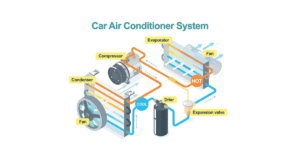 After dealing with mechanics, researching parts, and even trying a few DIY fixes, I gained a solid understanding of car AC systems. This guide breaks everything down in simple terms, with no confusing jargon.
Whether you’re a car owner, DIY enthusiast, or just curious, you’ll walk away knowing exactly how your car’s AC works and what each part does.
How a Car AC System Works (Simple Explanation)
Before diving into parts, here’s the big picture:
A car AC system works by:
- Compressing refrigerant gas
- Cooling it into liquid form
- Expanding it back into gas
- Absorbing heat from inside your car
This cycle repeats continuously to keep your cabin cool.
Main Car AC Parts and Their Functions
Let’s break down each component in a way that actually makes sense.
1. Compressor (The Heart of the System)
Function:
The compressor pumps refrigerant through the system and compresses it into high-pressure gas.
Real-life insight:
When my AC stopped working, the culprit was a worn-out compressor clutch. Without it, the entire system just shuts down.
Key signs of failure:
- Loud clicking noise
- AC is not cooling at all
- Engine strain when AC is on
2. Condenser (Heat Releaser)
Function:
Turns hot, high-pressure gas into a cooler liquid by releasing heat outside the car.
Location:
Usually mounted in front of the radiator.
Common issue:
Dust and debris can block airflow, reducing cooling efficiency.
3. Receiver-Drier (Cleaner & Moisture Remover)
Function:
- Filters contaminants
- Removes moisture from refrigerant
Why it matters:
Even a tiny bit of moisture can damage the entire AC system.
4. Expansion Valve / Orifice Tube (Pressure Controller)
Function:
Controls how much refrigerant enters the evaporator.
Think of it like:
A faucet regulates water flow, but for refrigerant.
5. Evaporator (Cooling Unit Inside Cabin)
Function:
Absorbs heat from the air inside your car, cooling it down.
Location:
Inside the dashboard.
Personal experience:
A clogged evaporator caused weak airflow and a bad smell in my car. Cleaning it made a huge difference.
6. Blower Motor (Air Pusher)
Function:
Pushes air over the evaporator and into the cabin.
Symptoms of failure:
- Weak airflow
- No air is coming out at all
7. Refrigerant (Cooling Fluid)
Function:
The substance that absorbs and releases heat.
Common types:
- R134a (older vehicles)
- R1234yf (newer, eco-friendly)
8. AC Hoses and Lines
Function:
Carry refrigerant between components.
Common problem:
Leaks, especially in older cars.
9. Cabin Air Filter
Function:
Filters dust, pollen, and debris before air enters the cabin.
Pro tip:
Replace it every 10,000–15,000 km for best airflow.
My Honest Experience With Car AC Repairs
After owning multiple cars over the years, here’s what I’ve learned:
- Compressor issues are the most expensive
- Most problems start small (like low refrigerant)
- Regular maintenance saves a LOT of money
One time, I ignored weak cooling for weeks, and it turned into a compressor failure that cost nearly 5x more than a simple recharge would have.
Buyer’s Guide: Choosing Car AC Parts
If you’re replacing or upgrading AC components, here’s what you need to know.
1. Always Match Your Car Model
Not all parts are universal. Even slight mismatches can cause system failure.
2. OEM vs Aftermarket
OEM (Original Equipment Manufacturer):
- Better reliability
- Higher cost
Aftermarket:
- Budget-friendly
- Quality varies
My advice:
Go OEM for major parts like compressors.
3. Check Warranty
AC parts can be expensive. Always choose products with at least a 6–12 month warranty.
4. Look for Energy Efficiency
Modern compressors and refrigerants are more efficient and eco-friendly.
5. Avoid Cheap Refrigerants
Low-quality refrigerant can:
- Damage seals
- Reduce cooling
- Harm the environment
6. Consider Climate Conditions
If you live in hot regions (like South Asia), invest in:
- High-quality condenser
- Strong blower motor
Maintenance Tips to Keep Your AC Running Smooth
Here’s what actually works (from experience):
- Run your AC weekly (even in winter)
- Clean the condenser regularly
- Replace the cabin filter often
- Check refrigerant levels yearly
- Fix leaks immediately
Common Car AC Problems and Causes
1. AC Not Cooling
- Low refrigerant
- Compressor failure
2. Weak Airflow
- Dirty cabin filter
- Faulty blower motor
3. Bad Smell
- Mold in the evaporator
- Dirty filter
4. Strange Noises
- Compressor issues
- Loose components
Long Detailed Explanation (Deep Dive)
Refrigeration Cycle in Detail
The AC system works through a continuous loop:
- A compressor compresses refrigerant gas
- The condenser cools it into a liquid
- Expansion valve reduces pressure
- The evaporator absorbs heat and cools the air
This process repeats every few seconds while your AC is on.
Why AC Systems Fail Over Time
- Wear and tear on moving parts
- Refrigerant leaks
- Dirt accumulation
- Moisture contamination
Cost Breakdown (Realistic)
- AC recharge: Low cost
- Compressor replacement: High cost
- Full system repair: Very expensive
DIY vs Professional Repair
DIY:
- Filter replacement
- Basic cleaning
Professional:
- Compressor replacement
- Refrigerant handling
Read More: What Do Car Sunshades Do
FAQs: Car AC Parts And Functions
1. What is the most important AC part?
The compressor drives the entire system.
2. How often should I service my car’s AC?
At least once a year.
3. Why is my AC blowing hot air?
Usually low refrigerant or compressor failure.
4. Can I drive with a broken AC?
Yes, but it can worsen other issues if ignored.
5. How long does a car AC system last?
Typically,y 8–15 years with proper maintenance.
6. Is an AC gas refill necessary every year?
Not always, only if there’s a leak or low level.
7. Why does my AC smell bad?
Mold buildup in the evaporator or a dirty filter.
8. How can I improve cooling performance?
Clean condenser, replace filter, check refrigerant.
Final Thoughts
Understanding your car’s AC system isn’t just about knowledge; it can actually save you money, time, and stress. From my experience, most AC issues start small and become expensive when ignored.
Knowing the parts and their functions gives you an advantage when dealing with mechanics or diagnosing problems yourself. If you take away one thing from this guide, let it be this:
Regular maintenance is far cheaper than major repairs.