If you’ve ever turned on your car’s AC and been hit with a musty, moldy smell, you’re not alone. I’ve been there, especially during humid seasons when moisture builds up inside the evaporator core.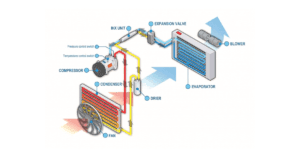 The car AC evaporator is one of the most important components in your air conditioning system. It’s the cold coil hidden deep inside your dashboard that cools the air before it blows into your cabin. Over time, it collects:
- Dust
- Dirt
- Mold & mildew
- Bacteria
- Debris fromthe cabin air
Most people think you need to remove the dashboard to clean it. That’s expensive and time-consuming. The good news?
👉 You can clean your car’s AC evaporator without removing it. In this detailed guide, I’ll show you:
- How the evaporator gets dirty
- Step-by-step cleaning methods
- The best products to use
- A comparison table of cleaning methods
- A complete buyer’s guide
- Long expert insights
- FAQs
Let’s dive in.
What Is a Car AC Evaporator?
The evaporator is a cold coil located inside your HVAC box (usually behind the dashboard). Refrigerant flows through it, absorbing heat from cabin air and cooling it.
Think of it like the opposite of a heater core. When warm air passes over it:
- Heat is absorbed
- Moisture condenses
- Cold air enters the cabin
That moisture is the main reason mold grows.
Signs Your AC Evaporator Needs Cleaning
Before cleaning, make sure it actually needs it.
Common Symptoms
- Musty or sour smell when the AC starts
- Weak airflow
- AC not cooling properly
- Allergy symptoms when the AC runs
- Water is not draining properly
If you notice these, cleaning the evaporator is a smart first step before replacing parts.
Methods to Clean a Car’s AC Evaporator Without Removing
There are three main DIY methods.
AC Evaporator Foam Cleaner (Most Effective)
This is my personal favorite. You spray a special foam cleaner into the evaporator area through:
- Cabin air filter housing
OR - AC drain tube
The foam expands, breaks down dirt and mold, then drains out as liquid.
Spray Disinfectant Through Air Intake
Quick and cheap, but less effective. You spray disinfectant into:
- Outside air intake vents (near windshield)
It circulates through the system. Good for light odor. Not for heavy mold.
Cleaning Through Drain Hose (Professional-Style)
This involves:
- Lifting car
- Finding the AC drain hose under the car
- Inserting the cleaning tube
More thorough, but slightly advanced.
Comparison Table: Cleaning Methods
| Cleaning Method | Difficulty Level | Effectiveness | Cost | Time Required | Best For |
| Foam Cleaner via Cabin Filter | Easy | ⭐⭐⭐⭐⭐ | Low–Medium | 30–45 min | Mold & strong odor |
| Spray Disinfectant via Intake | Very Easy | ⭐⭐ | Very Low | 15–20 min | Light smell |
| Drain Hose Cleaning Method | Medium | ⭐⭐⭐⭐ | Medium | 45–60 min | Deep cleaning |
👉 For most people, foam cleaner through the cabin air filter slot is the best balance.
Step-by-Step: How To Clean a Car AC Evaporator Without Removing
Method 1: Using Foam Cleaner (Recommended)
Tools Needed:
- AC evaporator foam cleaner
- Screwdriver
- Gloves
- New cabin air filter (recommended)
Step 1: Turn off the car
Make sure:
- The engine is off
- Keys removed
- AC off
Safety first.
Step 2: Remove Cabin Air Filter
Most cars have it:
- Behind the glove box
- Under dashboard
Remove the old filter. If it’s dirty, replace it.
Step 3: Insert Foam Cleaner Tube
Insert the straw/tube into:
- Evaporator housing (where the filter was)
Spray the entire can slowly. You’ll see foam expanding inside.
Step 4: Wait 15–20 Minutes
Let the foam:
- Break down mold
- Loosen dirt
- Kill bacteria
It will liquefy and drain out of the AC drain hose underneath the car.
Step 5: Reinstall New Cabin Filter
Always use a new filter after cleaning.
Step 6: Run AC on High
Start the car. Turn AC:
- Max cooling
- High fan speed
- Recirculation OFF
Let it run 10 minutes. This dries the evaporator.
Why Evaporators Get Dirty (Deep Explanation)
Evaporators are perfect mold environments because:
- Cold surface
- Moisture condensation
- Dark enclosure
- Dust particles feed bacteria
In humid climates, this gets worse. Every time you turn off the AC, moisture remains on the fins. Over time:
Moisture + Dust + Warm Air = Mold growth
That’s why smells are worse after parking overnight.
Buyer’s Guide: Choosing the Right AC Evaporator Cleaner
Not all cleaners are equal. Here’s what to look for.
1️⃣ Foam Expansion Quality
Good cleaners:
- Expand fully
- Reach deep fins
- Dissolve completely
Avoid thin spray-only products.
2️⃣ Anti-Bacterial Formula
Look for:
- Mold removal claim
- Antibacterial properties
- HVAC-safe formula
3️⃣ Non-Corrosive
Cheap chemicals can damage:
- Aluminum evaporator fins
- Rubber seals
Always choose automotive-grade products.
4️⃣ Odor Neutralization
Some products mask the smell. Better products:
- Kill the odor source
- Neutralize bacteria
5️⃣ Drain Compatibility
Make sure:
- Cleaner liquefies fully
- Won’t clog the drain tube
Professional vs DIY Cleaning
Professional AC service includes:
- Evaporator cleaning
- Blower motor cleaning
- Cabin filter replacement
- AC gas check
DIY cleaning:
- Costs much less
- Good for maintenance
- Doesn’t replace major service
If smell returns quickly, you may have:
- Blocked drain tube
- Leaking heater core
- Dirty blower motor
How Often Should You Clean the AC Evaporator?
General rule:
- Every 12–18 months
- Before summer
- After the monsoon season
- If odor appears
If you live in humid areas, consider yearly cleaning.
Extra Tips to Prevent Mold
Here’s something most people don’t know:
1️⃣ Turn Off the AC Before Turning Off the Engine
Keep the fan running 2–3 minutes. This dries evaporator.
2️⃣ Replace Cabin Air Filter Every 10,000–15,000 Miles
Dirty filters feed mold.
3️⃣ Avoid Permanent Recirculation Mode
Fresh air mode reduces humidity.
When Cleaning Won’t Fix the Problem
Sometimes odor means:
- Refrigerant leak
- Clogged drain line
- Dirty blower motor
- Mold in ducts
In rare cases, evaporator replacement is required, but that involves dashboard removal.
Long Expert Insight: How the AC Evaporator Works in Detail
The evaporator is part of the refrigeration cycle:
- The compressor compresses the refrigerant
- Condenser releases heat
- Expansion valve reduces pressure
- The evaporator absorbs cabin heat
Inside evaporator:
- Refrigerant changes from liquid to gas
- Heat is absorbed
- Moisture condenses
That moisture drains via the drain tube. If drain clogs:
- Water pools
- Smell worsens
- AC performance drops
Regular cleaning maintains:
- Airflow efficiency
- Cooling performance
- Cabin air quality
- Allergy reduction
Cost Breakdown
| Cleaning Type | Estimated Cost |
| DIY Spray Cleaner | $10–$25 |
| Premium Foam Cleaner | $20–$40 |
| Professional Cleaning | $100–$300 |
| Evaporator Replacement | $800–$1500 |
DIY saves serious money.
Read More: Car AC Parts List
FAQs: How To Clean Car AC Evaporator Without Removing
Can I use household disinfectant spray?
Not recommended. It may damage AC components.
Will cleaning improve cooling performance?
Yes, if the airflow was restricted by dirt or mold.
How long does evaporator cleaning last?
Typically 1 year.
Is evaporator cleaning safe?
Yes, if you follow instructions and use proper products.
Why does the smell return quickly?
Possible drain blockage or deep mold buildup.
Can I pressure wash the evaporator?
No. It can damage delicate fins.
Final Thoughts
Cleaning your car’s AC evaporator without removing it is:
Affordable
Easy
Effective
Prevents expensive repairs
Improves cabin air quality
From personal experience, the foam cleaner method gives the best results. It removes stubborn odor and restores fresh airflow.
Instead of spending hundreds at a workshop, you can handle this in under an hour at home. If your AC smells bad, don’t ignore it. Clean it before summer hits.