It started like most great modern debates do: casually, online, and with absolutely no warning. Someone asked, “Are there more wheels or doors in the world?” At first, I laughed. Then I answered confidently. Then someone replied with a counterpoint.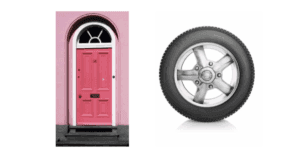 Ten minutes later, I was staring at my office chair, counting wheels, and whispering, “You’re not even a door… are you?” This question exploded on social media because it hits a perfect sweet spot:
- It’s simple
- It’s visual
- It’s surprisingly complex
- And everyone thinks they’re right
So I decided to stop guessing and actually break it down object by object, industry by industry, using logic, real-world estimates, and common sense.
This is not a scientific paper. This is a casual yet informative personal review of reality itself. Let’s go.
Why This Question Is Harder Than It Looks
At first glance, doors feel everywhere:
- Homes
- Apartments
- Offices
- Stores
- Schools
- Hospitals
But then you start noticing wheels:
- Cars
- Bikes
- Office chairs
- Suitcases
- Carts
- Toys
- Conveyor belts
- Factory machines
And suddenly… wheels are everywhere too. The problem isn’t counting. The problem is the definition.
What Counts as a Door?
Most people agree:
- Hinged doors
- Sliding doors
- Cabinet doors
- Closet doors
- Garage doors
What Counts as a Wheel?
This is where chaos begins:
- Car wheels? Yes.
- Bike wheels? Obviously.
- Office chair wheels? Yep.
- Toy car wheels? Still wheels.
- Gears? Rollers? Casters? Conveyor wheels?
If it rolls, most people count it. And once you include tiny wheels, the math changes fast.
Doors: A Deep Look at Where Doors Exist
Let’s give doors a fair shot.
Residential Buildings
The average U.S. home has:
- Front door (1)
- Back door (1)
- Bedroom doors (2–4)
- Bathroom doors (1–2)
- Closet doors (2–6)
- Garage door (1)
- Cabinet doors (20–40 easily)
That’s 30–50 doors per house, and that’s conservative. Now multiply that by:
- Over 140 million housing units in the U.S.
- Billions worldwide
Doors are strong contenders.
Commercial Buildings
Office buildings add:
- Exterior doors
- Office doors
- Conference room doors
- Restroom doors
- Fire doors
- Elevator doors (yes, those count)
A single office building can have hundreds or thousands of doors.
Schools, Hospitals, and Public Spaces
These are door factories:
- Classrooms
- Patient rooms
- Storage rooms
- Emergency exits
- Specialized access doors
Hospitals alone may have 10,000+ doors in large facilities. Doors are stacking up fast.
Wheels: Where Things Start Getting Wild
Now let’s talk wheels, and this is where doors start sweating.
Vehicles (The Obvious Ones)
- Cars: 4 wheels × billions of cars
- Trucks: 4–18 wheels
- Buses: 6–10 wheels
- Motorcycles: 2 wheels
- Bicycles: 2 wheels
Even before counting anything else, vehicles alone produce tens of billions of wheels worldwide.
Office Chairs: The Silent Wheel Army
This one shocks people. A typical office chair has:
- 5 wheels
Now think about:
- Offices
- Homes
- Schools
- Call centers
- Gaming setups
There are hundreds of millions of office chairs globally. That’s billions of wheels hiding under desks.
Suitcases, Carts, and Trolleys
Modern luggage:
- 2 to 8 wheels per suitcase
Now add:
- Shopping carts
- Airport luggage carts
- Warehouse dollies
- Hospital carts
- Hotel service carts
Every major building has dozens or hundreds of rolling items.
Toys: The Wheel Multiplier Nobody Talks About
This is the game changer.
- Toy cars
- Toy trucks
- Hot Wheels
- LEGO wheels
- Strollers
- Ride-on toys
One toy box can contain 50+ wheels. Factories produce billions of toy wheels every year. Kids accidentally tipped the scale.
Industrial and Manufacturing Wheels
This is where doors officially lose control. Factories use:
- Conveyor belt rollers
- Machine wheels
- Pulleys
- Casters
- Robotic movement systems
A single warehouse can contain thousands of wheels, many of which no one ever sees. Doors don’t exist at this scale.
Head-to-Head Comparison Table
Here’s a simplified breakdown:
| Category | Doors | Wheels |
| Homes | High | Moderate |
| Offices | High | Very High |
| Vehicles | Low | Extremely High |
| Toys | Moderate | Massive |
| Industrial | Low | Massive |
| Furniture | Moderate | High |
| Logistics | Very Low | Extremely High |
Verdict: Wheels dominate in high-volume manufacturing and small-scale repetition.
My Personal Experience: What Changed My Mind
I used to be Team Doors. Then I did one thing. I walked through my house and counted:
- Doors: 37
- Wheels: 68
And that was just:
- Chairs
- Suitcases
- Laundry cart
- Trash bin
- Kids’ toys
- Vacuum cleaner
Then I went to a grocery store. Carts alone destroyed the door count. That’s when it clicked: Wheels are quieter, smaller, and multiply faster.
The Buyer’s Guide (Yes, Really)
Since this is a “personal review-style article,” let’s have fun.
If You’re Team Doors, You’re Probably:
- A homeowner
- An architect
- A contractor
- Someone who notices rooms more than objects
You value: Structure, boundaries, and entry points.
If You’re Team Wheels, You’re Probably:
- A parent
- An engineer
- A warehouse worker
- A traveler
- Someone who notices movement
You value: Efficiency, motion, and logistics.
What Should You “Buy” Into?
If your worldview includes:
- Factories
- Mass production
- Global shipping
- Children’s toys
👉 Buy the wheels argument.
If you only consider:
- Buildings
- Rooms
- Traditional architecture
👉 Doors feel dominant, but they’re not.
The Final Verdict: Wheels or Doors?
After breaking it down across:
- Homes
- Cities
- Industries
- Toys
- Transportation
- Manufacturing
There are more wheels in the world than doors.
Not by a little.
By a lot.
The key reason:
Wheels are produced in massive quantities, often in sets of 2, 4, or 5, and exist in places doors never will, such as factories, toys, machinery, and logistics systems.
Doors are big. Wheels are everywhere.
Read More: What Is Offset On Wheels
FAQs: Are There More Wheels Or Doors In The World
Are cabinet doors really doors?
Yes. Most people agree that cabinet and closet doors count.
Do gears count as wheels?
Usually, no, unless they directly enable rolling movement. Most debates exclude gears.
What about sliding doors?
They count as doors… and ironically, they often use wheels underneath.
Are toy wheels counted?
Absolutely. They’re mass-produced and everywhere.
What about wheels inside machines?
Most arguments count functional rolling components, and that’s where wheels dominate.
Is this question actually solvable?
Not precisely, but logically, wheels win when you consider scale.
Why This Debate Is Actually Fun
This question isn’t really about counting objects. It’s about:
- How we define things
- What we notice in daily life
- How perspective changes outcomes
And honestly? Any question that makes people argue about office chairs and Hot Wheels is a win in my book.
Final Thought
Next time someone asks, “Are there more wheels or doors in the world?”
Smile.
Pause dramatically.
Then say:
“Wheels. And it’s not even close.”