Modern vehicles are essentially computers on wheels. Behind every smooth acceleration, fuel-efficient drive, and safety feature lies a network of tiny electronic components called car sensors.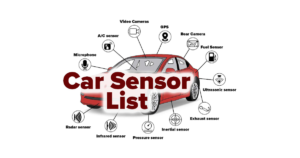 A sensor in a car is an electronic device that detects changes in the vehicle’s operating conditions, such as temperature, pressure, speed, oxygen levels, or position, and sends this information to the car’s computer, known as the Engine Control Unit (ECU).
The ECU then analyzes this data and makes real-time adjustments to optimize performance, fuel economy, emissions, and safety. In simple terms, car sensors act like the vehicle’s eyes, ears, and nervous system.
My Personal Take on Car Sensors
If you’ve ever driven an older car from the 1980s or early 1990s and then switched to a modern vehicle, the difference is remarkable. Years ago, diagnosing engine issues often involved mechanical guesswork.
Today, sensors tell mechanics almost exactly what’s happening inside the engine. While this increased complexity can make repairs more expensive, it also means better fuel efficiency, cleaner emissions, improved safety, and easier diagnostics.
I’ve found that many “major” car problems are actually caused by relatively inexpensive sensors. A faulty oxygen sensor or mass airflow sensor can make a perfectly healthy engine run poorly, trigger warning lights, and reduce fuel economy dramatically.
How Do Car Sensors Work?
The process is surprisingly simple:
- A sensor detects a physical condition.
- It converts that condition into an electrical signal.
- The signal is sent to the ECU.
- The ECU adjusts engine operation accordingly.
For example:
- If the engine temperature rises, the coolant temperature sensor informs the ECU.
- If oxygen levels in exhaust gases change, the oxygen sensor reports it.
- If a wheel suddenly stops rotating during braking, wheel speed sensors activate the ABS.
Without sensors, modern vehicles simply would not function properly.
Why Are Sensors Important in Cars?
Car sensors play a vital role in:
- Engine performance
- Fuel efficiency
- Emissions control
- Transmission operation
- Safety systems
- Driver assistance technologies
- Preventive diagnostics
Even advanced features like adaptive cruise control and automatic emergency braking depend heavily on sensor technology.
Common Types of Car Sensors
1. Oxygen Sensor (O2 Sensor)
The oxygen sensor monitors oxygen levels in exhaust gases.
Main Functions:
- Controls the air-fuel mixture
- Improves fuel economy
- Reduces emissions
Symptoms of Failure:
- Check engine light
- Poor fuel economy
- Rough idling
- Failed emissions test
2. Mass Air Flow (MAF) Sensor
The MAF sensor measures how much air enters the engine.
Benefits:
- Better combustion
- Smooth acceleration
- Improved fuel efficiency
Signs of Problems:
- Engine hesitation
- Stalling
- Reduced power
- Hard starting
3. Engine Coolant Temperature Sensor
This sensor measures engine temperature.
Why It Matters:
- Prevents overheating
- Helps cold starts
- Controls cooling fans
Common Symptoms:
- Temperature gauge issues
- Poor fuel consumption
- Cooling fan problems
4. Crankshaft Position Sensor
One of the most important engine sensors.
Functions:
- Monitors crankshaft speed
- Controls ignition timing
- Helps fuel injection timing
Failure Symptoms:
- Engine won’t start
- Random stalling
- Misfires
5. Camshaft Position Sensor
Works together with the crankshaft sensor.
Responsible For:
- Valve timing
- Fuel injection synchronization
- Engine efficiency
6. Throttle Position Sensor (TPS)
Detects throttle opening angle.
Benefits:
- Smooth acceleration
- Proper transmission shifting
- Improved engine response
7. Manifold Absolute Pressure (MAP) Sensor
Measures intake manifold pressure.
Functions:
- Calculates engine load
- Controls ignition timing
- Adjusts fuel delivery
8. Wheel Speed Sensors
These sensors are essential for:
- ABS
- Traction control
- Stability control systems
A failed wheel sensor may disable several safety systems simultaneously.
9. Tire Pressure Monitoring Sensor (TPMS)
Monitors tire pressure continuously.
Benefits:
- Better safety
- Improved fuel economy
- Longer tire life
10. Knock Sensor
Detects abnormal combustion or engine knocking.
Purpose:
- Prevents engine damage
- Adjusts ignition timing automatically
Comparison Table: Common Car Sensors
| Sensor Type | Main Function | Symptoms of Failure | Average Replacement Cost |
| Oxygen Sensor | Monitors exhaust gases | Poor mileage, warning light | Low-Medium |
| MAF Sensor | Measures incoming air | Rough idle, stalling | Medium |
| TPS Sensor | Detects throttle position | Hesitation, poor acceleration | Medium |
| Coolant Sensor | Measures engine temperature | Overheating issues | Low |
| Crankshaft Sensor | Controls ignition timing | No start, stalling | Medium |
| Wheel Speed Sensor | Supports ABS systems | ABS warning light | Medium |
| TPMS Sensor | Monitors tire pressure | Tire pressure warning | Medium |
| Knock Sensor | Detects engine knock | Reduced power | Medium-High |
Mechanical Systems vs Sensor-Controlled Systems
| Feature | Older Mechanical Cars | Modern Sensor-Based Cars |
| Fuel Delivery | Carburetor | Electronic Fuel Injection |
| Diagnostics | Manual inspection | Computer diagnostics |
| Fuel Economy | Lower | Higher |
| Emissions | Higher | Lower |
| Safety Features | Limited | Advanced |
| Maintenance | Simpler | More precise but complex |
Signs That a Car Sensor May Be Failing
Many drivers ignore early sensor issues because the symptoms can be subtle. Watch for:
1. Check Engine Light
The most obvious warning sign.
2. Poor Fuel Economy
Faulty sensors can cause the ECU to inject too much fuel.
3. Rough Idling
Incorrect sensor readings often disrupt engine balance.
4. Stalling
Sensors involved in ignition timing may cause sudden shutdowns.
5. Reduced Power
The ECU may place the vehicle in “limp mode.”
6. Transmission Problems
Some sensors influence automatic transmission shifting.
Why Modern Cars Have So Many Sensors
Modern vehicles may contain anywhere from 50 to over 200 sensors. Luxury and electric vehicles often have even more. These sensors support:
- Adaptive cruise control
- Lane-keeping assist
- Automatic braking
- Parking assistance
- Battery management systems
- Hybrid drivetrain management
- Autonomous driving features
Without sensors, these technologies simply wouldn’t exist.
Can You Drive with a Bad Sensor?
Sometimes, yes, but not always.
Usually Safe for Short Distances:
- TPMS sensor
- Oxygen sensor
- Ambient temperature sensor
Potentially Dangerous:
- Wheel speed sensor
- Crankshaft position sensor
- Coolant temperature sensor
- Throttle position sensor
Ignoring sensor failures can eventually lead to:
- Increased repair costs
- Reduced fuel efficiency
- Engine damage
- Safety risks
Buyer’s Guide: Choosing Replacement Car Sensors
Buying a replacement sensor can be confusing because there are many aftermarket options.
1. OEM vs Aftermarket
OEM Sensors
Pros:
- Exact fit
- Reliable calibration
- Better long-term durability
Cons:
- More expensive
Aftermarket Sensors
Pros:
- Lower price
- Wide availability
Cons:
- Quality varies significantly
For critical sensors such as crankshaft, camshaft, and ABS sensors, OEM parts are often worth the extra cost.
2. Check Compatibility
Always verify:
- Vehicle make
- Model
- Engine size
- Production year
- VIN compatibility
Even minor differences can make sensors incompatible.
3. Look for Trusted Brands
Some well-known automotive sensor manufacturers include:
- Bosch
- Denso
- Delphi Technologies
- Continental
- NGK
Quality sensors generally provide more accurate readings and longer service life.
4. Read Diagnostic Codes First
Never replace sensors based only on symptoms. Use an OBD-II scanner to identify:
- Error codes
- Live sensor data
- Intermittent failures
Sometimes wiring problems mimic sensor failures.
5. Consider Installation Costs
Some sensors are easy DIY replacements. Others may require:
- Special tools
- ECU relearning procedures
- Professional calibration
Average Lifespan of Car Sensors
| Sensor | Typical Lifespan |
| Oxygen Sensor | 60,000–100,000 miles |
| MAF Sensor | 100,000+ miles |
| TPMS Sensor | 5–10 years |
| Wheel Speed Sensor | 70,000–120,000 miles |
| Crankshaft Sensor | Often lifetime, but can fail unexpectedly |
| Coolant Sensor | 100,000 miles or more |
Driving conditions and maintenance habits significantly affect lifespan.
Future of Automotive Sensors
The automotive industry is rapidly increasing its use of sensors. Emerging technologies include:
- LiDAR sensors
- Radar systems
- Infrared sensors
- Battery monitoring sensors
- Autonomous navigation sensors
Electric vehicles and self-driving cars rely heavily on sophisticated sensor networks. Companies such as Tesla and Waymo are pushing sensor technology to entirely new levels.
Read More: What Does A Map Sensor Do On A Car
FAQs: What Is A Sensor In A Car
1. What does a sensor do in a car?
A car sensor detects information such as temperature, pressure, speed, or oxygen levels and sends this data to the ECU so the vehicle can operate efficiently.
2. How many sensors are in a modern car?
Most modern vehicles contain between 50 and 200 sensors, while luxury and autonomous vehicles may have even more.
3. Can a bad sensor damage an engine?
Yes. Certain sensor failures can lead to incorrect fuel delivery, overheating, detonation, or ignition problems that may eventually damage the engine.
4. Why is my check engine light on?
One of the most common reasons is a faulty sensor, such as an oxygen sensor, MAF sensor, or crankshaft sensor.
5. Are car sensors expensive to replace?
Costs vary widely. Some sensors are inexpensive, while others require labor-intensive installation and calibration.
6. Can I replace a car sensor myself?
Many sensors can be replaced by experienced DIY enthusiasts, but some require professional diagnostic tools and recalibration.
7. How can I tell which sensor is bad?
The best method is using an OBD-II scanner to read trouble codes and monitor live data from the vehicle’s ECU.
8. Do electric cars use sensors too?
Absolutely. Electric vehicles rely heavily on sensors for battery management, motor control, regenerative braking, and advanced driver-assistance systems.
Final Thoughts
Car sensors may be small, but they are among the most important components in modern vehicles. They constantly monitor everything from engine temperature and fuel mixture to wheel speed and tire pressure.
In my experience, understanding the basics of automotive sensors helps drivers make smarter maintenance decisions and avoid unnecessary repair bills. A single malfunctioning sensor often causes many drivability issues that seem serious.
As vehicles become more computerized and increasingly autonomous, sensors will continue to play an even bigger role in performance, efficiency, and safety.